Kyiv’s most beautiful metro stations
Mosaics, murals and architectural gems in Kyiv’s metro.

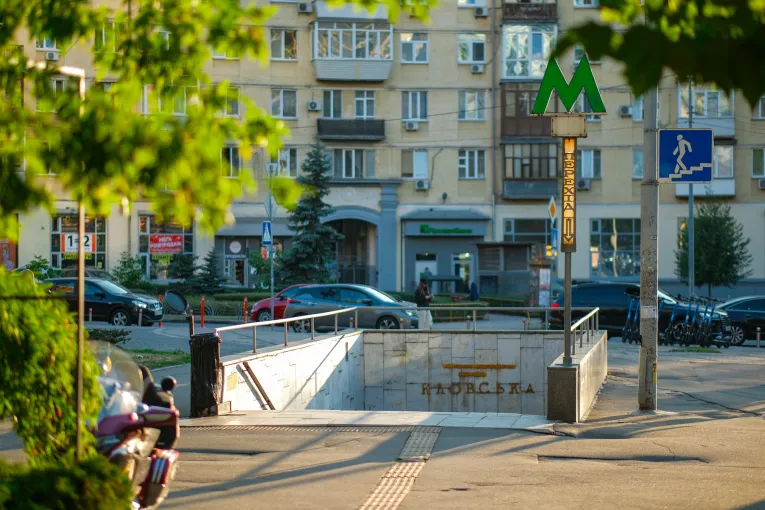
The Kyiv Metro has three lines — red, blue, and green — and is the most popular form of public transport among locals and tourists.
Each station has its own architectural style, history and artistic details. Arsenalna, for example, is known as one of the deepest stations in the world, while Zoloti Vorota is famous for its mosaics depicting the history of Kyivan Rus.
The Visit Kyiv team has picked nine of the city’s most beautiful metro stations, each with striking architecture, distinctive decor, and a story of its own.
Green Line
Zoloti Vorota
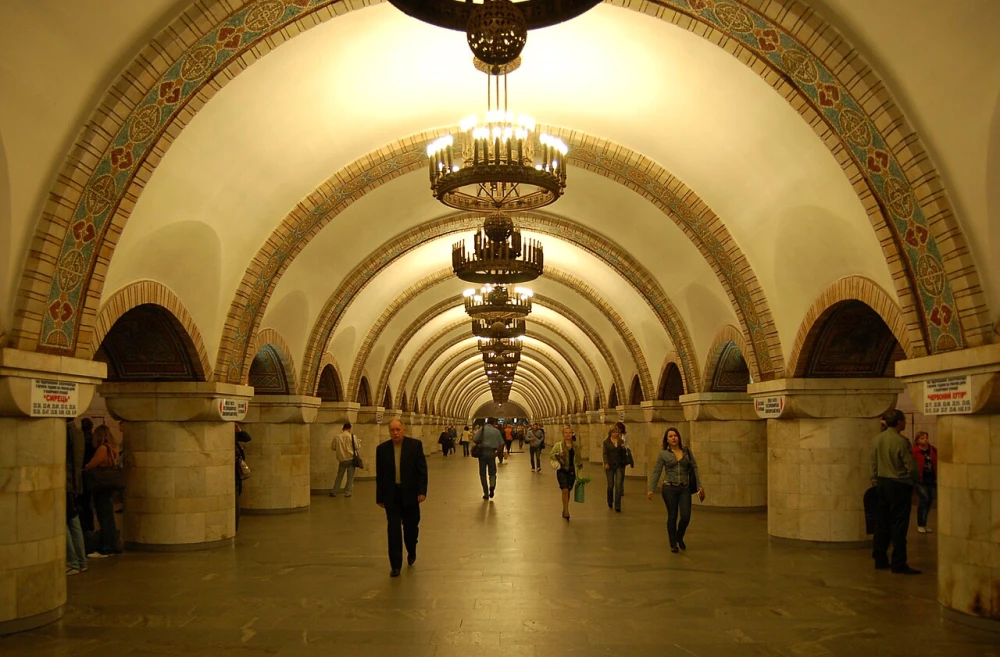
Zoloti Vorota is one of Kyiv’s most beautiful metro stations. Its design is inspired by the architecture of medieval churches in Kyivan Rus. The station opened in 1989 as part of the first section of the Syretsko-Pecherska Line, also known as the Green Line.
The station features unique mosaics depicting princes of Kyivan Rus, medieval churches, saints, religious figures, and the founders of Kyiv. Large bronze chandeliers hang from the ceiling, resembling old-fashioned lamps.
Another distinctive detail is the inscription “Slava Ukraini” (“Glory to Ukraine”), hidden in the passage between the two escalators. It was made from bright red smalti glass tiles against a darker background. Over the years, the red tiles have darkened, making the inscription harder to spot.
Zoloti Vorota has also received international recognition. In 2011, it was included in BootsnAll’s ranking of the world’s most beautiful metro stations, followed by The Daily Telegraph in 2013.
At Zoloti Vorota, you can change to the Red Line at Teatralna station. Alternatively, exit near the historic Golden Gate and continue your walk through Kyiv’s historic centre.
Osokorky
Osokorky metro station is located in a residential neighbourhood on Kyiv’s Left Bank. It opened in 1992 to connect the surrounding residential areas with the city centre.
In 2012, an electrical cable short circuit caused a fire at the station, damaging the ceiling cladding and chandeliers. The station was repaired and reopened to passengers the very next day.
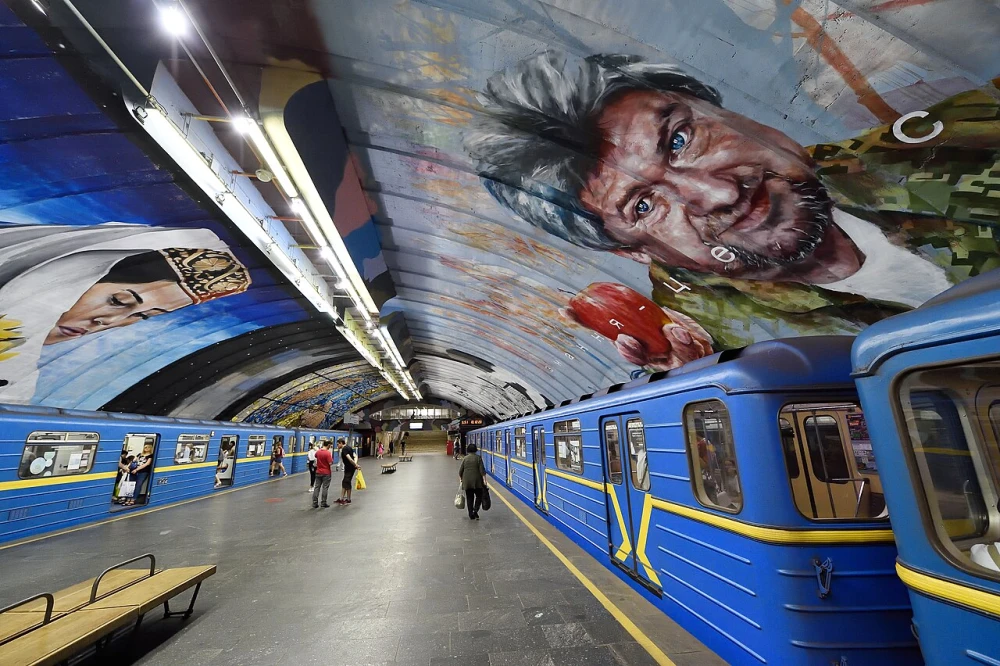
In 2018, Osokorky became an open-air art gallery of sorts. As part of the international art project MoreThanUs, eight murals celebrating Ukraine and its people were painted across the station’s walls and ceiling. Artists from Brazil, Switzerland, the United States, Costa Rica, Spain, Belgium and Ukraine took part.
Each mural tells a different story about Ukrainian culture, memory and resilience.
The artworks include a Crimean Tatar girl, Ukrainian actor Bohdan Stupka, the damaged city of Avdiivka alongside a child’s drawing, the control tower at Donetsk Airport, and a Ukrainian woman weaving a rug shaped like the outline of Ukraine. Other murals honour soldier and teacher Volodymyr Donos and celebrate music as a symbol of unity.
Near Osokorky station, you’ll find River Mall shopping centre, a range of cafés and restaurants and Pryberezhnyi Park. After exploring the station, you can go shopping or enjoy a walk in the park.
Slavutych
Slavutych metro station opened on 30 December 1992, alongside Osokorky. They were among the first Green Line stations to serve Kyiv’s Left Bank.
Slavutych was not part of the original metro construction plans. It was added in the mid-1980s in anticipation of new residential developments in the area. When the station opened, the surrounding landscape was mostly fields and cottages, so Kyiv residents were surprised to see a metro system in such a sparsely built-up area.
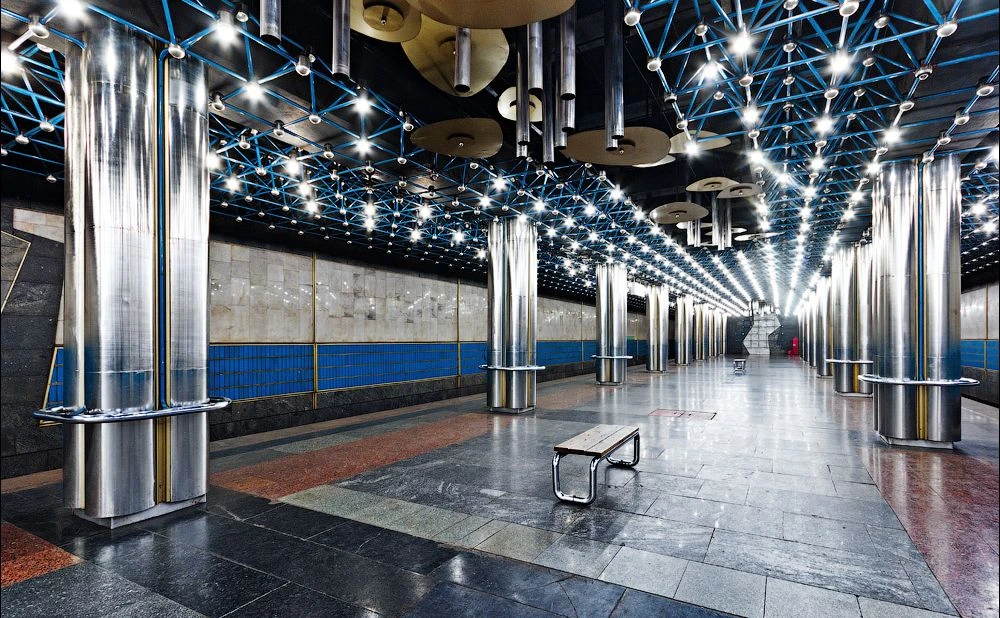
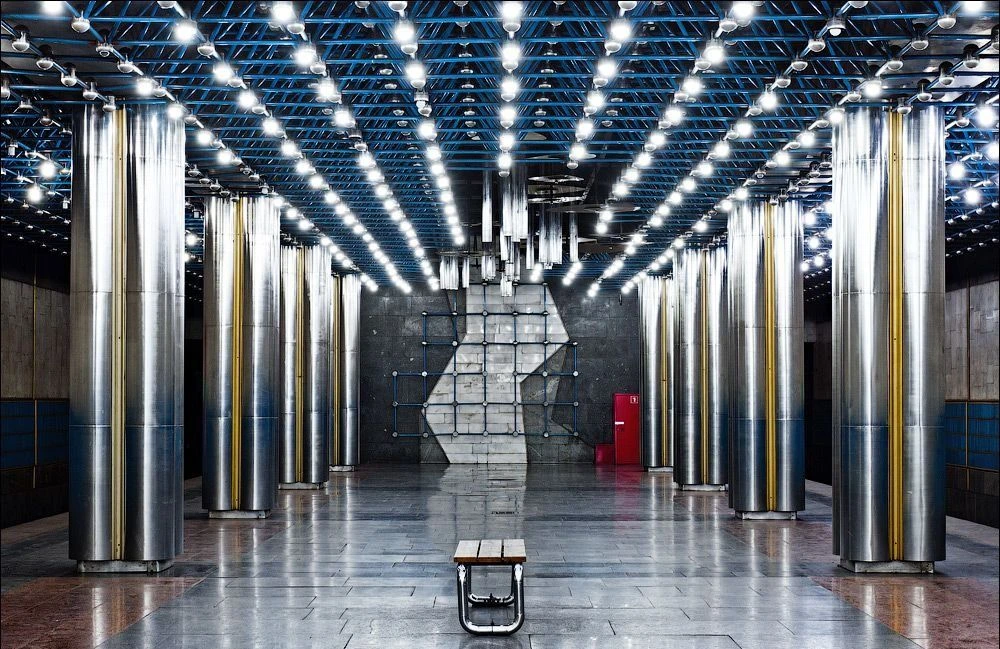
The name Slavutych comes from an old Ukrainian name for the Dnipro River. The station’s design combines a black ceiling, blue metal structures and spotlights that resemble a starry sky above the river. Decorative water lilies adorn the ceiling, while a composition at the end of the platform represents the Dnipro’s course.
Red Line
Universytet
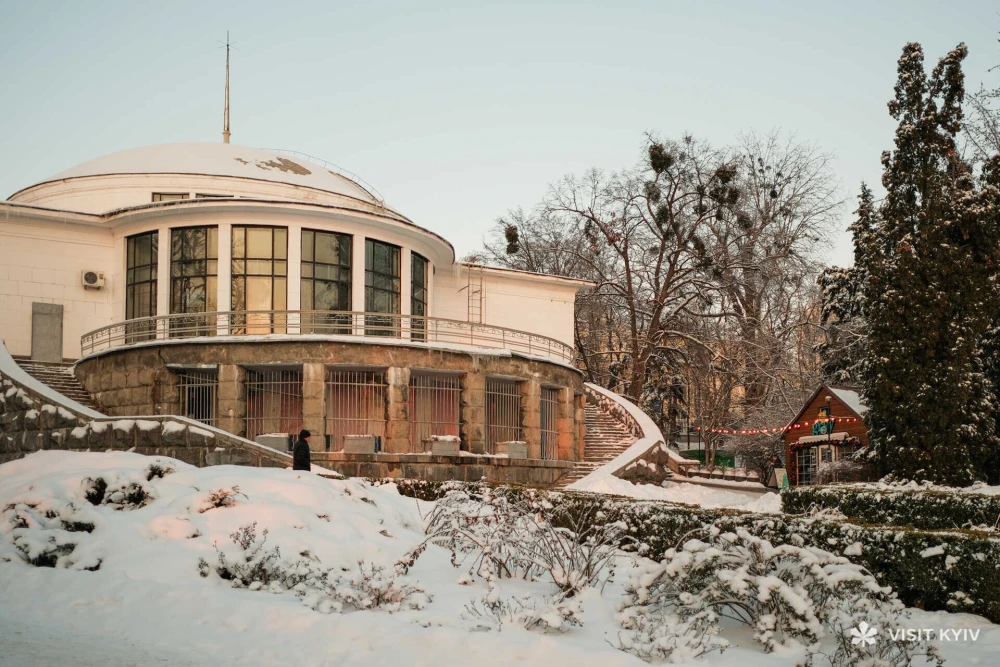
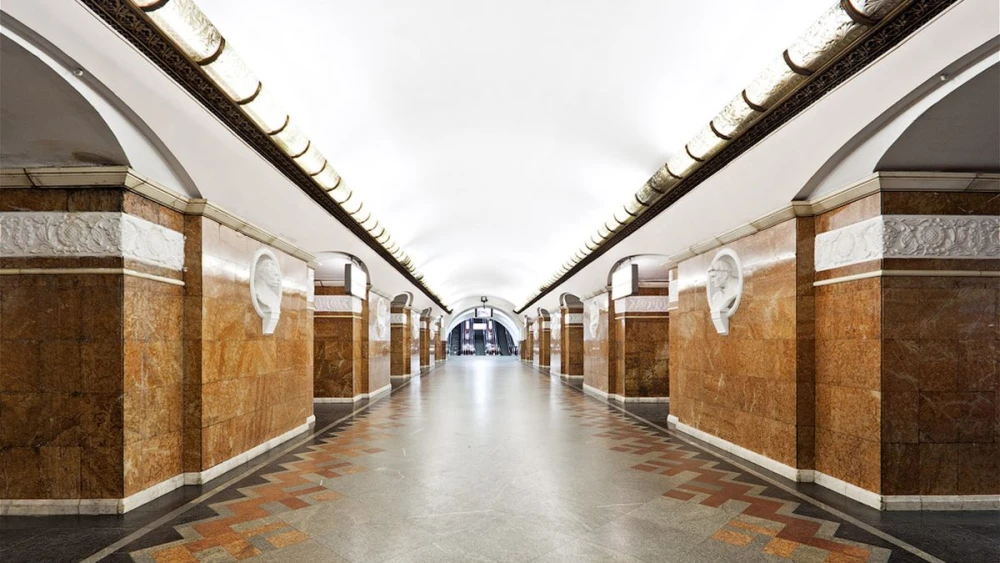
Universytet station is next to Fomin Botanical Garden and is widely considered one of Kyiv’s most beautiful metro stations. It was among the first four stations of the Kyiv Metro, which opened on 6 November 1960.
The station’s interior resembles a museum. Sculptures of prominent Ukrainian figures — Taras Shevchenko, Ivan Franko, Hryhorii Skovoroda and Oleksandr Bohomolets — line the platform. The walls feature plasterwork with Ukrainian ornamental motifs, while the geometric floor pattern is reminiscent of traditional Ukrainian embroidery.
The entrance pavilion is also notable for its architecture. Colonnades on either side of the building lead towards the botanical garden, while the back wall is curved and fitted with large panoramic windows.
After visiting the underground station, take a walk through Fomin Botanical Garden, stop by the café inside the garden, or head to the Red Building of Taras Shevchenko National University of Kyiv.

Teatralna
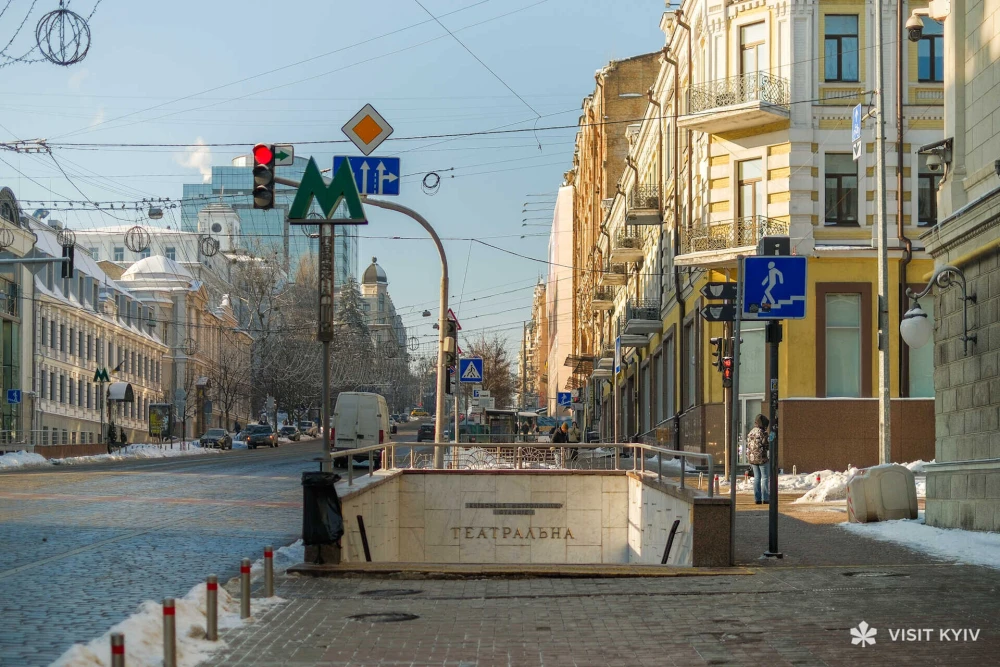
Teatralna station opened in 1987 between Universytet and Khreshchatyk. Before that, there was a long stretch of track between the two stations with no stops. To build the new station, train services on this section were suspended for several months while Teatralna was constructed within the existing metro line.
The station was originally called Leninska and featured distinctly Soviet decor, including extensive use of red granite and marble, as well as bronze high-relief sculptures dedicated to Lenin and Soviet ideological slogans.
The station received its current name in 1993 because of its proximity to the National Opera of Ukraine and the Lesia Ukrainka Theatre.
In 2014, as part of Ukraine’s decommunisation process, Soviet symbols were removed and the station’s decor took on a more artistic theme. Today, a 3D image of a theatre auditorium can be seen on the wall at the end of the central hall, reflecting Kyiv’s vibrant cultural life.
Teatralna is connected to Zoloti Vorota station on the Green Line. Nearby, you’ll also find TSUM and the Museum of Kyiv History. From here, you can walk along Khreshchatyk Street and continue to the Glass Bridge.
Khreshchatyk
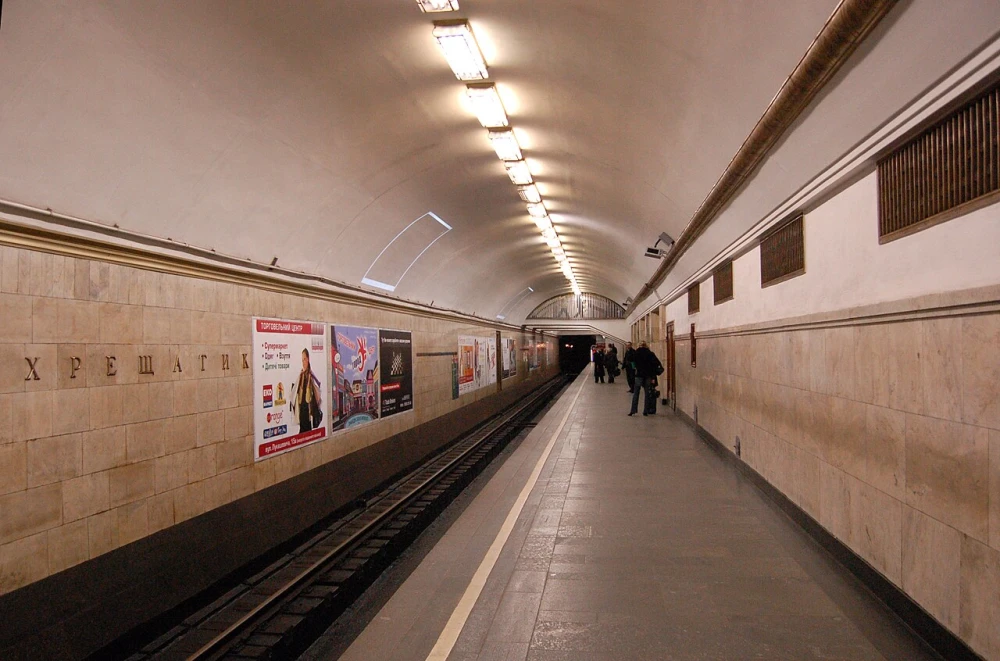
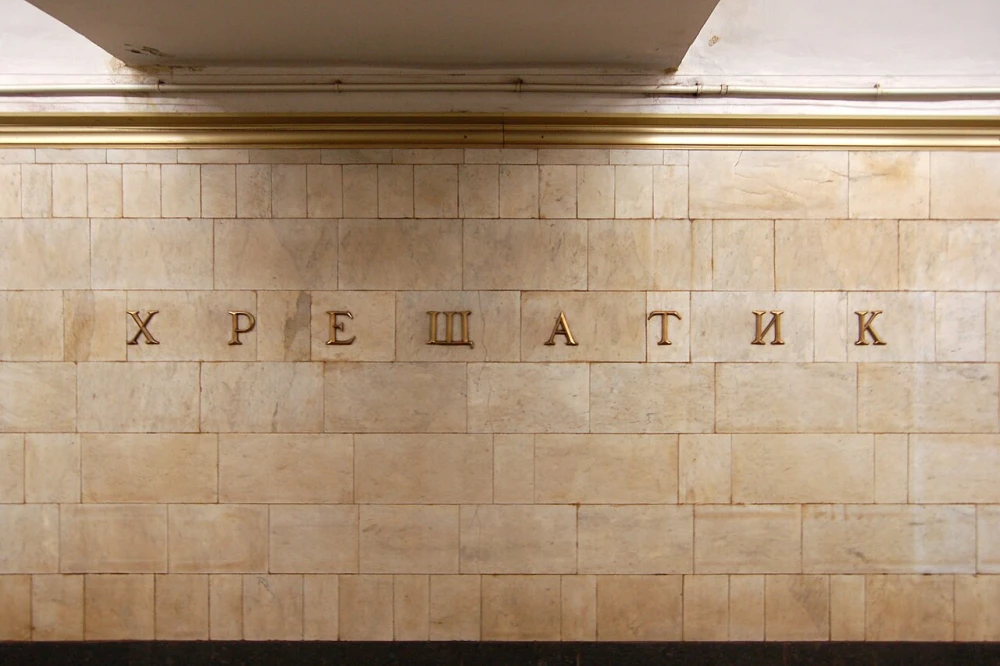
Khreshchatyk station opened on 6 November 1960, along with the four other stations that marked the beginning of the Kyiv Metro.
Located in the heart of Kyiv, the station provides access to the city’s main street. Together with the connection to Maidan Nezalezhnosti station, it forms one of the city’s key transport hubs, used by hundreds of thousands of residents and visitors every day.
The station’s decor reflects Ukrainian national motifs. The walls around the platform are adorned with majolica panels by ceramic artist Oksana Hrudzyńska, featuring floral patterns with sunflowers, cornflowers, poppies and wheat ears.
Until the 1990s, the main exit from the station was next to Metro restaurant, a well-known venue spread across four floors, with 13 dining rooms and a summer terrace. The menu featured classic Kyiv dishes, including chicken Kyiv, Metro salad and a Khreshchatyk cocktail. Today, the site is occupied by McDonald’s and the Khreshchatyk Plaza business centre.
Khreshchatyk is one of Kyiv’s iconic symbols, and its image often appears on souvenir postcards. Exit through the main entrance to reach Khreshchatyk Street, then walk towards Independence Square and Volodymyrska Hill.
The exit towards Instytutska Street leads to the Alley of the Heroes of the Heavenly Hundred, a memorial dedicated to those who took part in the Revolution of Dignity.
Dnipro
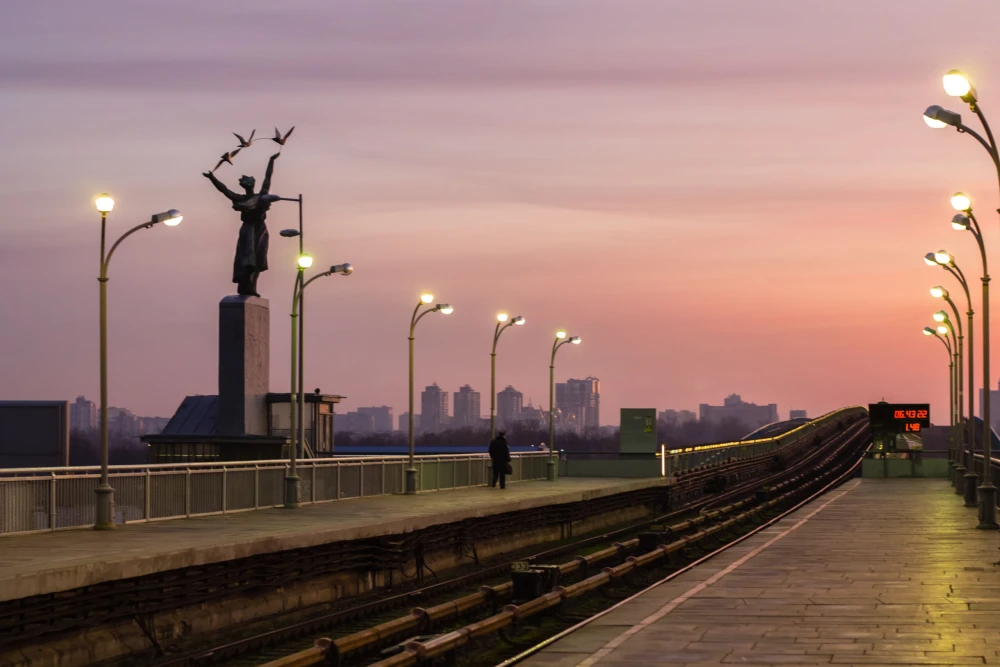
Dnipro station opened in 1960 as part of the metro’s first section, along with Vokzalna, Universytet, Khreshchatyk and Arsenalna. It was Kyiv’s first above-ground station, built on an elevated structure along the river embankment.
For the first five years, metro carriages reached Dnipro station by an unusual route. They were transferred from Darnytsia railway station onto tram tracks, transported across Paton Bridge and then taken along the river embankment. Beneath the viaduct, a turntable rotated the carriages 90 degrees, while a lift raised them to platform level.
The system became unnecessary after Metro Bridge and new stations opened in 1965.
One of Dnipro station’s main features is its elevated platform, which offers views of the Dnipro River and Kyiv’s Left Bank. Near the eastern exits, where the station meets Metro Bridge, stand two monumental sculptures: Peace, depicting a woman with doves, and Labour, depicting a male figure. In the warmer months, the platform is also a lovely spot to watch the sunset.
Blue Line
Minska
Minska station is on the Blue Line, between Heroiv Dnipra and Obolon stations. It opened in 1982, when the line was extended towards the Obolon residential district.
The first stations in Obolon opened in 1980, making a big difference to residents: the journey from the city centre to the neighbourhood now took just 15–20 minutes. Two years later, the Blue Line was extended further with the opening of Minska and Heroiv Dnipra stations.
The station was initially planned to be called Obolon II, but it was eventually named after the square above it.
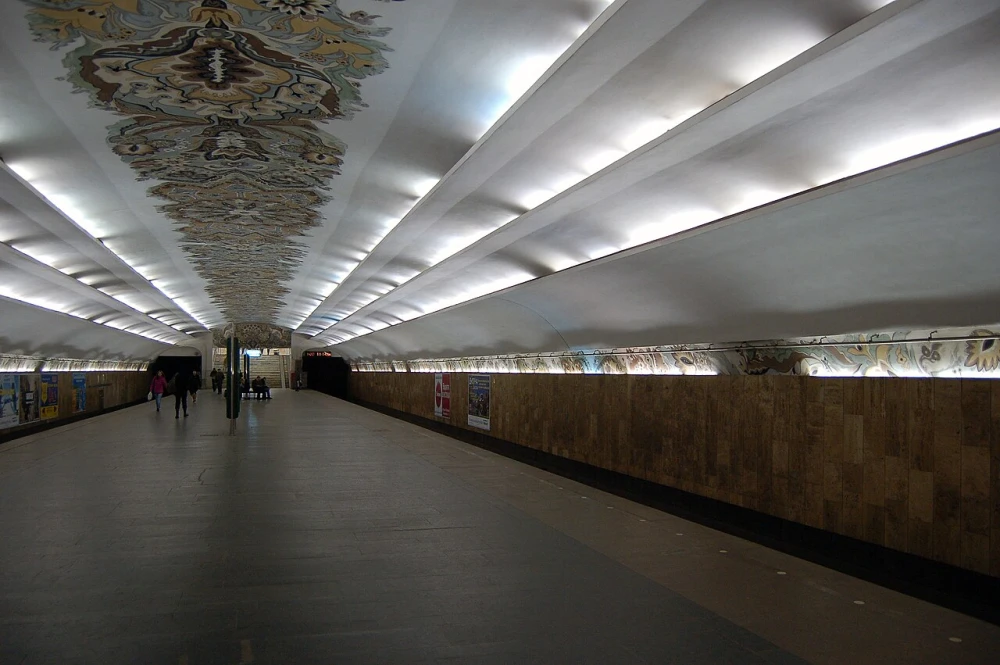
Minska was the first shallow single-vault station in the Kyiv Metro. It is just eight metres deep. The ceiling features a “Tree of Life” ornament that forms a continuous pattern along the entire vault.
Near the station, you’ll find Dream Mall, McDonald’s and other cafés. It takes around 30 minutes to walk from here to Obolon Embankment and the Azov Wave Bridge.
Olimpiiska
Olimpiiska station stands out for its sports-themed design. It is located near Olimpiyskiy Stadium, one of Ukraine’s main sports venues.
The station opened on 19 December 1981, a year after the Olympic Games, during which Kyiv’s Republican Stadium hosted football matches. The station was originally named Respublikanskyi Stadion (“Republican Stadium”) and was renamed Olimpiiska ahead of Euro 2012.
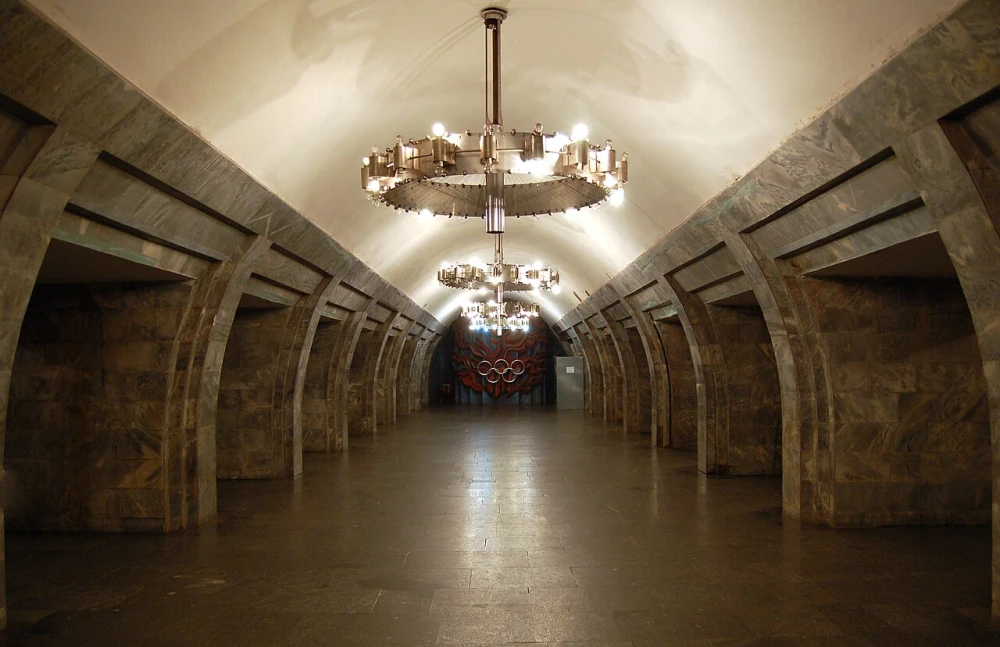
The interior draws on sporting themes, with large mosaics depicting athletes’ silhouettes at the ends of the platform walls. Stylised light fixtures resemble the Olympic rings.
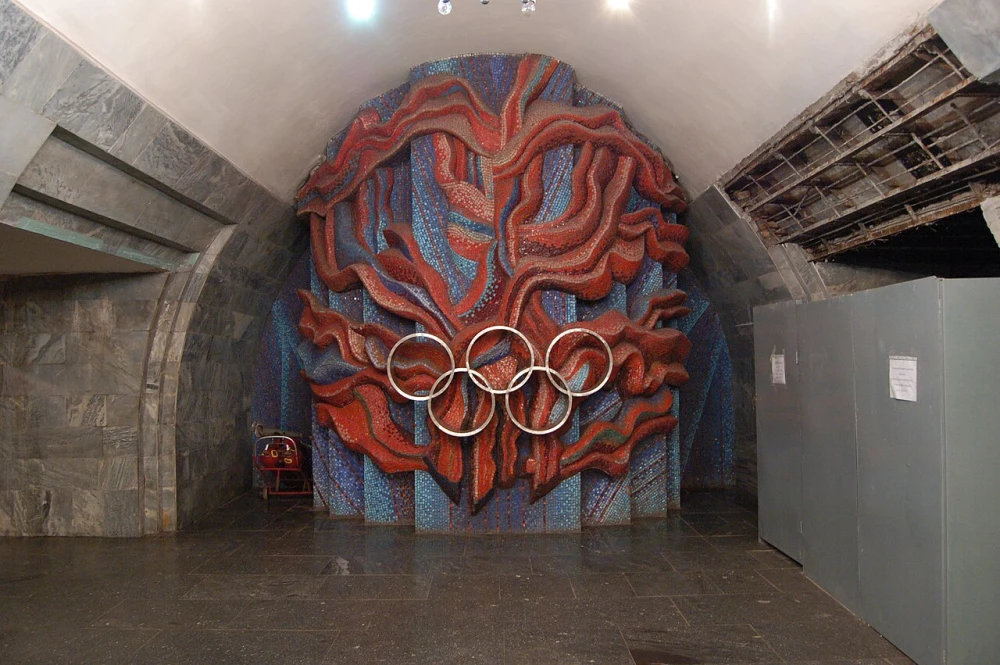
At the end of the central hall, a large mosaic depicts the Olympic flame. Near the escalators, metal structures with coloured stained glass and backlighting add to the station’s distinctive look.
Nearby attractions include the Kyiv Planetarium, the Kyiv National Academic Operetta Theatre, as well as bars and pubs, and restaurants.
About the author