


Weather and climate in Kyiv: when to visit and what to pack
What weather to expect in Kyiv throughout the year, when to plan your trip, and what to pack.

Kyiv has a temperate continental climate with four distinct seasons: cold winters, warm springs and summers, and cool falls. May and September are usually the most comfortable months for long walks around the city, while summer is ideal for spending time by the Dnipro River, relaxing on outdoor terraces, and attending open-air events. Here’s what to expect from Kyiv’s weather throughout the year, when to plan your trip, and what to pack.
When is the best time to visit Kyiv?
If you want to spend plenty of time exploring the city on foot, consider visiting in May or September. Average daytime highs in both months are around 20 °C, so it is usually warm without the intense summer heat.
For the Dnipro River, beaches, outdoor terraces, and open-air events, summer is the best time to visit. In winter and late fall, it makes more sense to plan your itinerary around museums, theaters, exhibitions, and shorter walks through the city center.
| Period | What weather to expect | What to plan | What might affect your plans |
|---|---|---|---|
| March–May | From a cool March with an average high of 6.5 °C to a warm May at 21.1 °C | Parks, botanical gardens, walking routes, spring blooms | Frost or snow in March, rain and colder spells throughout spring |
| June–August | Average daytime highs of around 24.6 to 26.6 °C | The Dnipro River, beaches, parks, outdoor terraces, and open-air events | Heat waves above 30 °C, heavy rain, and thunderstorms |
| September–November | Around 20 °C in September, 12.9 °C in October, and 5.3 °C in November | Walks, parks, viewpoints, museums | Rain, rapid cooling, frost, or wet snow in late fall |
| December–February | Average highs close to 0 °C and lows of around −5.5 to −3.5 °C | Museums, theaters, exhibitions, and shorter walks | Freezing temperatures, snow, slush, ice, and early sunsets |
The temperatures in the table are based on the 1991–2020 climate normals. They are long-term averages, not forecasts for specific dates.
Weather in Kyiv by Season



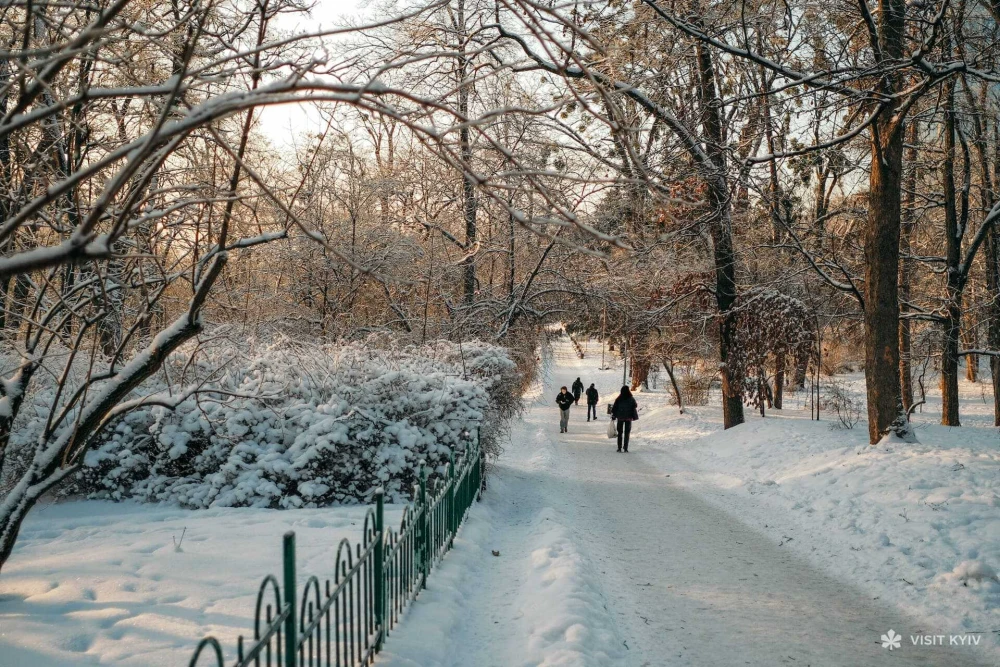
Winter in Kyiv
What Weather to Expect
If you want to see Kyiv covered in snow, keep in mind that winter weather here can change quickly. Freezing temperatures may give way to a thaw, while snow can turn into wet snow, rain, or slush. Conditions can change noticeably even over the course of a few days.
From December through February, average daytime highs range from −0.7 to 0.8 °C, while average lows range from −5.5 to −3.5 °C. January is the coldest month, with an average monthly temperature of −3.2 °C. During occasional cold spells, temperatures can drop much lower.
What to Pack
- a warm jacket or coat;
- warm waterproof shoes with non-slip soles;
- a hat, scarf, and gloves;
- a sweater or fleece for layering;
- thermal underwear if very cold weather is forecast or you plan to spend a lot of time outdoors.
What to Know
It gets dark early in Kyiv in winter, so longer walks are best planned for the first half of the day.
Alternating freezes and thaws can make sidewalks slippery. Take extra care on cobblestones, stairs, and slopes.
Try not to plan your entire day outdoors. A museum, exhibition, or another indoor venue is a useful backup if the weather changes.
Things to Do in Kyiv
On a cold or wet day, choose one or two museums in Kyiv or book tickets in advance for a theater or opera.
If the weather is dry and sunny, you can combine a cultural outing with a short walk through the city center.



Spring in Kyiv
What Weather to Expect
Spring weather in Kyiv changes considerably from month to month. Snow is still possible in March, while May can already feel almost like summer.
In March, the average daytime high is 5 °C and the average low is −1.5 °C, so frost and even snow are still possible.
April is considerably warmer, with an average high of 15.1 °C during the day and around 5.7 °C at night. May, with an average daytime high of 21.1 °C, is one of the most comfortable months for long walks.
If you are visiting for spring blooms — magnolias, lilacs, cherry blossoms, or chestnut trees — late April and May are usually the best time to come. Exact blooming dates vary from year to year and depend on the weather.
What to Pack
- in March, a warm jacket, sweater, and closed waterproof shoes;
- in April and May, a light jacket or raincoat and clothes that are easy to layer;
- a compact umbrella or lightweight rain jacket;
- an extra warm layer for mornings and evenings, even when sunny weather is forecast.
What to Know
Don’t look only at the daytime high in the forecast. If temperatures are expected to reach 18 °C during the day, it may still be much cooler at 8 a.m.
If you are coming to see a particular plant in bloom, check the latest updates from the botanical garden before visiting. Before a long walk through Kyiv’s parks, check the forecast for rain and wind as well as temperature.
Things to Do in Kyiv
For an introduction to the city in spring, start with our Kyiv spring guide.
During blooming season, check what is currently flowering at the Hryshko Botanical Garden.
If you would rather explore several green spaces, browse Kyiv’s parks, squares, and botanical gardens.


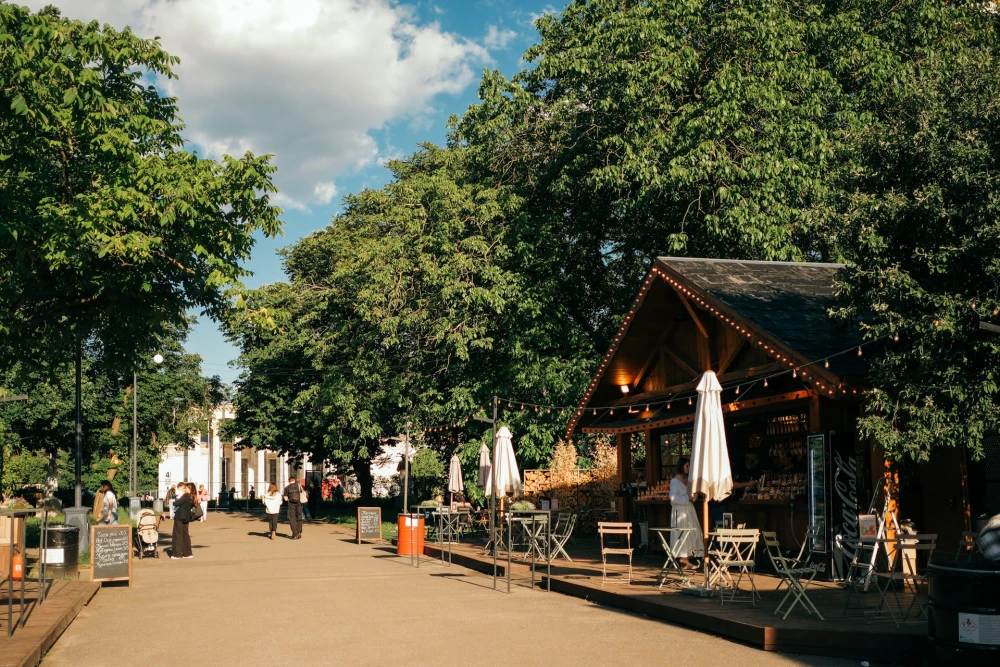
Summer in Kyiv
What Weather to Expect
Summer is a good time to enjoy the Dnipro River, beaches, outdoor terraces, concerts, and other open-air events. On hot days, the city center is more comfortable to explore in the morning or evening.
From June through August, average daytime highs range from around 24.6 to 26.6 °C, while average lows range from 14.8 to 16.6 °C.
July is the warmest month, with an average monthly temperature of 21.3 °C. The average daytime high reaches 26.6 °C, while temperatures can exceed 30 °C during heat waves.
What to Pack
- lightweight, breathable clothing;
- comfortable shoes for long walks;
- a hat, sunglasses, and sunscreen;
- a water bottle;
- a lightweight rain jacket or compact umbrella;
- a swimsuit if you plan to visit a beach or pool or spend time by the water.
What to Know
On hot days, plan longer walks for the morning or evening. Around midday, take a break for lunch, visit a museum, or spend some time in the shade.
Kyiv has plenty of hills, stairs, and open spaces, so comfortable shoes and water are particularly important on longer walks.
If you plan to swim, check the current status of the beaches and updates from city authorities before you go. Access conditions can change after severe weather.
Things to Do in Kyiv
Browse our summer guide to Kyiv for outdoor places and seasonal activities.
You can also dedicate a day to the Dnipro River, Kyiv’s islands, and beaches.
On a hot day, avoid combining the riverfront, city center, and more distant parks in one walking route — the distances between them are considerable.

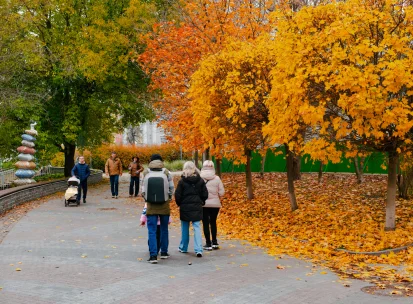
Fall in Kyiv
What Weather to Expect
September and November in Kyiv can feel like two very different seasons.
In September, the average daytime high is 20 °C and the average low is 10.6 °C. The summer heat has usually passed, making early fall a comfortable time for long walks around the city.
In October, average temperatures fall to 12.9 °C during the day and 5.1 °C at night.
By November, the average daytime high is around 5.3 °C and the average low around 0.3 °C. Frost and wet snow are possible, and the weather can already feel more like early winter.
What to Pack
- clothes that are easy to layer;
- a waterproof jacket or raincoat;
- closed, water-resistant shoes;
- an umbrella or lightweight rain jacket;
- in November, a scarf, hat, and gloves if colder weather is forecast.
What to Know
What you need to pack for September can be very different from what you need in November: the average daytime high in November is almost 15 °C lower.
After rain, cobblestones, stairs, and fallen leaves can become slippery, so comfortable footwear is particularly important for longer walks.
Things to Do in Kyiv
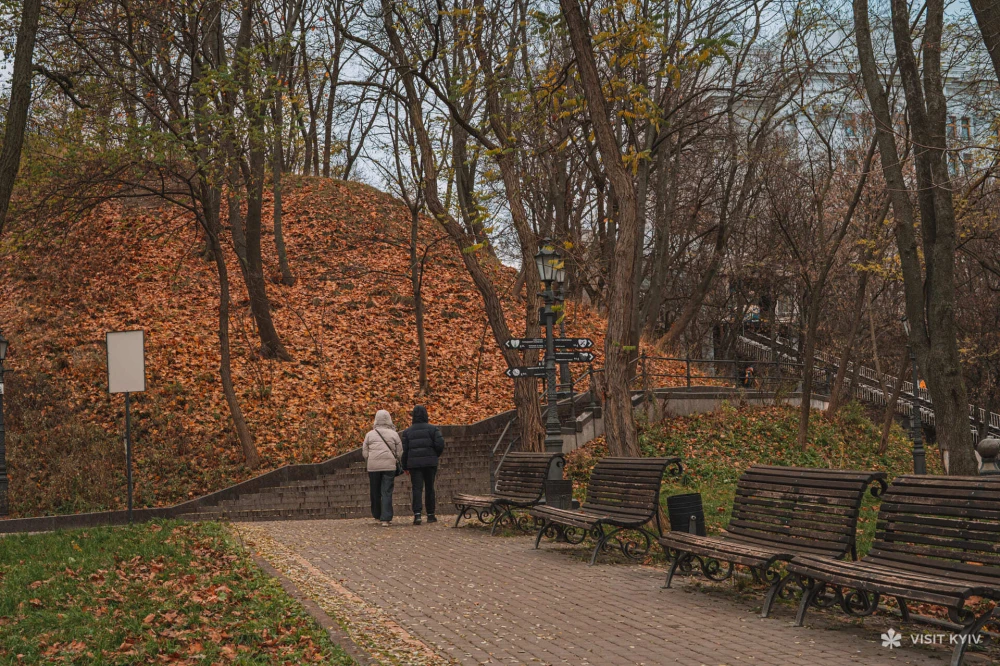
On a dry day, follow our Old Kyiv walking route or visit one of Kyiv’s panoramic viewpoints.
Before heading to a viewpoint, check the cloud cover and visibility. On days with heavy rain or low clouds, a museum, exhibition, or theater may be a better choice.


What to Know About the Weather in Kyiv
The month matters more than the season. March is much colder than May, while September is considerably warmer than November. If you are planning a spring or fall trip, look at the specific month and dates rather than the season alone.
Climate normals are not forecasts. Average temperatures give you a general idea of what to expect, but actual conditions can be quite different. Check the latest forecast a few days before your trip before deciding what to pack.
Weather can affect walking routes. Central Kyiv has plenty of hills, stairs, and cobblestones. After rain or snow, or when conditions are icy, allow extra time and consider shortening your route if necessary.
FAQ

If you want to spend plenty of time exploring the city on foot, May and September are usually the most comfortable months. Average daytime highs are around 20 °C.
For the Dnipro River, beaches, and open-air events, summer is the better choice. If museums, theaters, and exhibitions are your priority, Kyiv can be visited at almost any time of year.
According to the climate normals, July is the warmest month. The average monthly temperature is 21.3 °C, while the average daytime high is 26.6 °C.
January is the coldest month, with an average monthly temperature of −3.2 °C. The average daytime high is −0.7 °C, while the average low is −5.5 °C.
Snow is a normal part of winter in Kyiv, but the amount of snow and how long it stays on the ground vary from year to year.
Thaws can quickly turn snow into slush, rain, or sleet, so don’t count on continuous snow cover throughout your trip.
Bring a warm jacket or coat, waterproof shoes with non-slip soles, a hat, gloves, a scarf, and clothes you can layer.
Thermal underwear is useful if very cold weather is forecast or you expect to spend a lot of time outdoors.
It can get quite hot. Average daytime highs from June through August range from around 24.6 to 26.6 °C, while temperatures can exceed 30 °C during heat waves. Bring water, a hat, and sunscreen on hot summer days.


