


10 historical landmarks in Kyiv: what to see and why they matter
10 historic landmarks in Kyiv and ready-made walking routes.

You don’t need to spend a day in a history museum to see how Kyiv has changed over the centuries. The Golden Gate and St. Sophia’s Cathedral take you back to the age of Kyivan Rus, St. Andrew’s Church represents the Baroque Kyiv of the 18th century, and the House with Chimaeras offers a glimpse of the city at the beginning of the 20th century.
Kyiv itself is more than 1,500 years old. Its oldest surviving architectural landmarks are considerably younger, but together they let you trace almost a thousand years of the city’s history.
And historical places in Kyiv aren’t confined to a single “Old Town.” On one walk through the city center, you can go from the Golden Gate to St. Sophia’s Cathedral, St. Michael’s Golden-Domed Monastery, and St. Andrew’s Church, then follow Andriivskyi Descent down to Podil.
We’ve picked 10 places to start with. If you’re looking for Kyiv historical landmarks, here’s why each one matters, what to look for when you get there, and how to combine them into a few easy walking routes.
What to know before you go
Most of the landmarks on this list are easy to include in a walk around the city. You can also visit the Golden Gate, St. Sophia’s Cathedral, St. Cyril’s Church, and St. Andrew’s Church as museum sites.
Because of martial law, opening hours and access can change at short notice. Museums may also close during air raid alerts, so check each site’s official website or social media before you go.
The war has affected Kyiv’s cultural heritage as well. In June 2025, a blast wave from a Russian attack damaged the eastern facade of St. Sophia’s Cathedral. On June 15, 2026, the Dormition Cathedral at the Kyiv Pechersk Lavra and other parts of the complex were also damaged.
1. Golden Gate
Era: 11th century
Why visit: to see the surviving remains of medieval Kyiv’s main gateway.
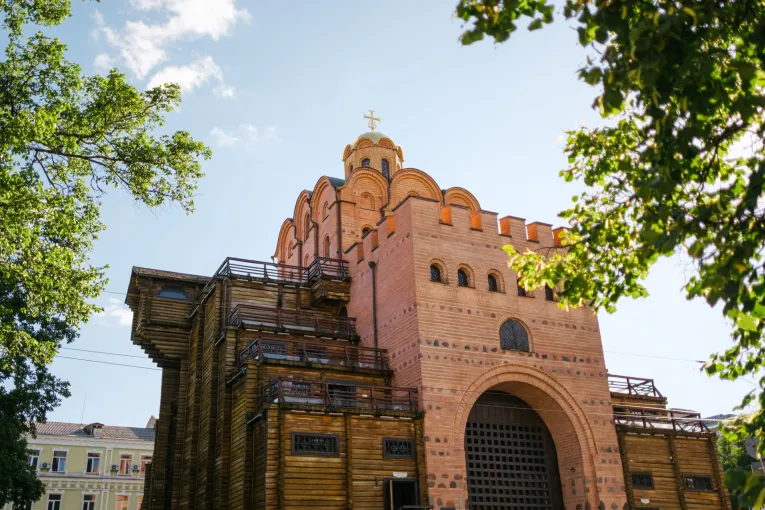
If you want to picture Kyiv during the age of Kyivan Rus, the Golden Gate is a good place to start.
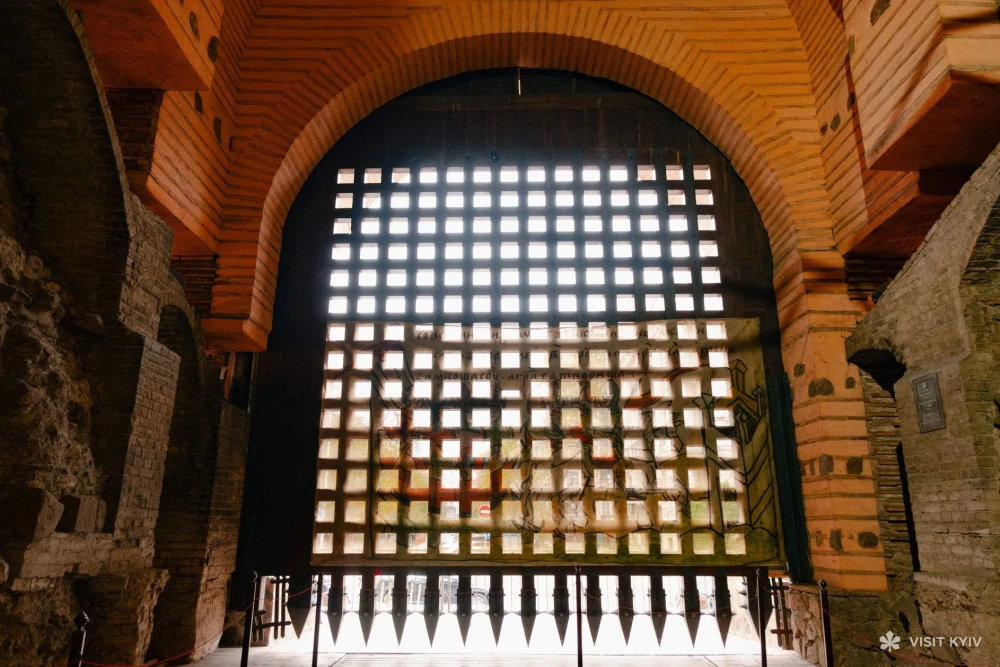
The main gateway into medieval Kyiv was built in the first half of the 11th century during the reign of Yaroslav the Wise. It formed part of the city’s defensive system while also serving as a ceremonial entrance. The Church of the Annunciation stood above the passage.
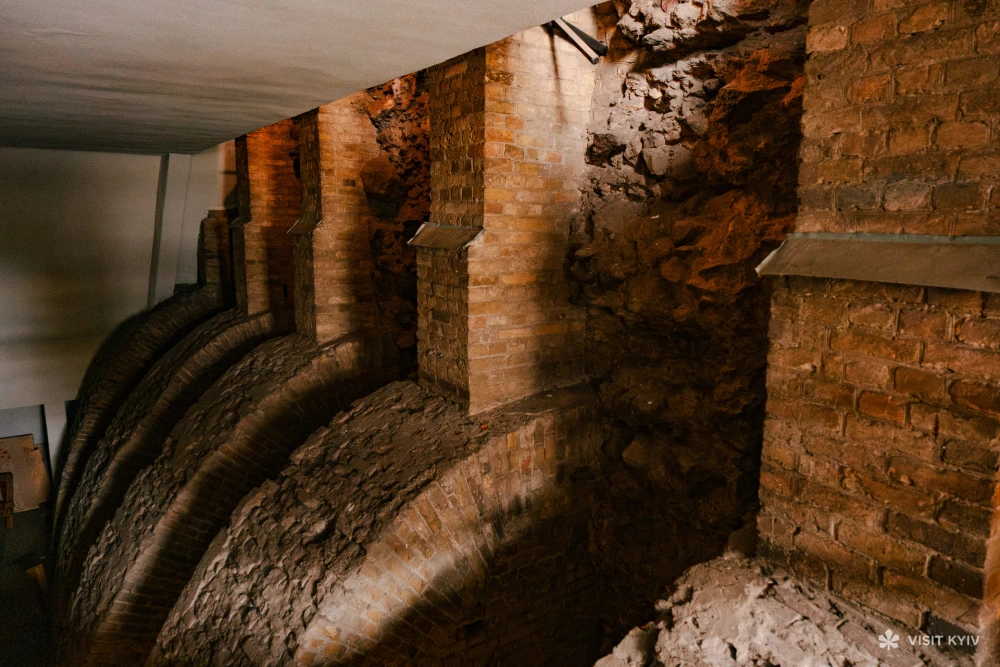
The structure you see today isn’t a fully preserved 11th-century gate. In 1982, a protective pavilion was built over the surviving ruins to recreate what the gate may have looked like in the Middle Ages.
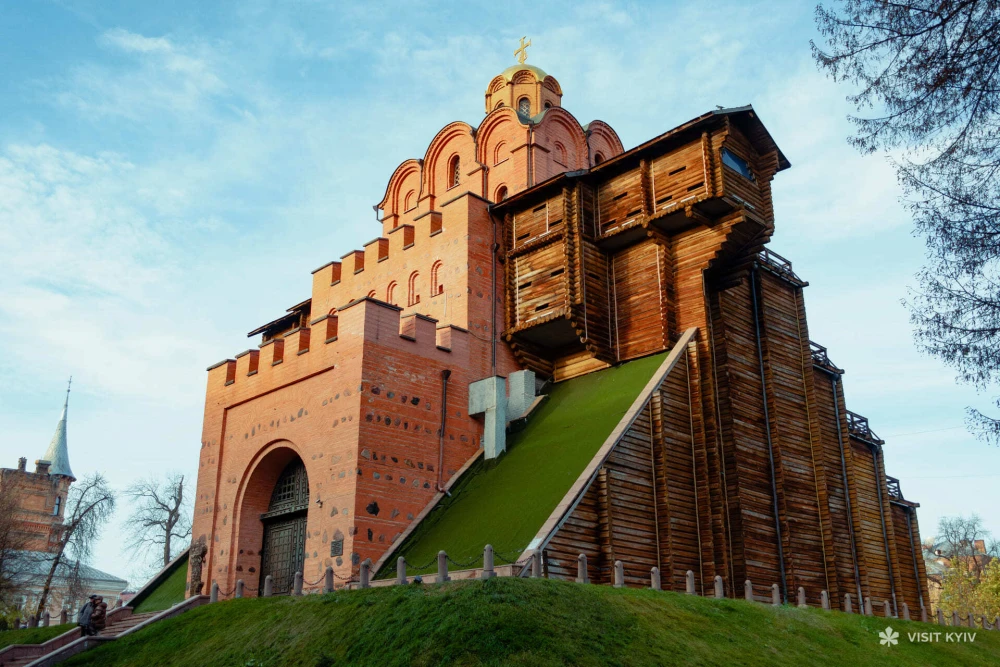
What to see: head inside the museum to see original sections of the 11th-century walls. The upper levels also offer views over the surrounding historic center.
From here, continue along Volodymyrska Street. St. Sophia’s Cathedral is about a 10-minute walk away. For a short detour, turn onto Reitarska Street.
2. St. Sophia’s Cathedral
Era: 11th century
Why visit: for original mosaics and frescoes dating back almost a thousand years.
St. Sophia’s Cathedral was much more than a church in medieval Kyiv. It was one of the political and cultural centers of Kyivan Rus, hosting major ceremonies and foreign envoys. The cathedral complex was also home to a library and scriptorium.
Step inside and you’ll find around 260 m² of original mosaics and 3,000 m² of frescoes. The best-known is the monumental Orans mosaic in the central apse.
The cathedral is surrounded by much later monastic buildings, most dating from the 18th century. It’s one of the places where you can see several layers of Kyiv’s architectural history within a single complex.
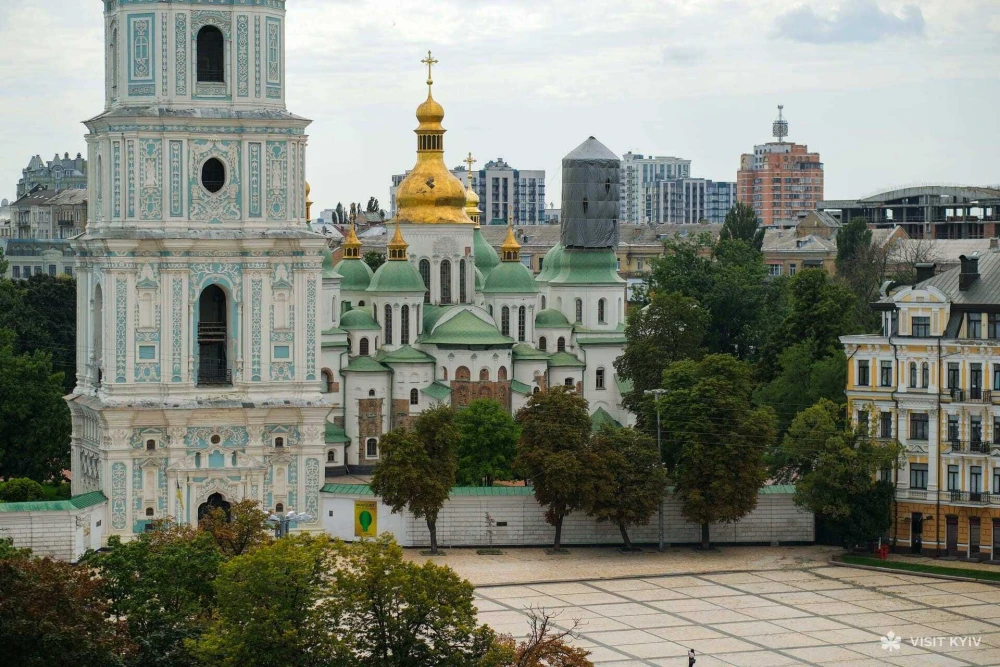
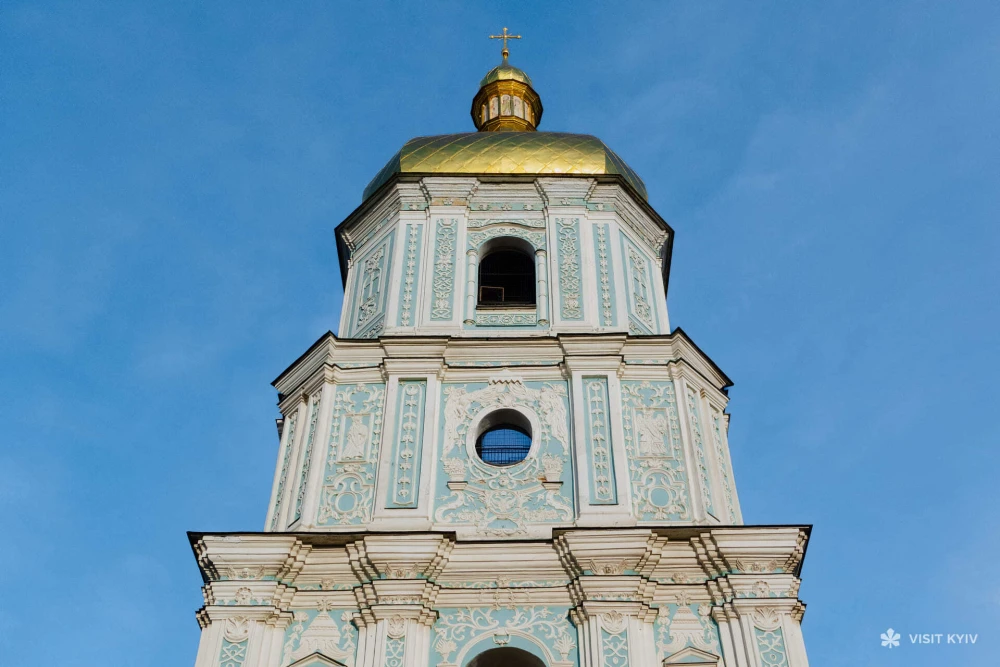
What to see: the Orans mosaic, 11th-century frescoes, medieval graffiti scratched into the walls and the sarcophagus traditionally associated with Yaroslav the Wise. If you have time, climb St. Sophia’s Bell Tower for views over the historic center.
St. Sophia’s Cathedral and the Kyiv Pechersk Lavra together form a UNESCO World Heritage Site.
From St. Sophia’s, cross Sofiiska Square and continue towards St. Michael’s Golden-Domed Monastery.
3. Kyiv Pechersk Lavra
Era: from the 11th century
Why visit: to explore a vast monastic complex shaped by almost a thousand years of history.
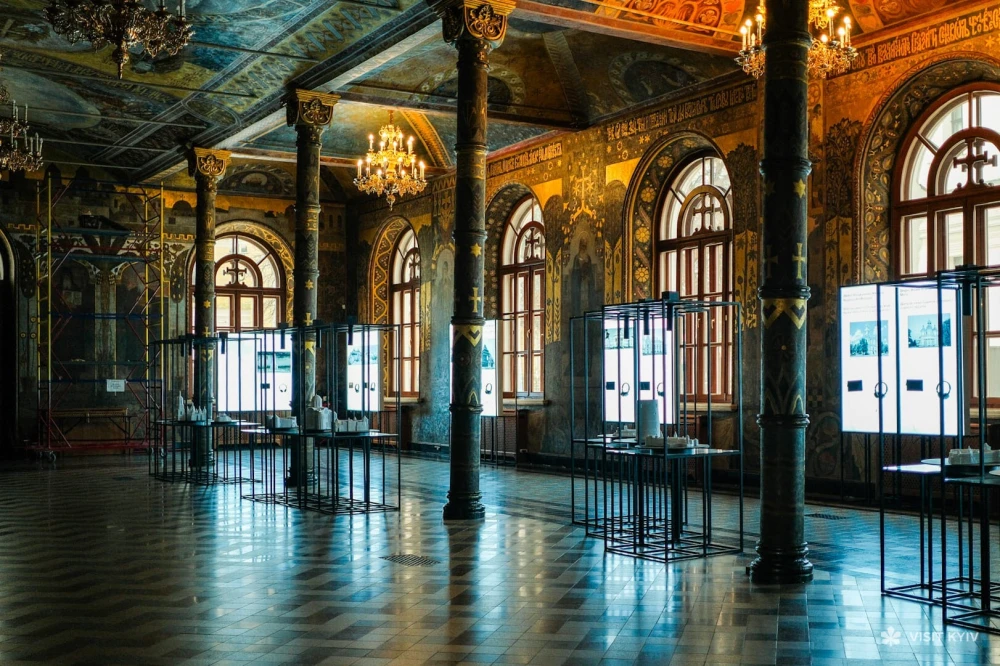
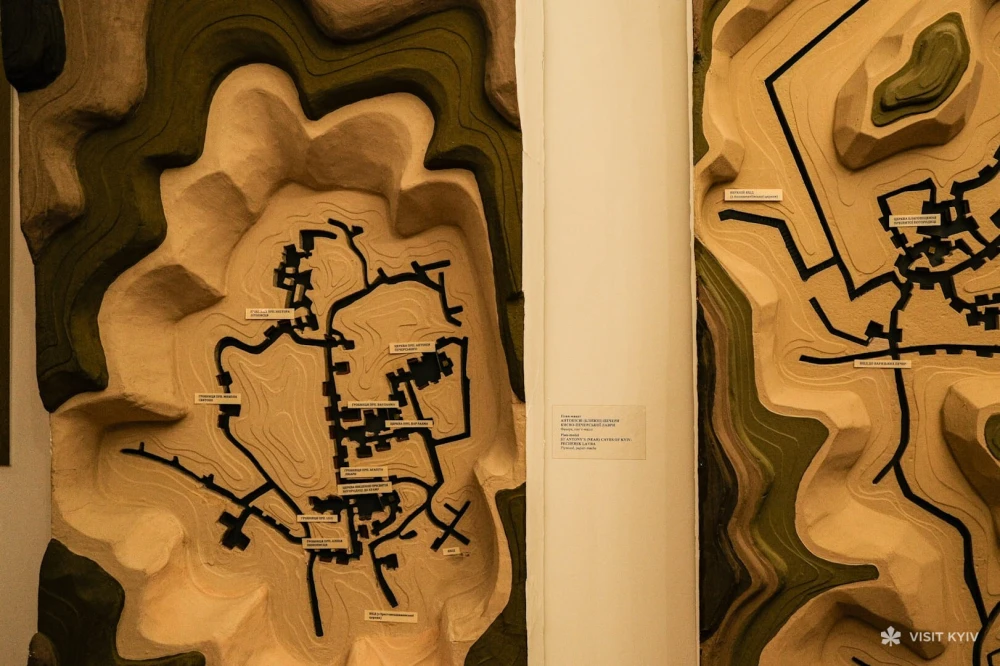
The Lavra’s story began not with golden domes, but in caves overlooking the Dnipro. The monastery traditionally dates its foundation to 1051, when the monk Anthony settled here.
Over the centuries, the Lavra grew into a major religious and cultural center. Chronicles were written here, icons were painted and books were printed.
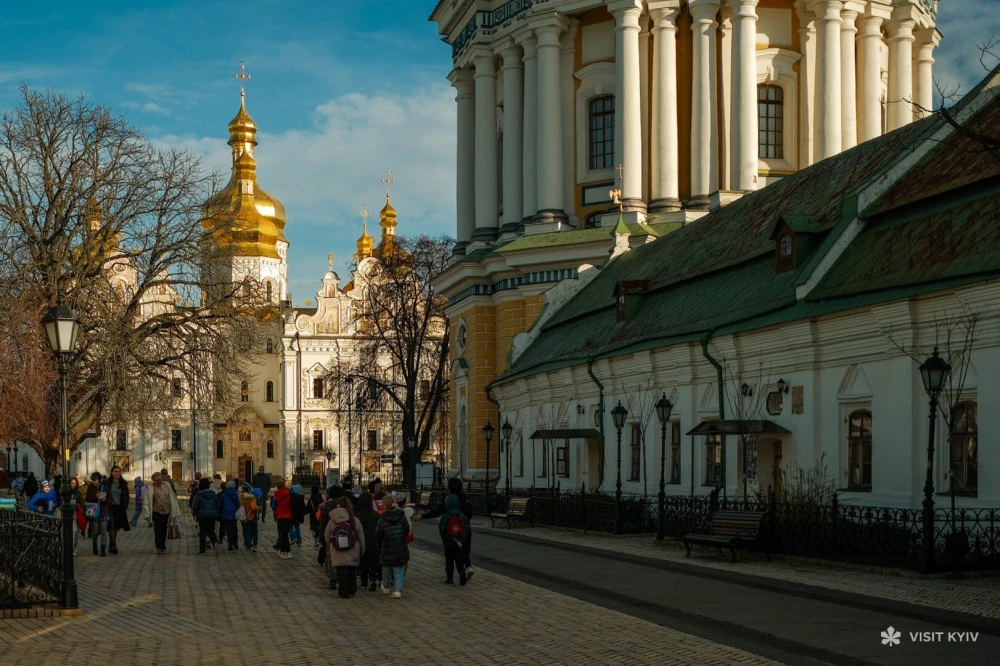
The complex developed over many centuries, so a visit today takes you through very different periods of Kyiv’s history. Ancient caves, Baroque churches, bell towers and later buildings all share the same grounds.
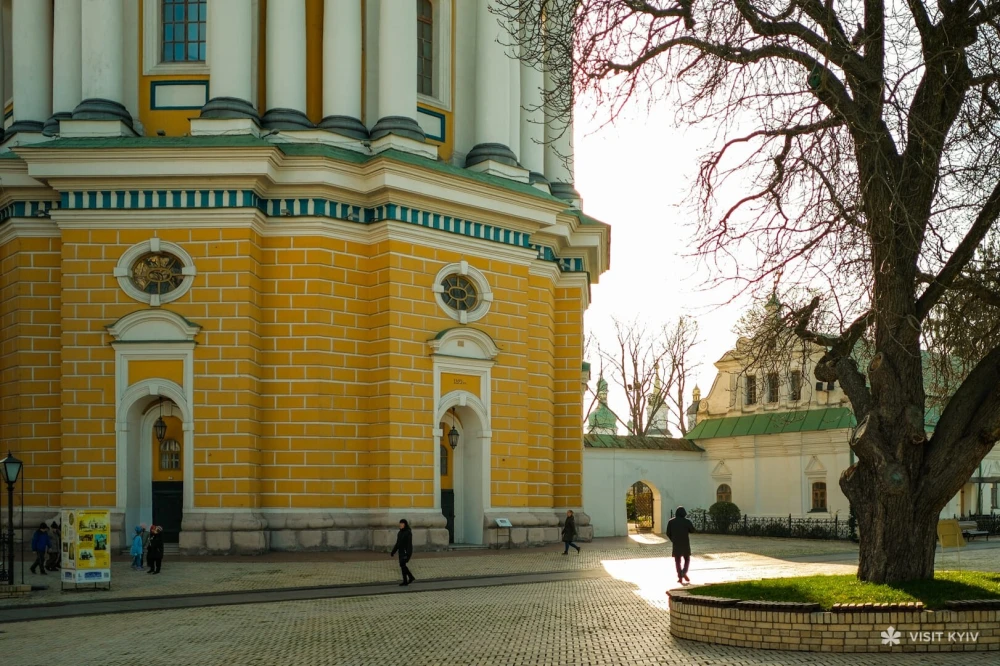
The Dormition Cathedral has a particularly complex history. The original church was founded in 1073, destroyed during World War II and reconstructed in Ukrainian Baroque forms in 1999–2000. In June 2026, the cathedral was damaged again during a Russian attack.
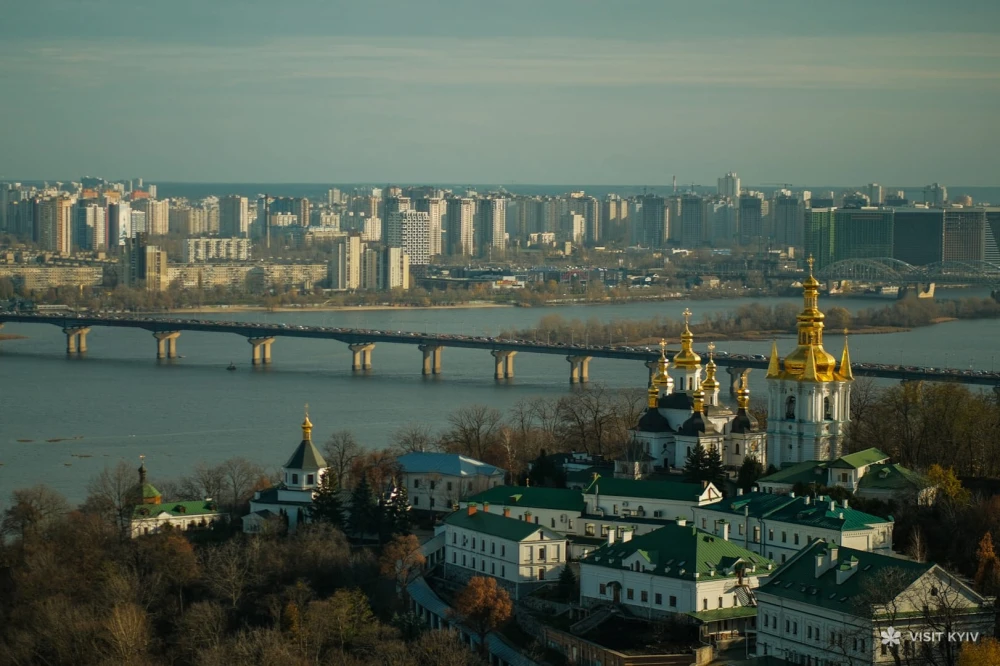
What to see: the caves, the Dormition Cathedral, the Great Lavra Bell Tower and the views over the Dnipro from the monastery grounds.
If you want to see more of Pechersk, follow the Visit Kyiv route Kyiv through history and memory. It continues through the neighborhood towards the War Museum and the Motherland Monument.
For lunch, head back towards Arsenalna metro station. Kyiv Food Market is nearby.
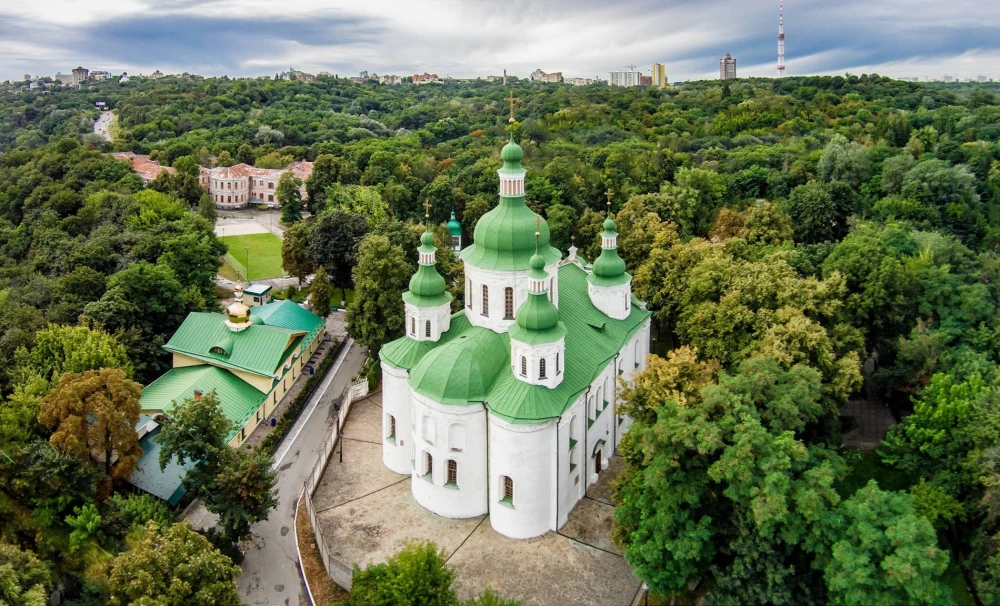
4. St. Cyril’s Church
Era: 12th century
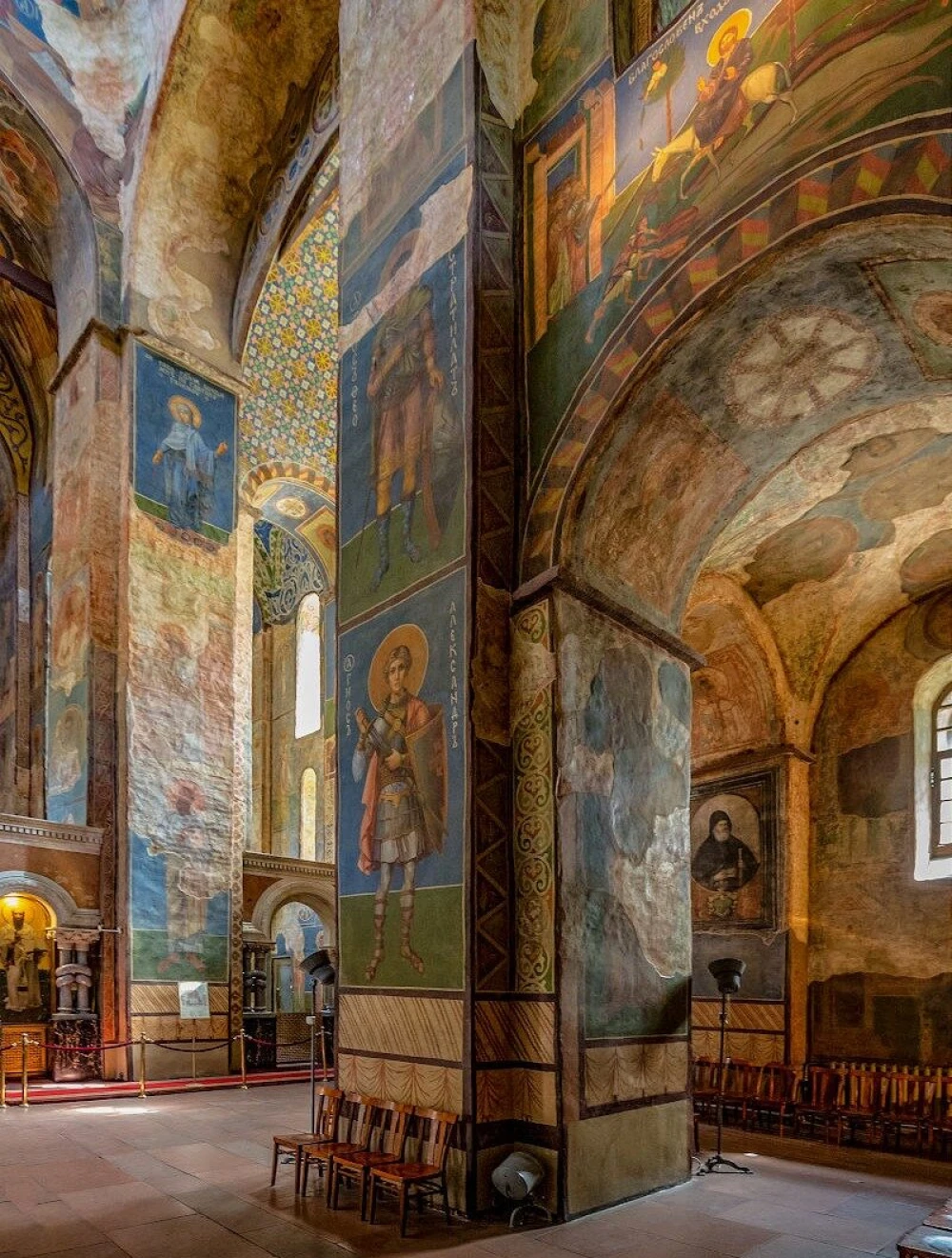
Why visit: for rare 12th-century frescoes in a medieval church away from Kyiv’s main tourist routes.
St. Cyril’s Church was founded in the 12th century during the reign of Prince Vsevolod Olhovych. It served both as a church and as a burial place for the princely family.
Its exterior now reflects later Ukrainian Baroque transformations, but inside, around 800 m² of 12th-century frescoes have survived.
Major restoration work was carried out in the 19th century under the direction of Adrian Prakhov. Among the artists who worked here was Mykhailo Vrubel.
What to see: the 12th-century frescoes, ancient graffiti and 19th-century paintings. Few places in Kyiv bring together such different periods of the city’s artistic history within a single building.
St. Cyril’s Church is outside the historic center, so it’s better planned as a separate trip rather than squeezed into your Golden Gate–St. Sophia’s walk.
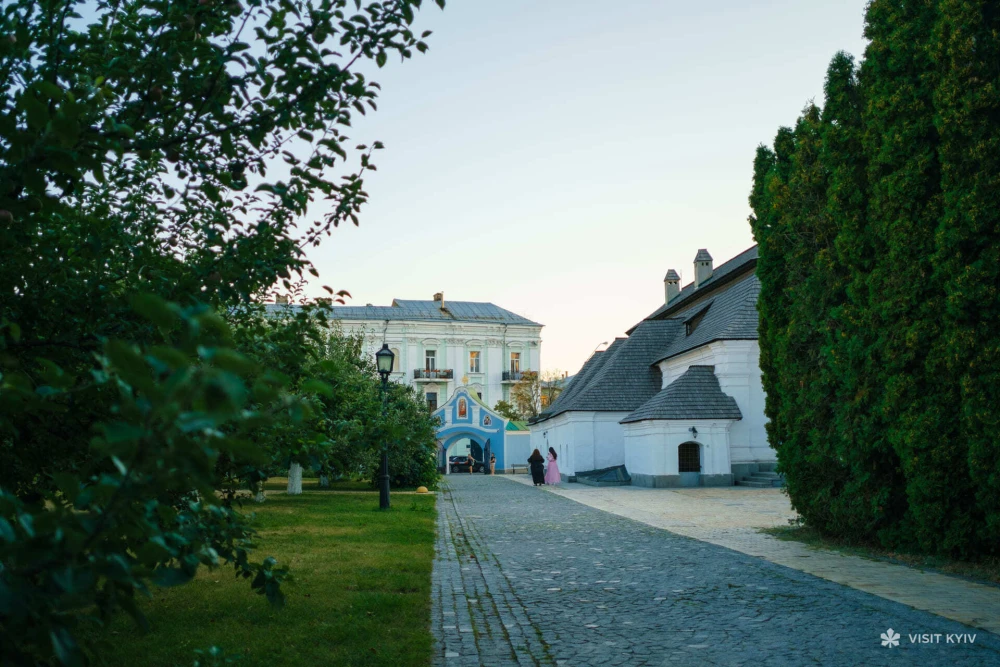
5. St. Michael’s Golden-Domed Monastery
Era: 12th century; rebuilt in the late 20th century
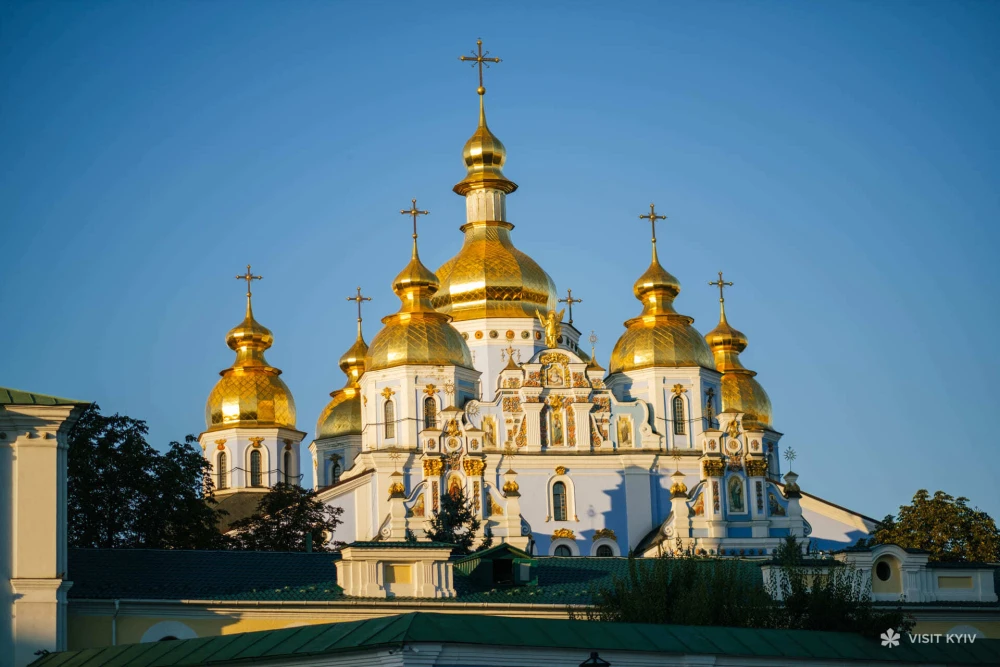
Why visit: for a place whose history spans Kyivan Rus, Soviet destruction and Ukraine’s Independence.
The first stone cathedral on this site was founded in 1108 during the reign of Prince Sviatopolk-Michael Iziaslavych. The monastery was expanded and rebuilt over the centuries, eventually taking on many of the Ukrainian Baroque features associated with it today.
In the 1930s, Soviet authorities demolished the historic cathedral. Some of its 12th-century mosaics and frescoes were removed and saved before the building was destroyed.
After Ukraine regained independence, the monastery was rebuilt, with the cathedral and bell tower reconstructed in the late 1990s.
What to see: walk through the monastery grounds and Mykhailivska Square. Original mosaics and frescoes rescued from the demolished cathedral can be seen at St. Sophia’s Cathedral.
From here, St. Andrew’s Church is about a 10–15-minute walk away.
6. St. Andrew’s Church
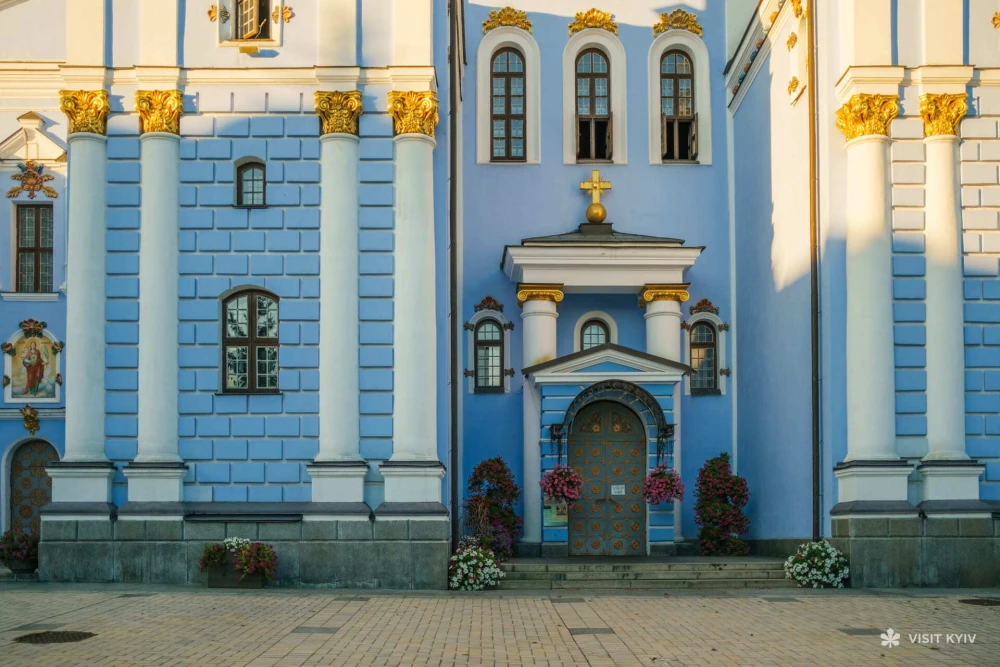
Era: 18th century
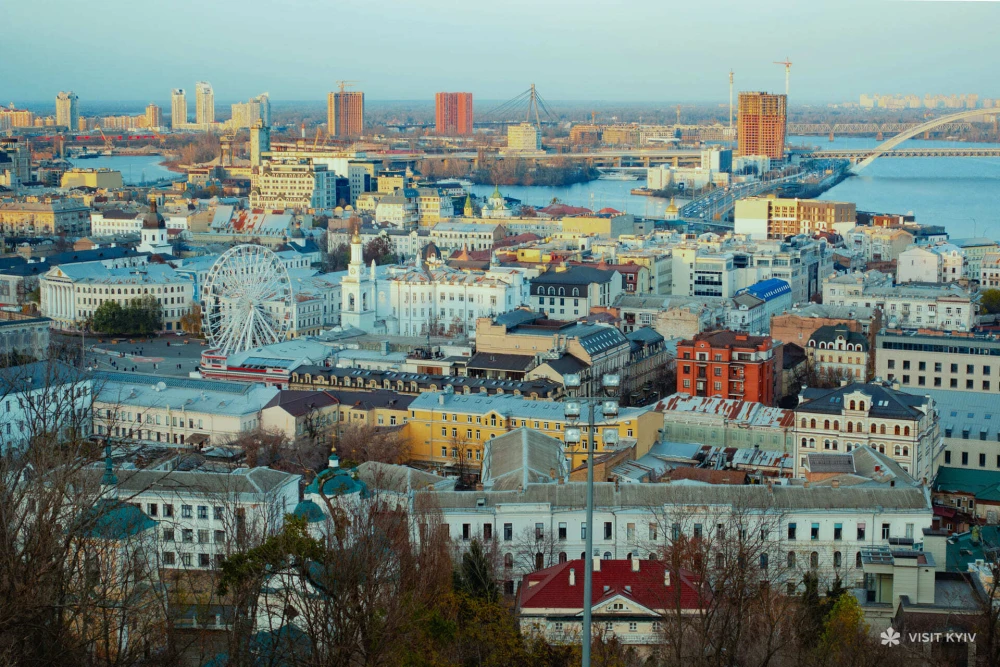
Why visit: for its Baroque interior and views over Podil.
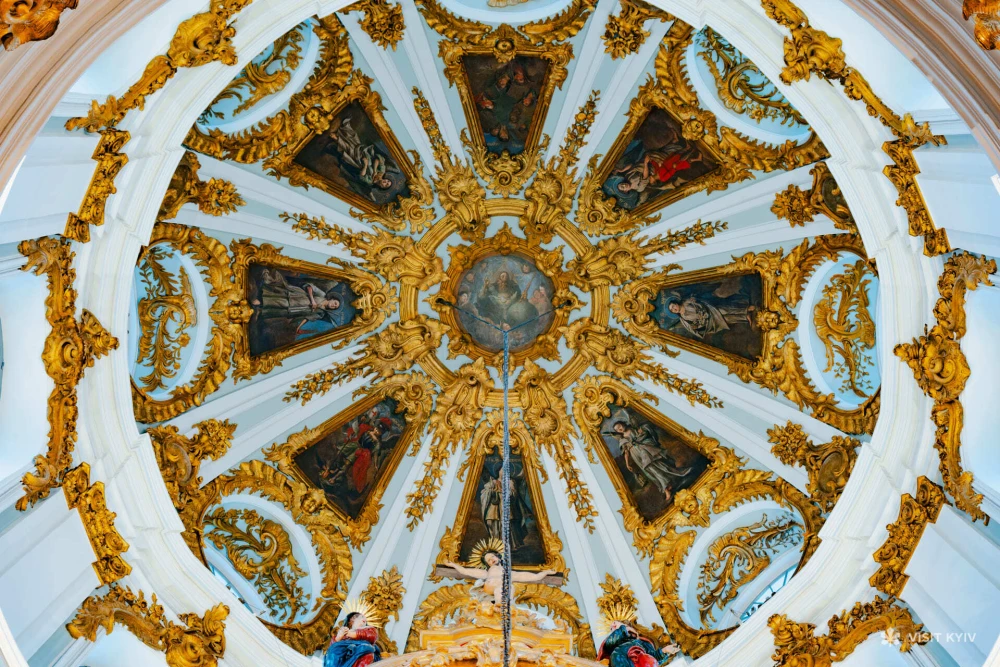
After St. Sophia’s and St. Michael’s, St. Andrew’s Church takes you into a very different period of Kyiv’s history: the Baroque city of the 18th century.
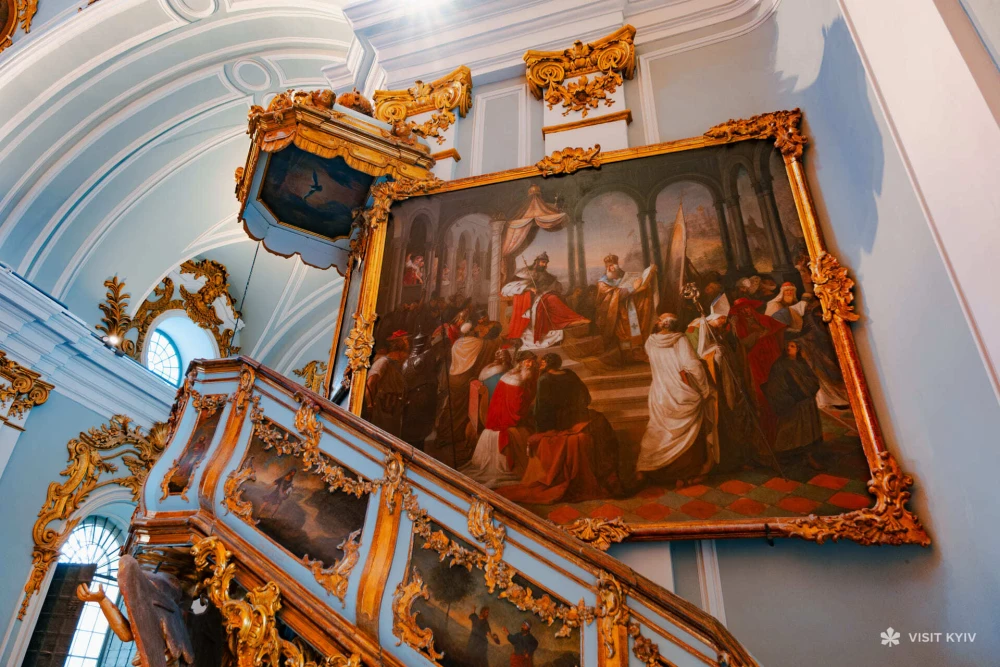
The church was built to a design by Bartolomeo Rastrelli, who also designed the Mariinsky Palace. Inside, look for the elaborate iconostasis, paintings and decorative details dating from the 18th century.
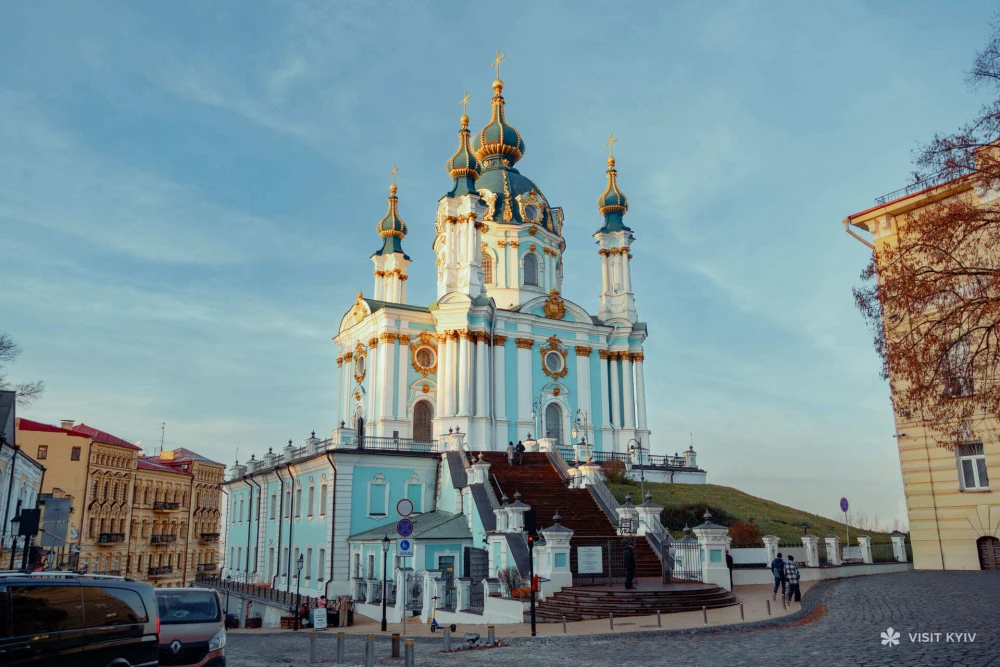
What to see: the church interior and the panoramic views over Podil from the hill.
Afterwards, don’t retrace your steps. Follow Andriivskyi Descent downhill towards Podil. Along the way, you’ll pass historic buildings, museums and galleries before reaching one of Kyiv’s oldest neighborhoods.
Переглянути цей допис в Instagram
7. Mariinsky Palace
Era: 18th century
Why visit: for Baroque architecture and a walk through Mariinsky Park.
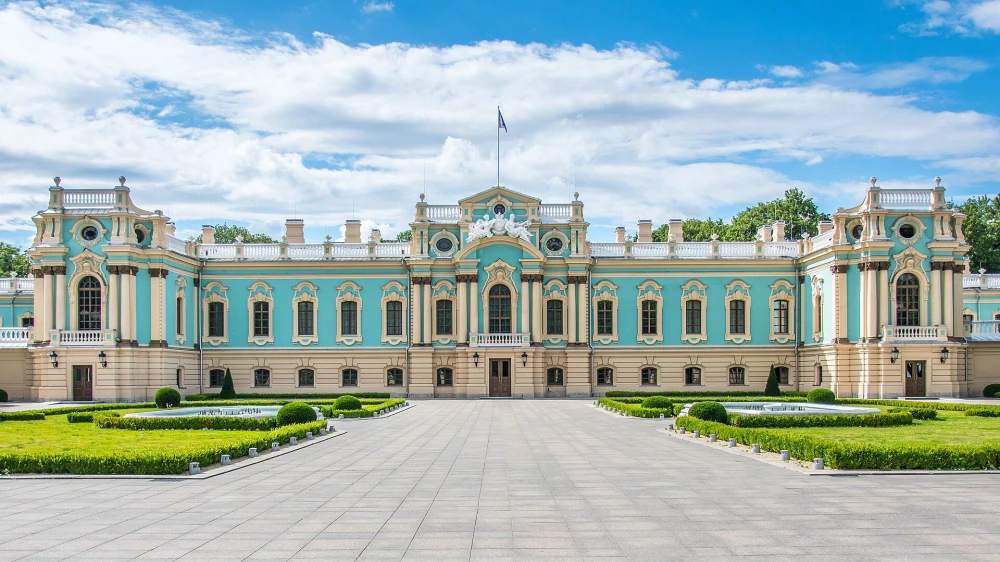
The decision to build a royal palace in Kyiv was made in 1744 during the reign of Empress Elizabeth. The project was developed under the direction of Bartolomeo Rastrelli.
Over nearly three centuries, the palace has survived fires, revolutions, World War II and several major restorations.
Since Ukraine regained independence, it has served as the official ceremonial residence of the President of Ukraine and is used for state receptions and meetings with foreign delegations.
What to see: the palace exterior and Mariinsky Park. From here, you can continue along Kyiv’s hills for views towards the Dnipro.
Access: the palace has an official government function, and Ukraine remains under martial law, so access to the building and nearby areas may be restricted. Check current conditions before making a special trip.

8. St. Volodymyr’s Cathedral
Era: 19th century
Why visit: for monumental murals and Neo-Byzantine architecture.
St. Volodymyr’s Cathedral was built between 1862 and 1886, with its interior decoration completed in 1896.
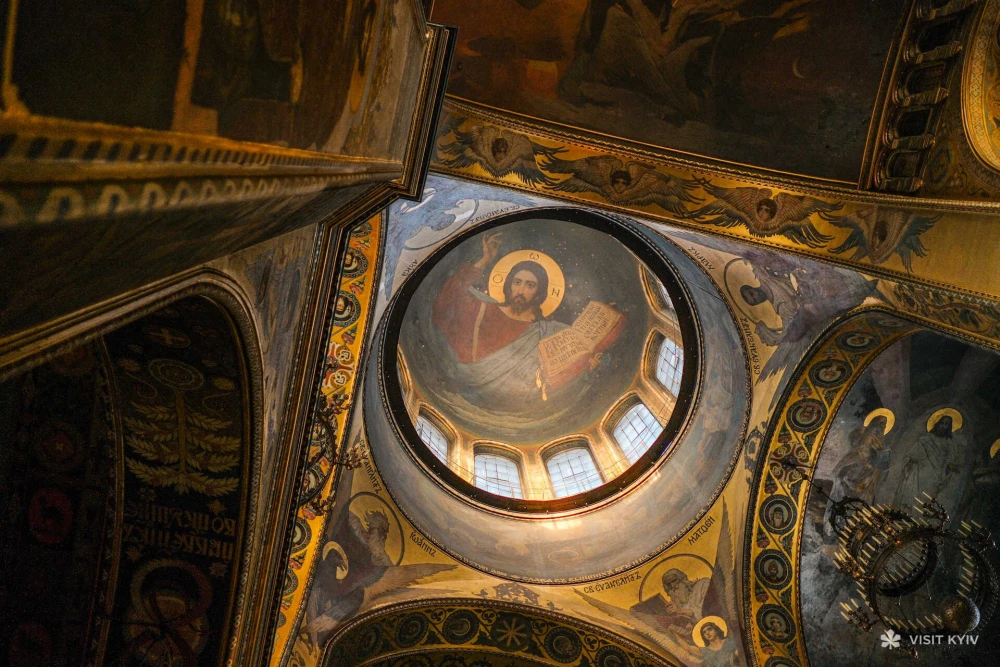
Its architecture is predominantly Neo-Byzantine. A large group of artists led by Adrian Prakhov worked on the interior paintings.
The cathedral is dedicated to Volodymyr the Great, the ruler under whom Kyivan Rus adopted Christianity in the late 10th century. So while the building itself dates from the 19th century, its story points back to a much earlier chapter in Kyiv’s history.
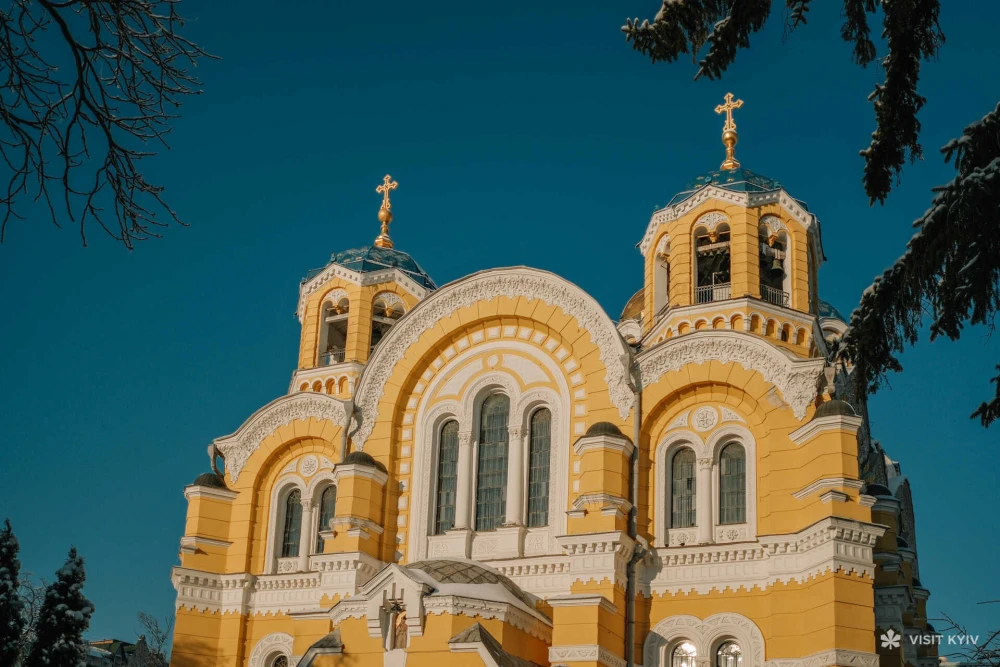
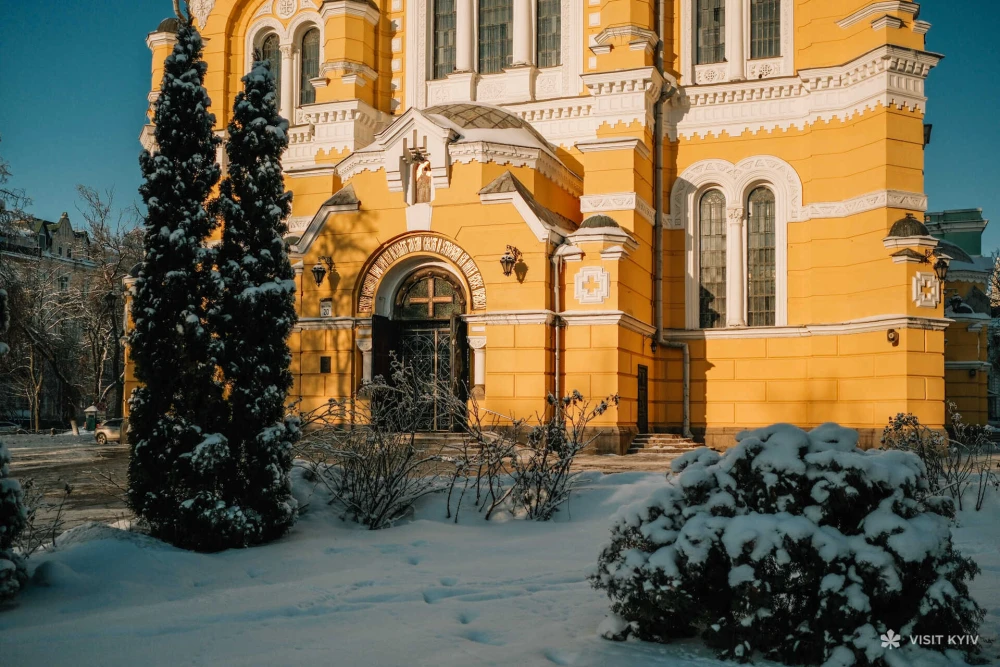
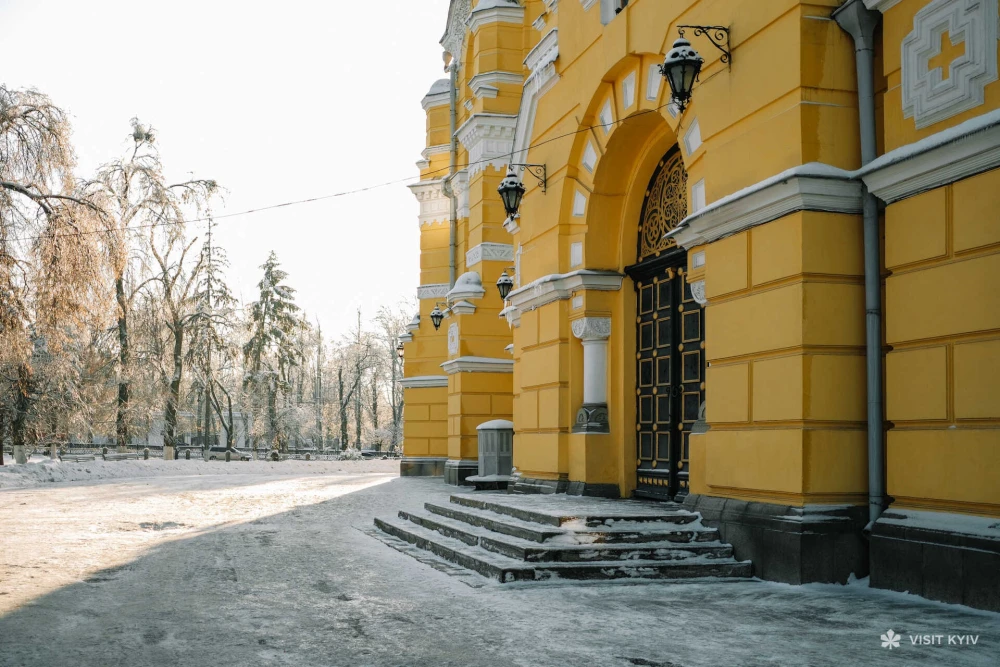
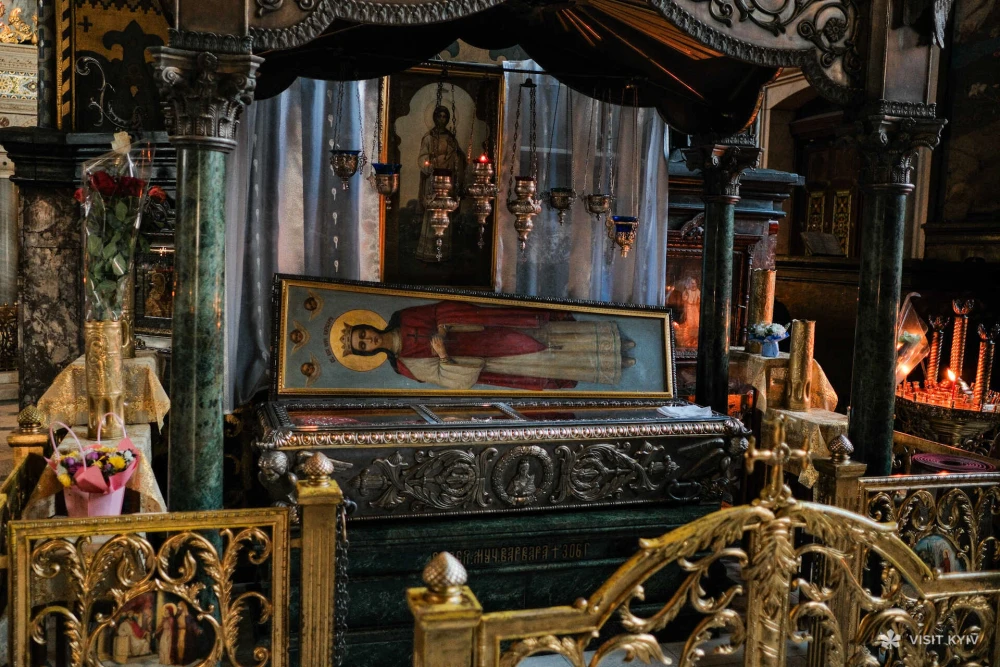
What to see: start with the interior and its monumental paintings. This is an active Orthodox cathedral, so keep in mind that you’re visiting a place of worship, not just a tourist attraction.
The cathedral is easy to include in a walk through central Kyiv. The Fomin Botanical Garden, the red building of Taras Shevchenko National University and Taras Shevchenko Boulevard are all nearby.
9. National Opera of Ukraine
Era: early 20th century
Why visit: to pair a day of sightseeing with an evening at the opera or ballet.
Kyiv’s permanent opera company was established in 1867, but the theater building it originally used burned down in 1896.
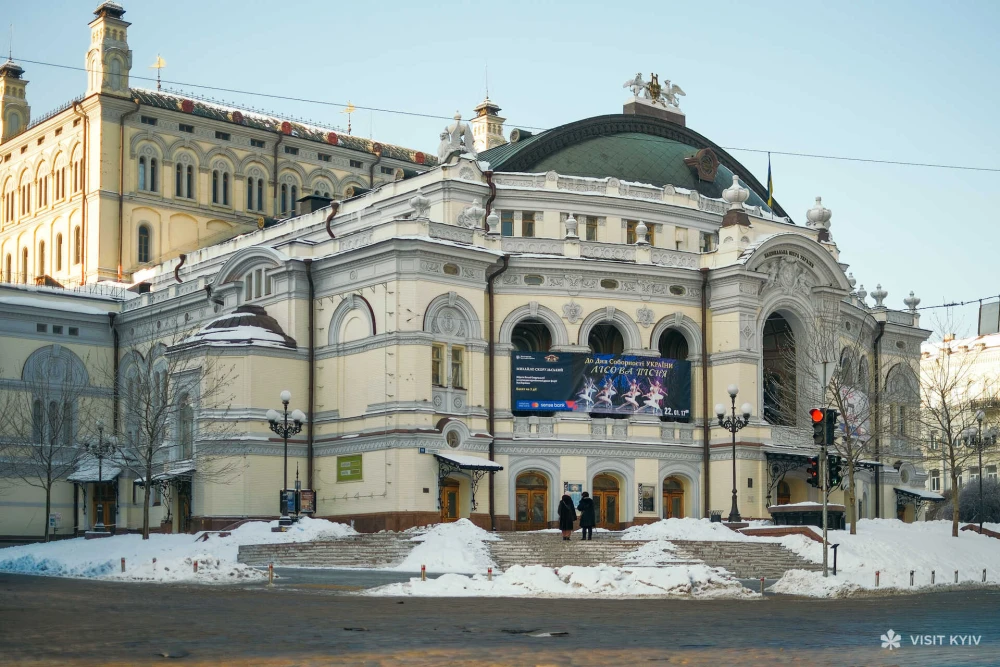
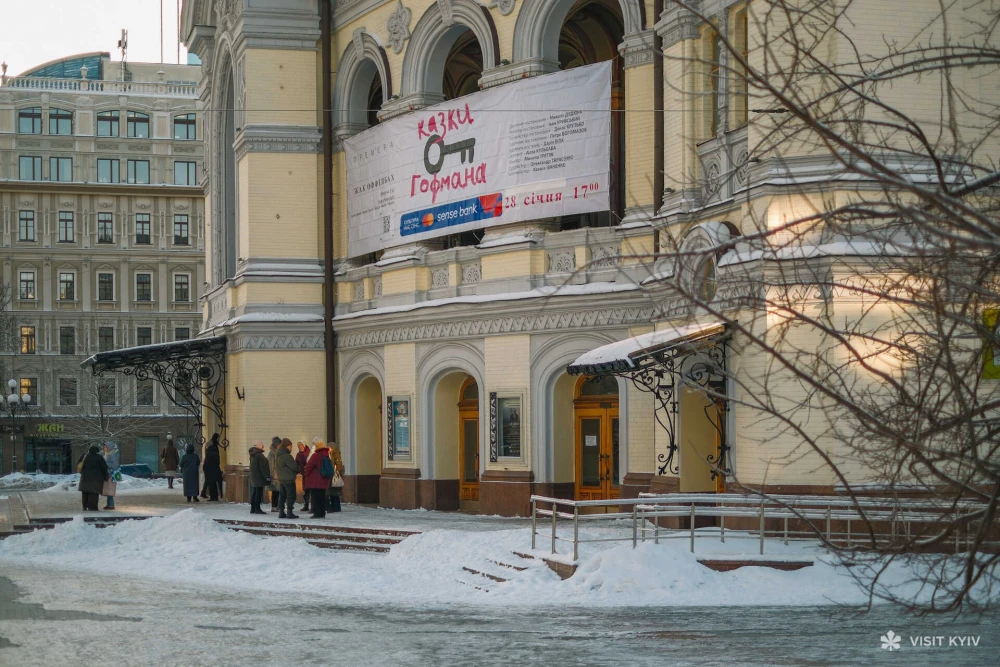
The current building, designed by architect Viktor Schröter, opened in 1901. Built in the Neo-Renaissance style, it became one of Kyiv’s landmark public buildings of the early 20th century.
What to see: the facade is worth a look, but the best way to experience the National Opera is to book a performance. You’ll get to see the historic interior and finish your day with a ballet or opera rather than another stop on a sightseeing checklist.
The Opera is about a 10-minute walk from the Golden Gate. One easy plan is to explore the historic center during the day, stop for dinner, then come back for an evening performance.

10. House with Chimaeras
Era: 1901–1903
Why visit: to see one of Kyiv’s most distinctive Art Nouveau buildings.
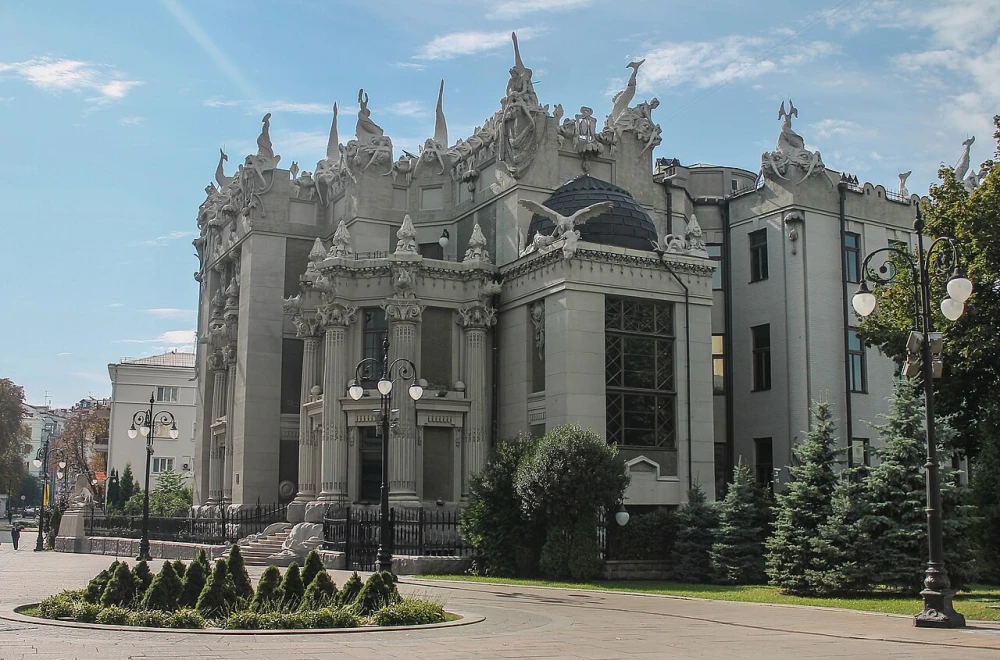
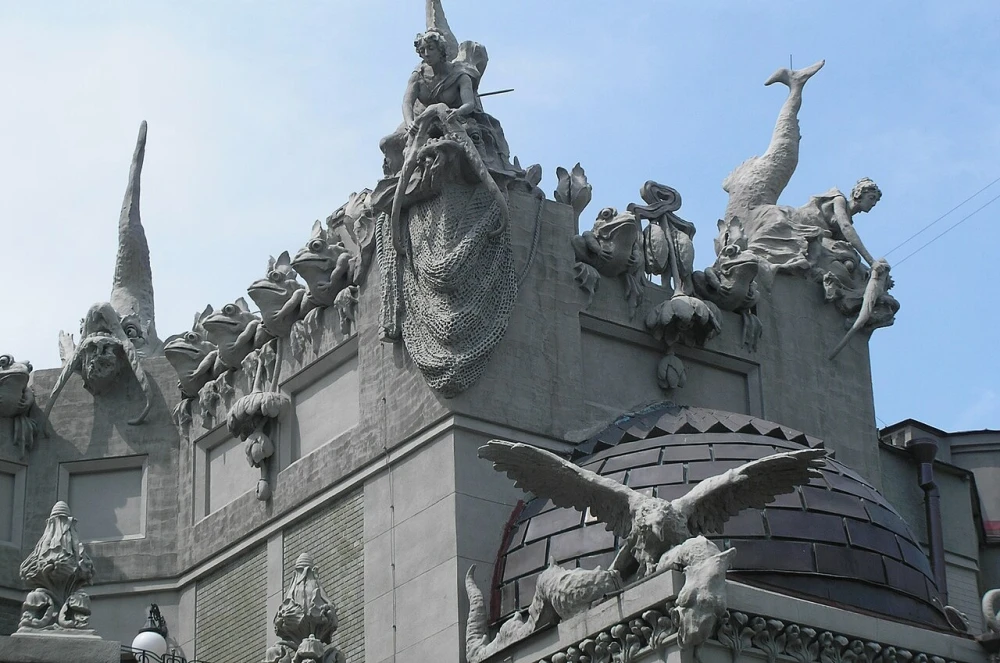
Architect Vladyslav Horodetsky designed the House with Chimaeras as an apartment building that also included his own residence. Its unusual sculptural decoration was created by Italian sculptor Elio Sala.
Because the house stands on a steep slope, it has three floors on one side and six on the other. Its facades are covered with concrete sculptures of animals, sea creatures and fantastical figures.
The building has inspired plenty of urban legends. The best-known claim is that Horodetsky built it in memory of his daughter, who had drowned. Historical evidence doesn’t support the story.
What to see: if access permits, try to view the building from more than one side. The steep terrain means its facades look surprisingly different depending on where you stand.
Access: The building is used for official government events. Because it stands on Bankova Street in the government quarter, access may be restricted during martial law. Don’t treat the House with Chimaeras as a guaranteed stop when planning your day.
Which historic Kyiv route should you choose?
If you’re planning to explore Kyiv historical places, don’t try to fit every stop into a single day. Several are close enough to combine into one walk, while others are better visited separately.
If you have 2–3 hours
Golden Gate → St. Sophia’s Cathedral → St. Michael’s Golden-Domed Monastery → St. Andrew’s Church → Andriivskyi Descent
This is a good introduction to historic Kyiv. You’ll start with landmarks connected to Kyivan Rus, move through Baroque Kyiv and finish by walking down to Podil.
For a slower version with more architecture along the way, follow the Visit Kyiv route and leisurely walk through old Kyiv.
If you have half a day
Follow the same route, but make time to go inside rather than simply walking past the landmarks. Visit the Golden Gate Museum and St. Sophia’s Cathedral, stop at the viewpoints, then continue to St. Andrew’s Church and down to Podil.
For coffee near the beginning of the route, make a short detour to Kashtan on Reitarska Street. Save lunch for Podil at the end of the walk.
If you’re interested in Kyivan Rus
Focus on the Golden Gate, St. Sophia’s Cathedral, Kyiv Pechersk Lavra and St. Cyril’s Church.
Don’t try to turn all four into one walking route. The Lavra and St. Cyril’s Church are away from the main Old Kyiv cluster, and the Lavra alone deserves at least a few hours.
If you’re interested in 18th–20th-century architecture
St. Andrew’s Church → Mariinsky Palace → House with Chimaeras → St. Volodymyr’s Cathedral → National Opera
This route largely skips medieval Kyiv. Instead, it takes you from 18th-century Baroque through 19th-century architecture to Kyiv Art Nouveau. If the schedule works, finish with an evening performance at the National Opera.
FAQ

Start with the Golden Gate, St. Sophia’s Cathedral, St. Michael’s Golden-Domed Monastery and St. Andrew’s Church. They’re all relatively close together and fit naturally into one walking route through the historic center.
Among the oldest surviving landmarks are the Golden Gate and St. Sophia’s Cathedral from the 11th century, the Kyiv Pechersk Lavra, founded in the 11th century, and St. Cyril’s Church from the 12th century.
The UNESCO World Heritage property includes St. Sophia’s Cathedral and its related monastic buildings, together with the Kyiv Pechersk Lavra. Since 2023, the property has also been on the List of World Heritage in Danger.
Many museums, cathedrals, and heritage sites remain open, but opening hours and access can change because of air raid alerts, security restrictions, or restoration work. Check the official website or social media page of each site on the day of your visit.
Yes, if you focus on the historic center. The Golden Gate, St. Sophia’s Cathedral, St. Michael’s Golden-Domed Monastery and St. Andrew’s Church fit comfortably into one walking route. The Kyiv Pechersk Lavra is better saved for a separate visit.


