“I’m inspired by the way Ukrainians keep going despite everything Russia is putting them through”
American entrepreneur and volunteer Eric Haar talks about moving to Kyiv, volunteering during the war, what he has come to love about the city, and helping foreigners build a life in Ukraine.
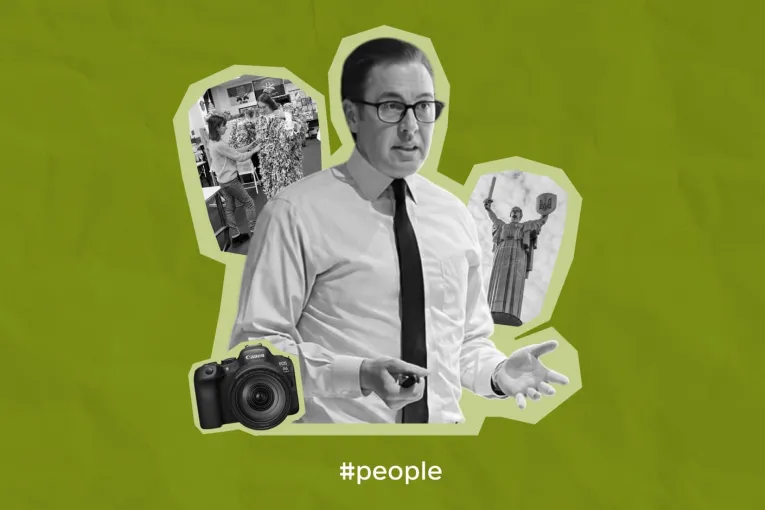
Eric Haar is an American entrepreneur who has made Kyiv an important part of his life. He first visited the city in 2020 and, in the summer of 2023, decided to move here permanently.
Today, Eric volunteers with Kitty Pechersk and runs Access Ukraine, a legal firm that helps foreigners relocate to and settle in Ukraine.
In an interview with Visit Kyiv, Eric spoke about why he returned after the start of the full-scale invasion, what drew him to Kyiv, and how the city gradually became home.
My first time in Kyiv
I first came to Kyiv in the summer of 2020, when I was working in banking. At the time, we could work remotely from almost anywhere in the world. Most countries were closed because of the pandemic, but Ukraine remained open.
I originally planned to spend just two weeks in Kyiv, rent an apartment, and then move on to another country. Instead, I kept coming back. Over the past six years, I’ve spent most of my time in Ukraine.
About three weeks before the full-scale invasion began in 2022, I left for a work trip to the US. Because of work and the situation in Ukraine, I wasn’t able to return until the summer of 2023. That’s when I left my job at the bank and decided to move to Kyiv permanently.
Why I came back after the full-scale invasion
I had lived in Kyiv on and off between 2020 and 2022, met a lot of Ukrainians, and many of them became close friends. When the full-scale invasion began, I was deeply worried about their safety.
At one point, a friend asked me to help his ex-wife and daughter get to the US. They left Kyiv for Poland, flew from there to Mexico, and then made their way toward the US border. I met them in Mexico and helped them reach a border crossing in Texas.
That experience had a huge impact on me. I saw firsthand what people were having to go through just to find safety.
Later, the US launched the Uniting for Ukraine program, which allowed Americans to sponsor Ukrainians seeking temporary entry to the country. I became a sponsor for nine Ukrainians.
They covered their own travel expenses and arranged their own housing in the US. My role was to support their applications through the program.
Their stories, along with conversations with friends who had stayed in Ukraine and others who had left for neighboring countries, affected me deeply. So when I had the chance to return to Kyiv in the summer of 2023, volunteer, and help in any way I could, I took it.
From camouflage nets to legal support
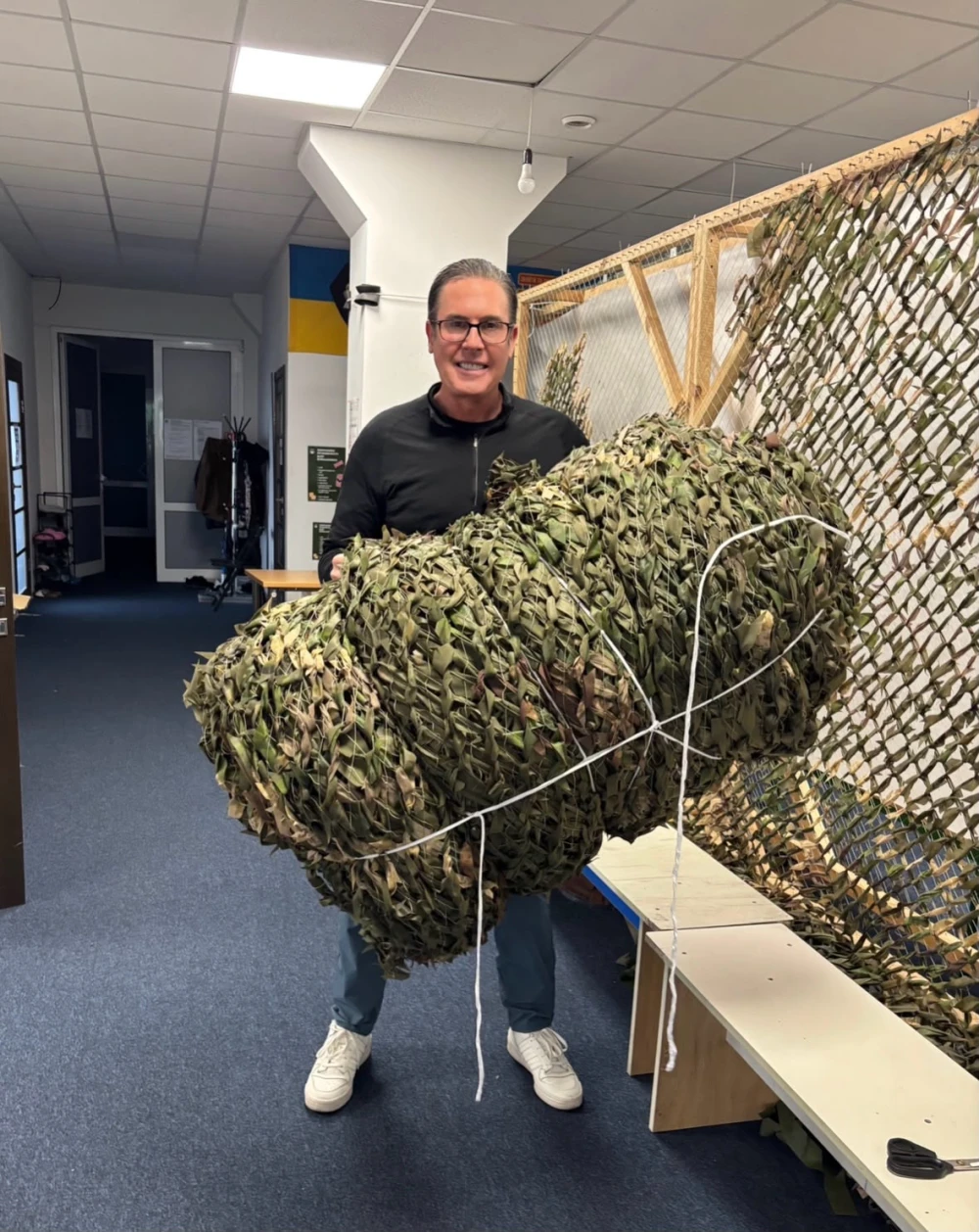
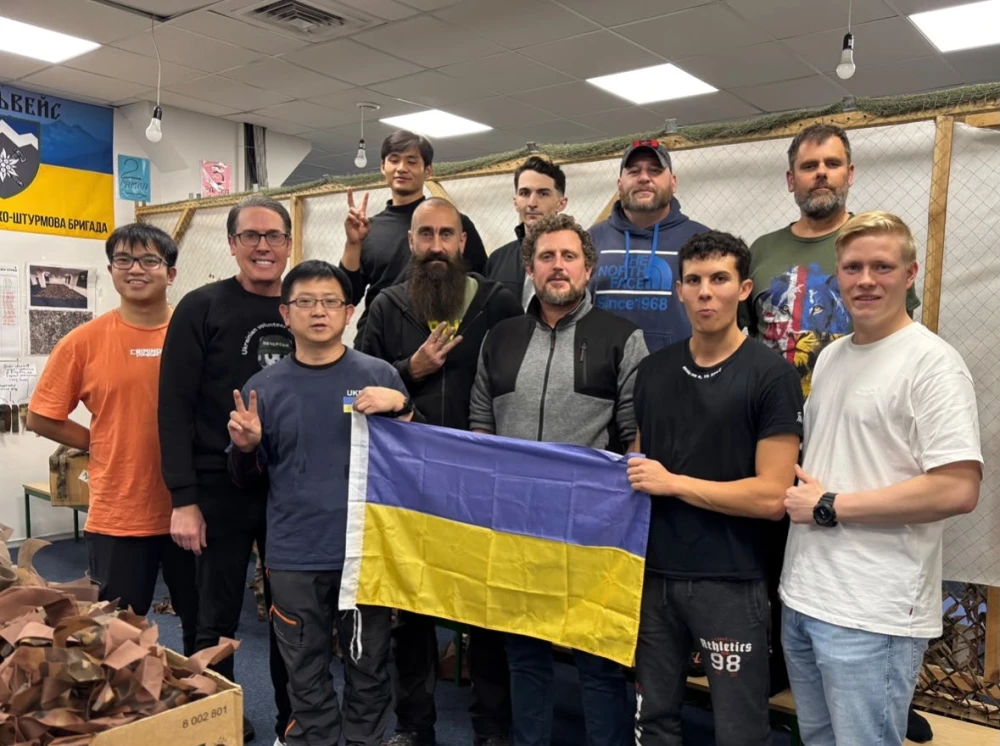
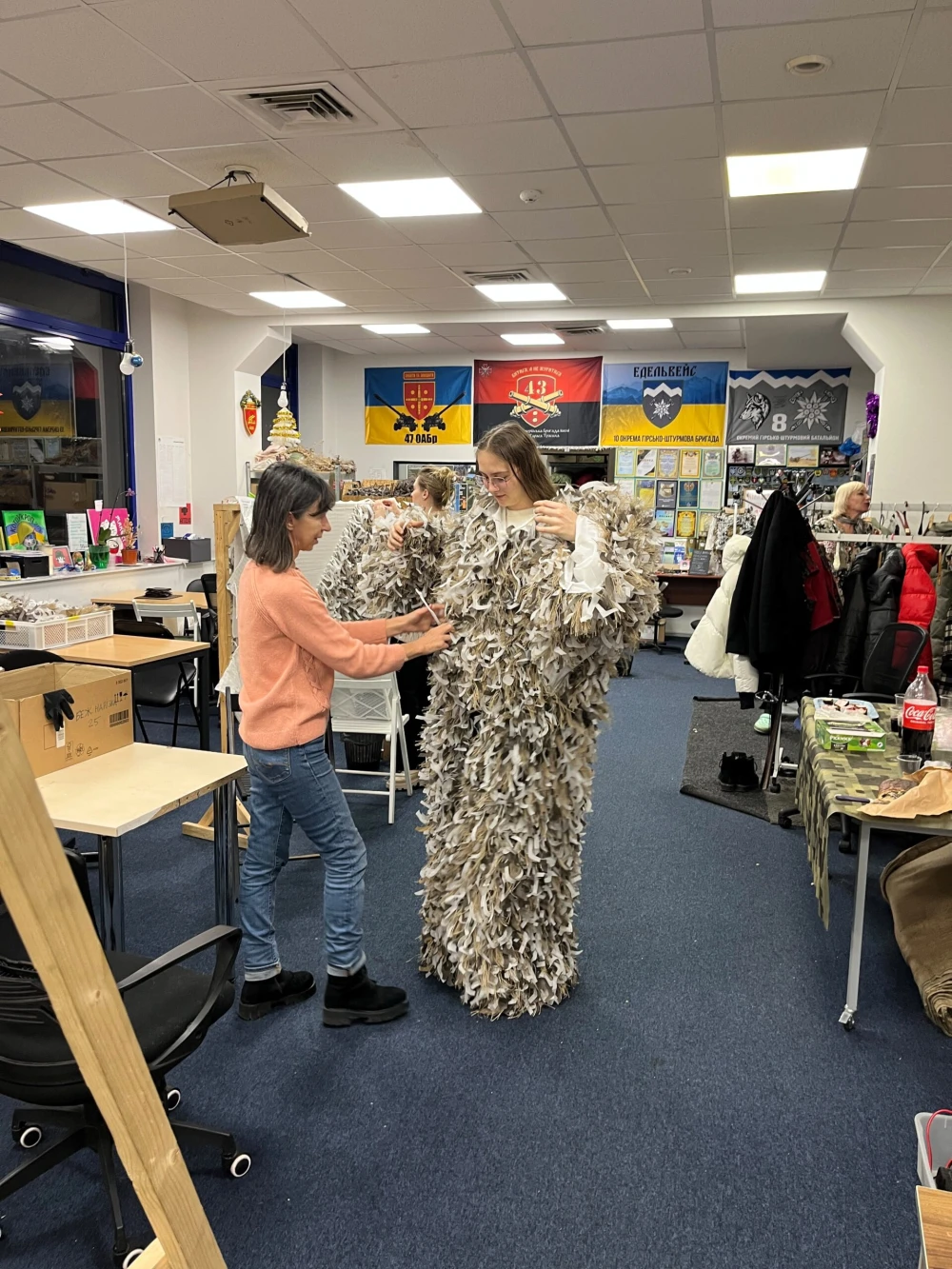
After returning to Kyiv, I started volunteering with Kitty Pechersk. About a month later, I was invited to coordinate international cooperation and work with foreign volunteers.
The community was formed after the full-scale invasion began. A group of women from the Pechersk district initially focused on helping people who were struggling to access food, medicine, and other essentials. Later, the volunteers shifted their efforts toward producing camouflage equipment for Ukrainian troops.
Today, hundreds of Ukrainian and international volunteers take part. They weave camouflage nets and make full camouflage suits for soldiers working in the field and in forested areas.
I’m very proud of what we do, and I’m grateful to the people who created Kitty Pechersk for welcoming me so warmly.
Alongside my volunteer work, I founded Access Ukraine in 2025, a legal firm that works with foreigners who want to live, volunteer, or work in Ukraine.
We help with visas and residence permits, obtaining a tax ID, opening bank accounts, and other practical issues related to long-term stays in Ukraine.
It’s challenging work, but I genuinely enjoy it and find it very rewarding.
Syrnyky, architecture, and murals: what I love about Kyiv
When I first came to Kyiv, I didn’t have any particular expectations. Most of what I knew about Ukraine came from what I had learned in world history and geography classes at school in the US.
What struck me right away was how friendly and open people were.
I started discovering Ukrainian cuisine and quickly fell in love with syrnyky, varenyky, borscht, and other dishes.
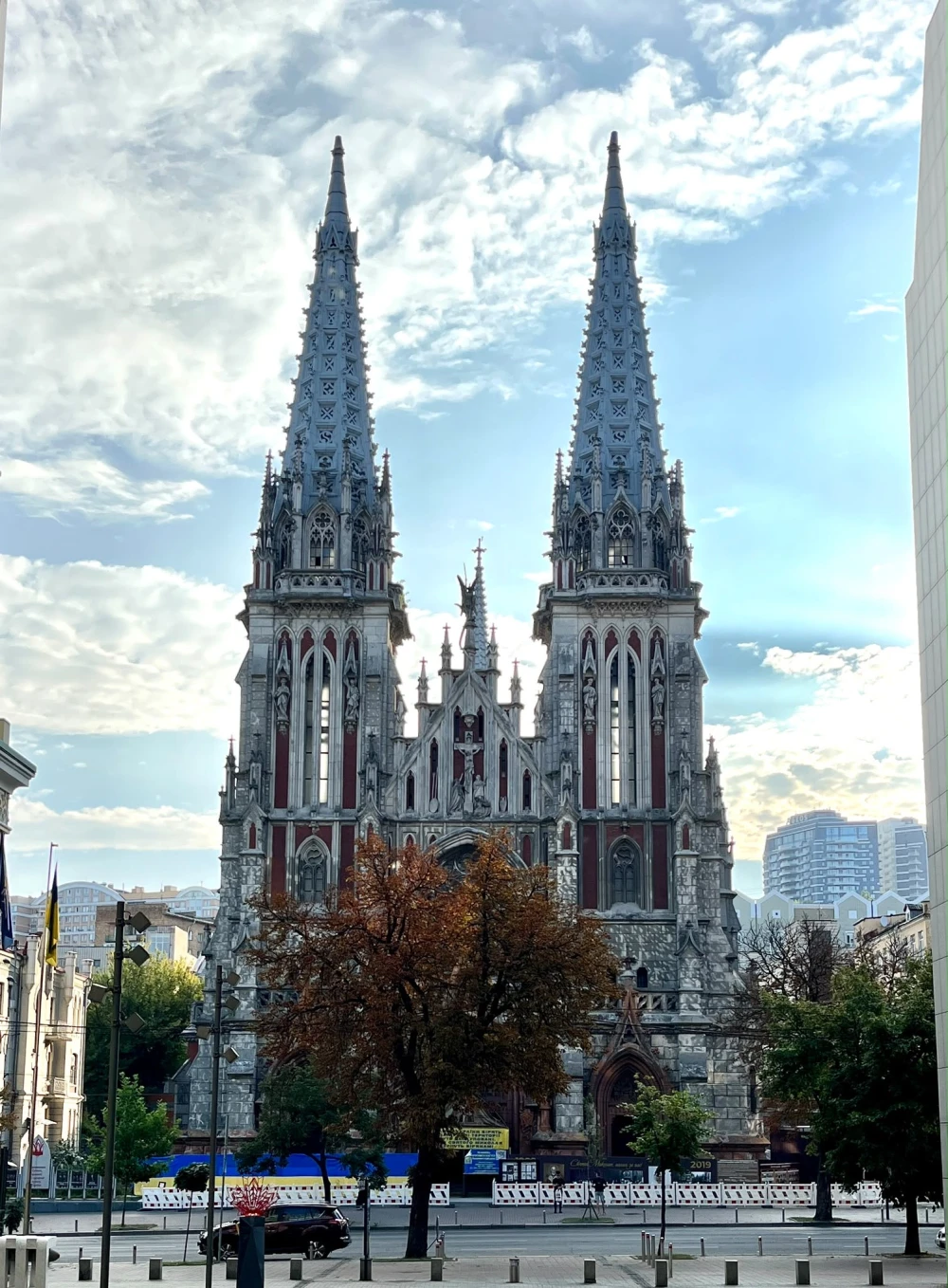
I also like how easy Kyiv is to explore on foot, and I love its architecture. I’m a runner, so I often discover the city that way.
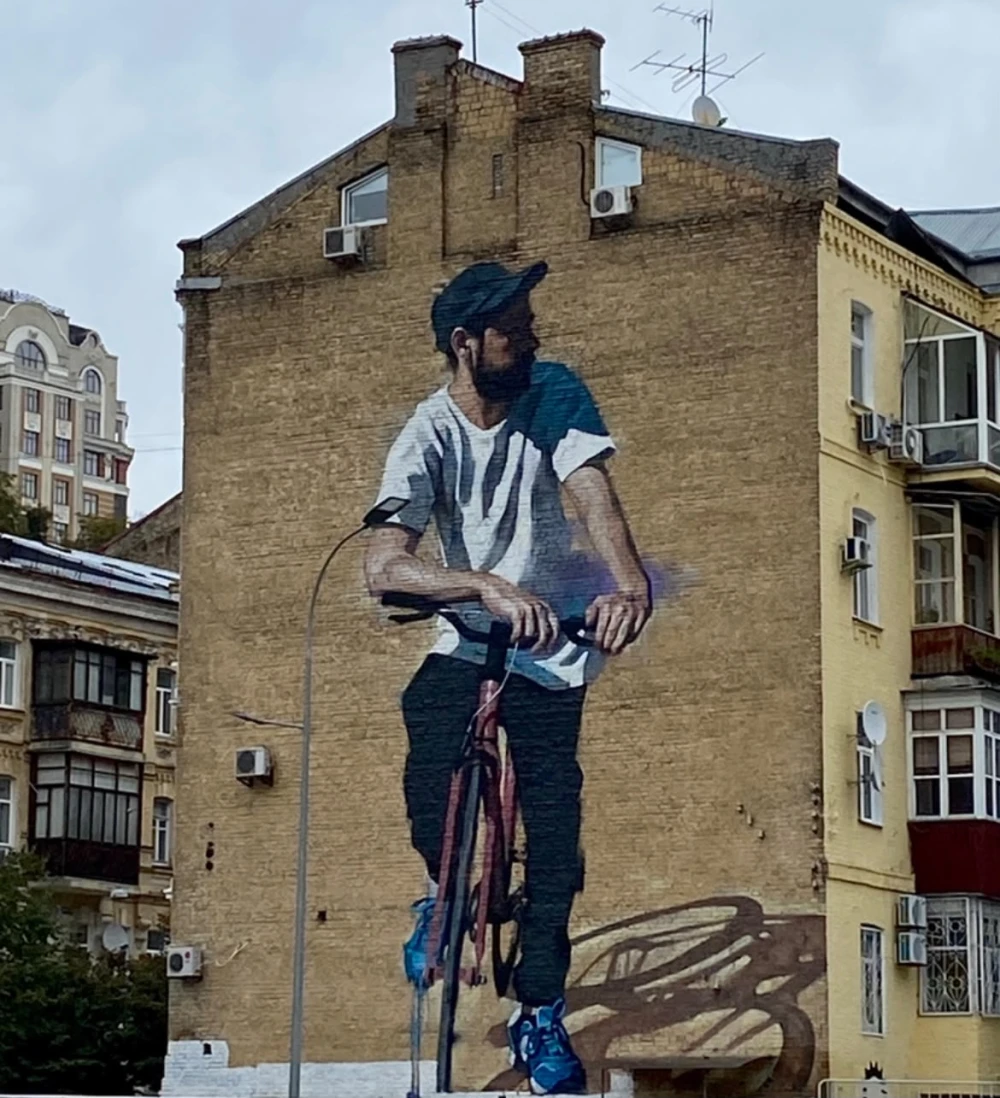
One of my favorite things about Kyiv is its murals. Whenever I come across a new one, I take a photo. By now, I have a collection of around 50.
One that has really stayed with me is the mural of a cyclist near the Kyiv Velodrome, though there are dozens of others around the city that I find just as striking.
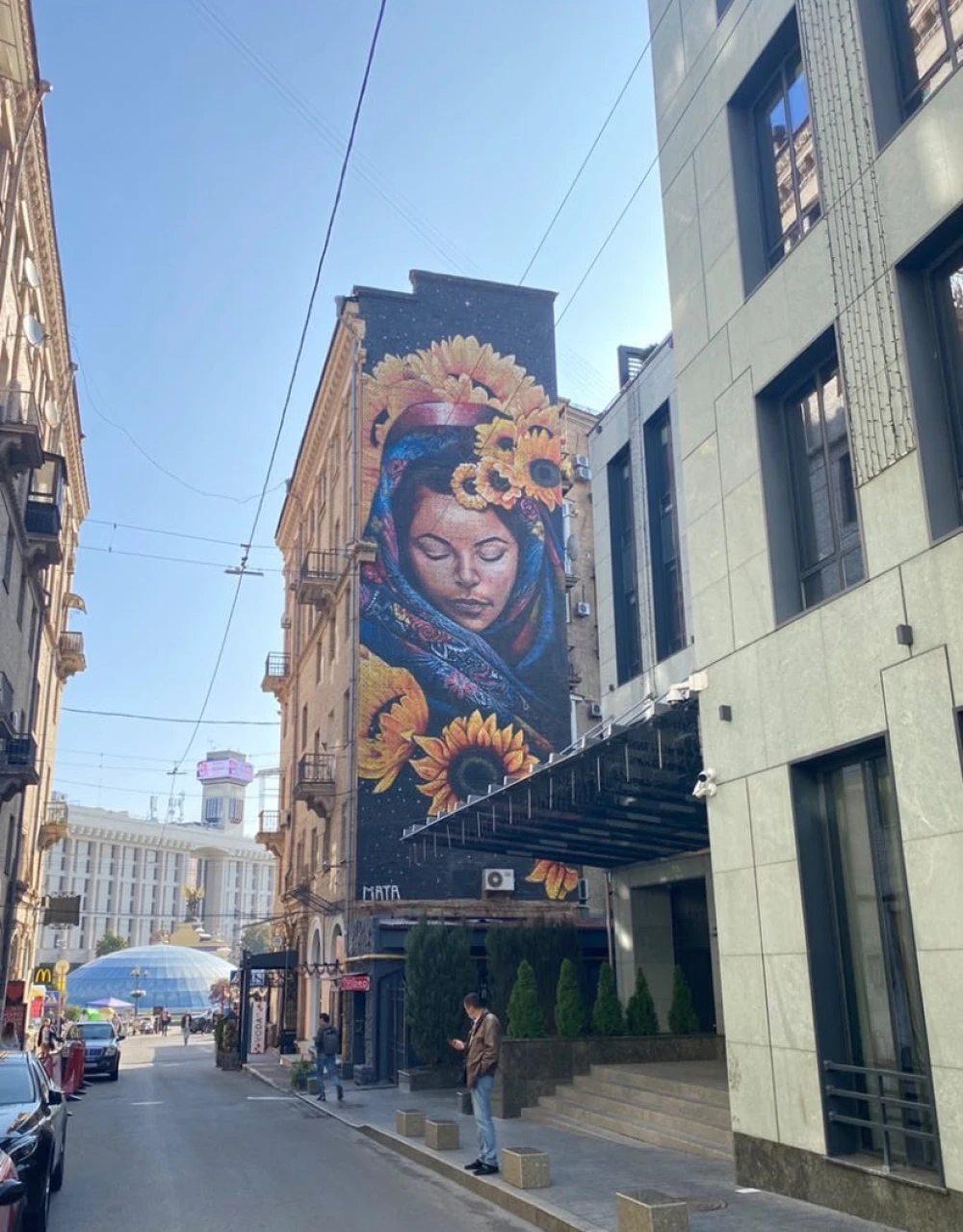
The moments when Kyiv started to feel like home
There have been a few moments when I felt that very clearly.
The first was on January 1, 2025. I was in my apartment that morning when I heard a very loud explosion. It woke me up and shook the building.
I went outside and saw that a building a few blocks away in central Kyiv was on fire. Along with other people, I stood nearby watching firefighters work to put out the blaze.
About ten minutes later, we heard another drone approaching. Two guys ran toward the nearest metro station. As soon as I heard it too, I ran after them with everyone else.
A second after I got inside, there was another powerful explosion nearby.
I later learned that it had been a repeat Russian strike, after emergency services had already arrived at the scene.
That moment reminded me again of how important it is for Ukraine to continue resisting Russian aggression.
Another moment came about four or five months after I started volunteering with Kitty Pechersk.
One of the volunteers was celebrating her birthday, and I was invited to join the group. That was when I really felt that I had become part of the community.
How Ukraine is seen in the US
People in the US are very aware of what is happening in Ukraine. American media covers the war extensively and shows how it affects everyday life here.
When I talk to family and friends, they tell me they regularly see stories about Ukraine in the news and follow what is happening.
At the same time, I think some people may come away with the impression that Ukrainian society is close to collapse, or that life here is defined entirely by hardship.
Of course, the reality is far more difficult for people living closer to the front line. In cities such as Sumy, Kharkiv, Kherson, and Zaporizhzhia, people are going through much more than in many other parts of the country.
But I also want my friends abroad to see another side of life in Ukraine.
I see people working, studying, taking their children to school, getting married, starting families, and continuing with their everyday lives.
A lot of things are still extremely difficult. But I’m inspired by the way Ukrainians keep living, keep moving forward, and keep going despite everything Russia is putting them through.
War tourism and the people who come to Ukraine
I’ve met a very small handful of people who seem to have come to Ukraine during the war mainly to take photos or create videos for TikTok, Instagram, or YouTube.
To some extent, I’m glad that this means they are documenting the crimes taking place here. But I don’t like the idea of people coming simply because they want to experience what it feels like to be in a country at war. To me, that’s the wrong motivation.
I’ve also met foreigners who came to Ukraine after going through difficult periods in their own lives. These people are often motivated by a strong desire to find community and to help others. It’s inspiring to see people from all backgrounds come to Ukraine with an interest in meeting Ukrainians and experiencing authentic Ukrainian culture.
For me, the main point is simple: foreigners are welcome in Ukraine, and there is a real need for people who want to contribute. Most of the foreigners I’ve met here are doing genuinely useful things.
But it’s important to understand why you’re coming and to think about how you can contribute while you’re here.
If Kyiv were a person…
If Kyiv were a person, it would be a professional boxer who isn’t afraid of any opponent or challenge.
Strong, resilient, and ready to go the distance.