
Kyiv Metro
Everything you need to know about the Kyiv Metro: fares, opening hours, lines, and how it works during air raid alerts.
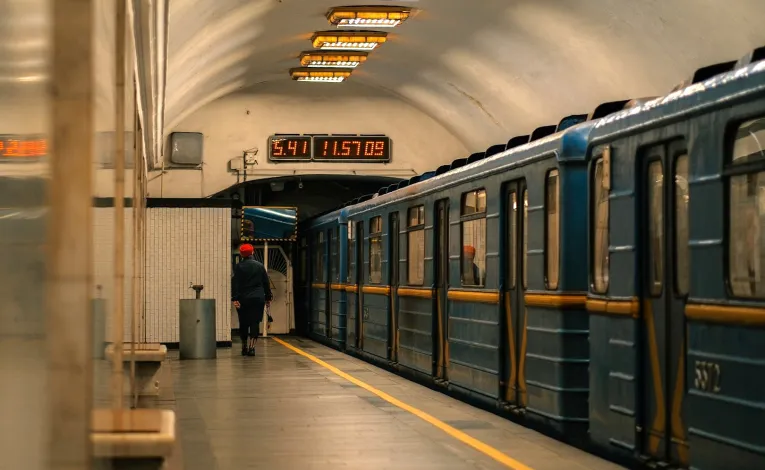
For most locals, the metro is the fastest and most convenient way to get around Kyiv. It connects many major tourist attractions, the central railway station, and main bus terminals, and it’s the easiest way to travel between the right and left banks of the city.
Contents
Kyiv metro map, lines and stations
The metro has three lines: red (M1), blue (M2), and green (M3). You can view the route map and transfer points online. The same map is posted at stations — on the walls across from the platforms — and inside every train car, usually above or near the doors.
The Kyiv metro is easy to use:
- The current and next stations are announced in Ukrainian and English, and some trains also show station names on overhead screens;
- Stations have clear signs showing exits and transfer routes to other lines. Some also display detailed station maps with Braille labels;
- Staff are on duty at every station and can help if needed.
Metro fares and how to pay
A single metro ride costs 8 UAH. You can pay in several ways:
- Bank card, phone, or smartwatch: tap your contactless device on the terminal at the turnstile.
- Digital QR ticket: buy it in the Kyiv Digital app, then scan it at the turnstile reader.
- Paper ticket with a barcode: buy it from a self-service machine at the station entrance using a card or cash, then scan the barcode at the turnstile.
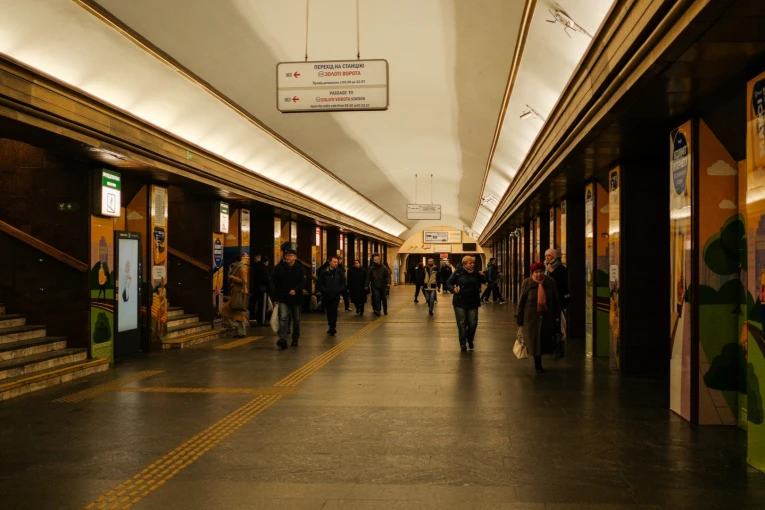
Photo: Visit Kyiv
Kyiv metro hours and train frequency
Trains run roughly from 5:30 am to 11:00 pm, depending on the line.
Weekday intervals:
- 7–10 minutes — before 8:00 am and after 9:00 pm;
- 2–3 minutes — during rush hours (8:00–9:00 am and 6:00–7:00 pm);
- 4–6 minutes — the rest of the day.
Weekend intervals:
- 8–10 minutes — mornings and evenings;
- 5–7 minutes — during the day.
How the metro operates during an air raid alert
During an air raid alert, trains keep running but only on underground sections of the lines, without crossing bridges over the Dnipro. During this time, you can’t travel between the right and left banks by metro — use ground transport or a taxi instead.
- On the red line, trains run from Akademmistechko to Arsenalna or Khreshchatyk;
- On the green line, trains run from Syrets to Vydubychi and from Osokorky to Chervony Khutir;
On the blue line, all stations are underground, so service runs as usual.
Underground metro stations also stay open 24/7 as shelters, with free access.
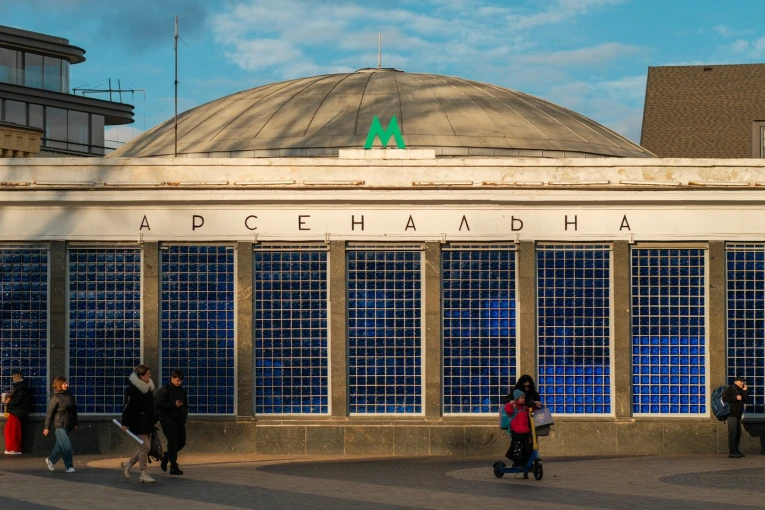
Photo: Visit Kyiv
Q&A about Kyiv Metro

The Kyiv metro operating hours are generally from 5:30 AM to 11:00 PM daily. However, Kyiv metro opening hours vary slightly by station, with some central hubs opening around 5:45 AM. The Kyiv metro closing time is strictly aligned with the start of the nightly curfew; the last trains usually depart their terminal stations around 10:30 PM to allow the system to clear by 11:00 PM.
Yes, the Kyiv metro bomb shelter system is one of the most reliable in the world. All 46 underground stations operate as shelters 24/7, even during curfew hours. During an alert, access to underground platforms is free, and the city has recently equipped stations with folding chairs and Wi-Fi to improve comfort for those sheltering.
The average speed of the Kyiv metro is approximately 36 km/h (22 mph). While the trains can reach a maximum speed of 80 km/h on long stretches, the frequent stops and the time required for acceleration and braking between stations result in this consistent average.

