What to see in Podil: a walking tour with a local guide
Explore Podil’s historic streets, hidden courtyards and local culture.

Podil is one of Kyiv’s oldest neighborhoods, but some of its most interesting places are easy to miss. This walking route takes you from the Dnipro riverfront through old market squares, quiet courtyards and streets shaped by centuries of trade. We put it together with Alina Virstiuk, a local guide from Awesome Kyiv Tours, who shares her favorite stops and a few stories you won’t find on every tourist itinerary.
Route details
- Duration: Around 1.5 hours, not including longer stops.
- Start: Poshtova Square.
- Finish: Verkhnii Val and Nyzhnii Val.
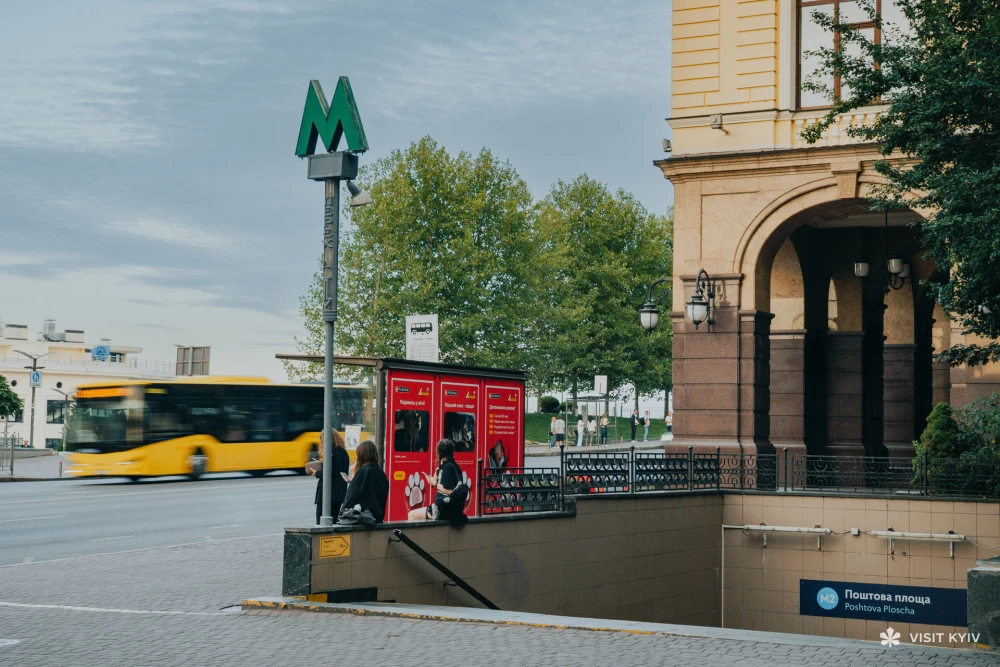
- Getting there: Take the metro to Poshtova Ploshcha station or ride the Kyiv funicular down from the upper station near Mykhailivska Square.
- Format: Self-guided walking tour.
- Route map: [Add map]
Poshtova Square
Start at Poshtova Square and walk towards the Dnipro embankment. You can get here by funicular or take the metro to Poshtova Ploshcha.
Podil owes much of its history to the river. Its port helped turn the neighborhood into Kyiv’s main trading district, bringing merchants and goods from far beyond the city.
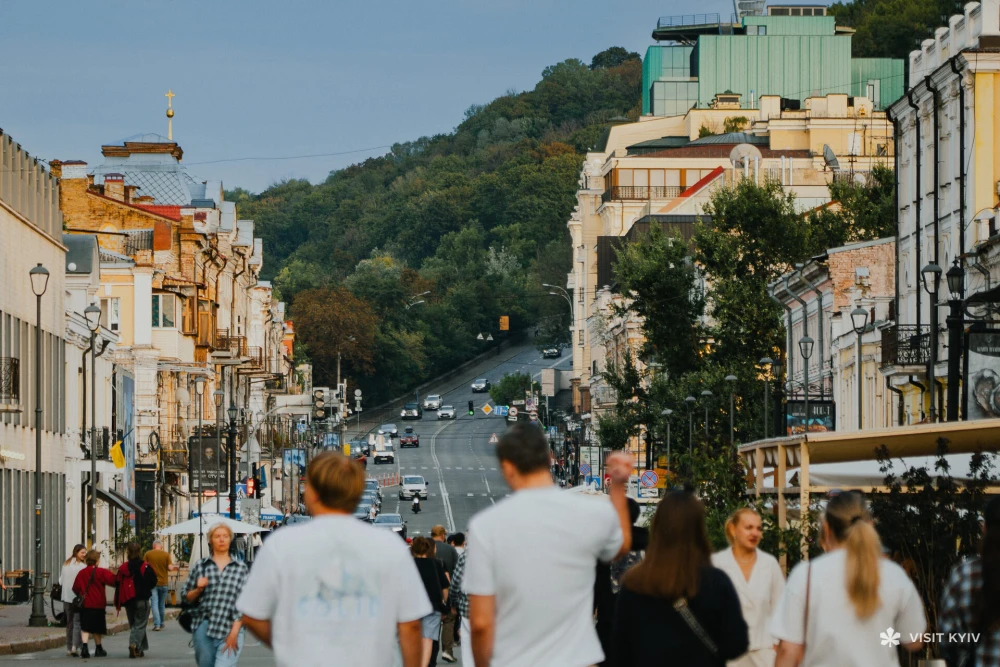
From the riverfront, look towards Volodymyrskyi Descent, the steep road climbing away from the Dnipro. Kyiv’s first electric tram began running here in 1892, making it easier to move people and goods up the city’s hills.
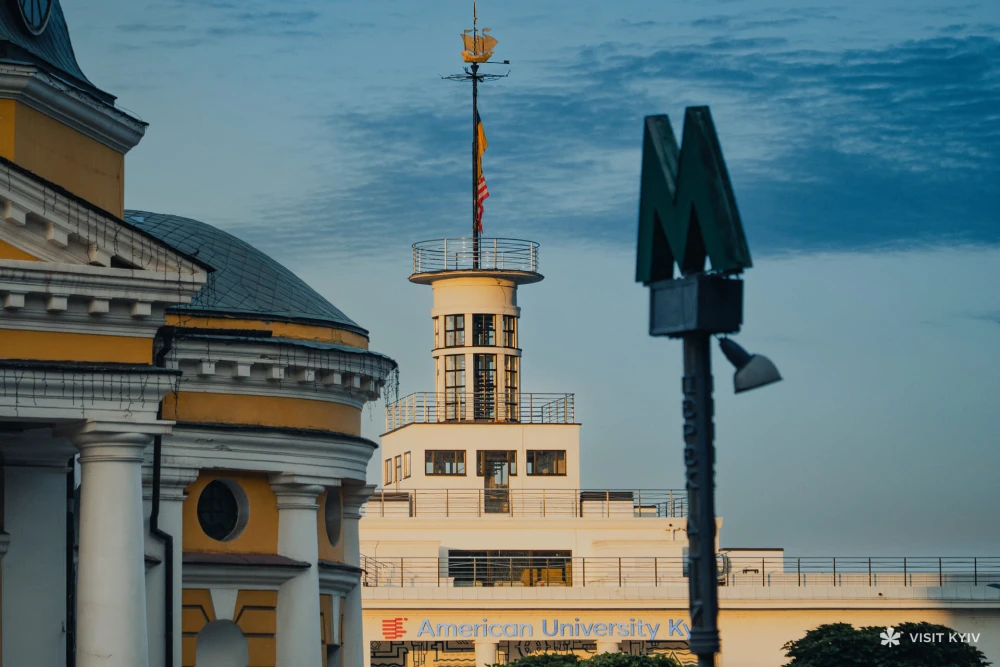
The embankment near Poshtova Square is one of the best spots along this walk for a wide view of the Dnipro. It’s worth stopping for a photo before heading into Podil.
Next: Follow Petra Sahaidachnoho Street towards Kontraktova Square.
Petra Sahaidachnoho Street
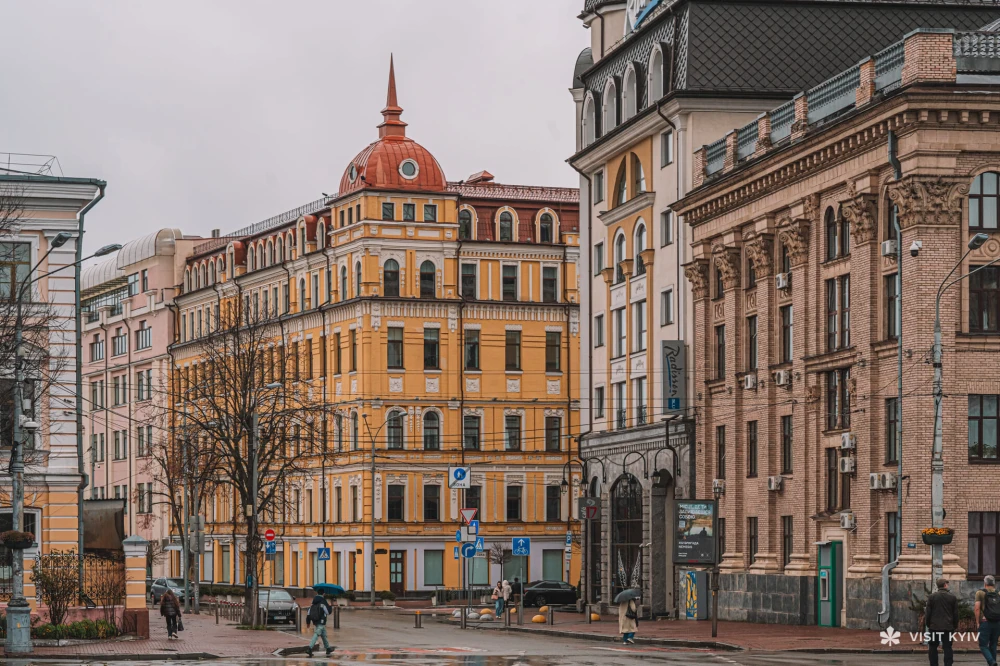
As you walk along Petra Sahaidachnoho Street, take a look at the surrounding blocks. Much of Podil follows a neat grid, which is unusual for a neighborhood with such a long history.
Before 1811, the streets were narrower and far less orderly. That year, a devastating fire destroyed much of the district. Architect William Heste later drew up a new plan, replacing the old street layout with straight roads and regular blocks. Much of that design survives today.
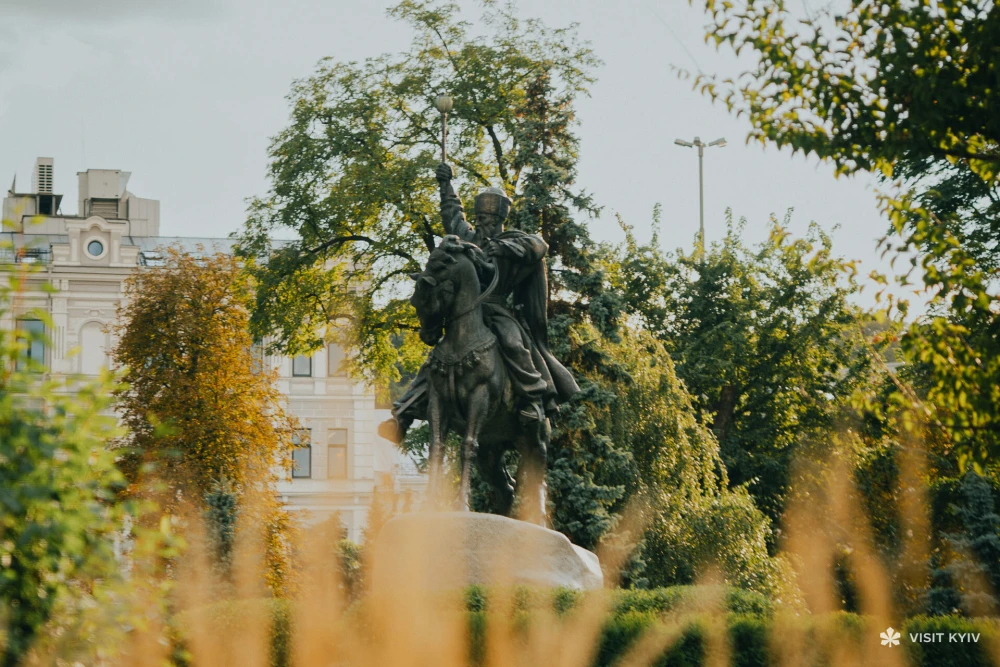

For coffee, make a short detour to Svit Kavy at 12A Ihorivska Street. If you’re more in the mood for a craft beer, Punkraft is another option nearby.
Next: Keep walking towards Kontraktova Square.
Kontraktova Square
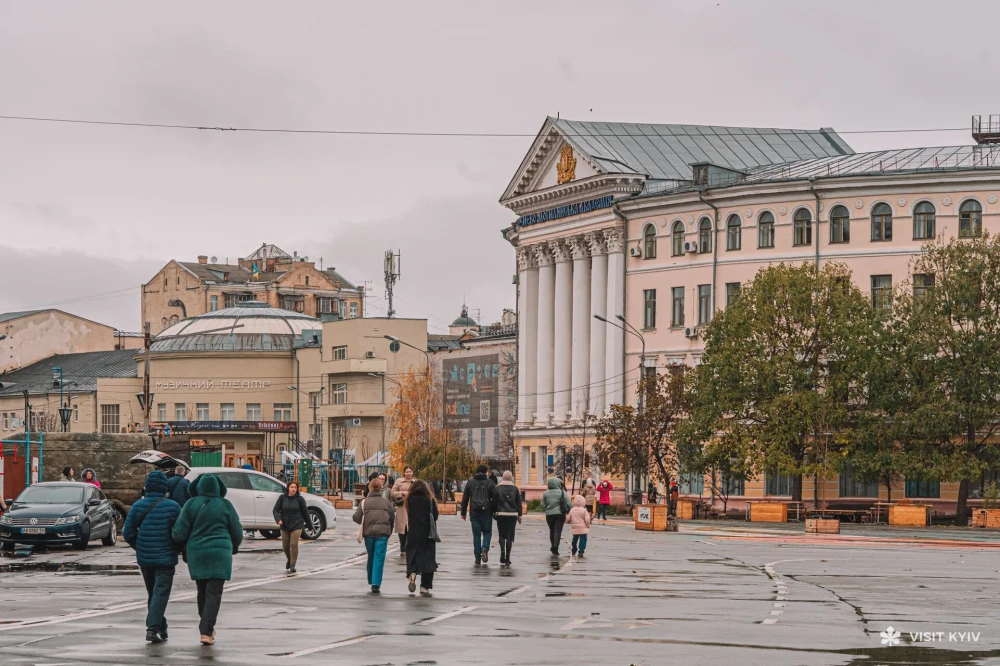
Kontraktova Square was once the center of business in Podil. Merchants came here for markets and trade fairs, and deals were made between traders from different cities and countries. That’s where the square gets its name.
Today, it’s one of the neighborhood’s main gathering places, with several historic landmarks worth stopping to see.
Samson Fountain and its legends
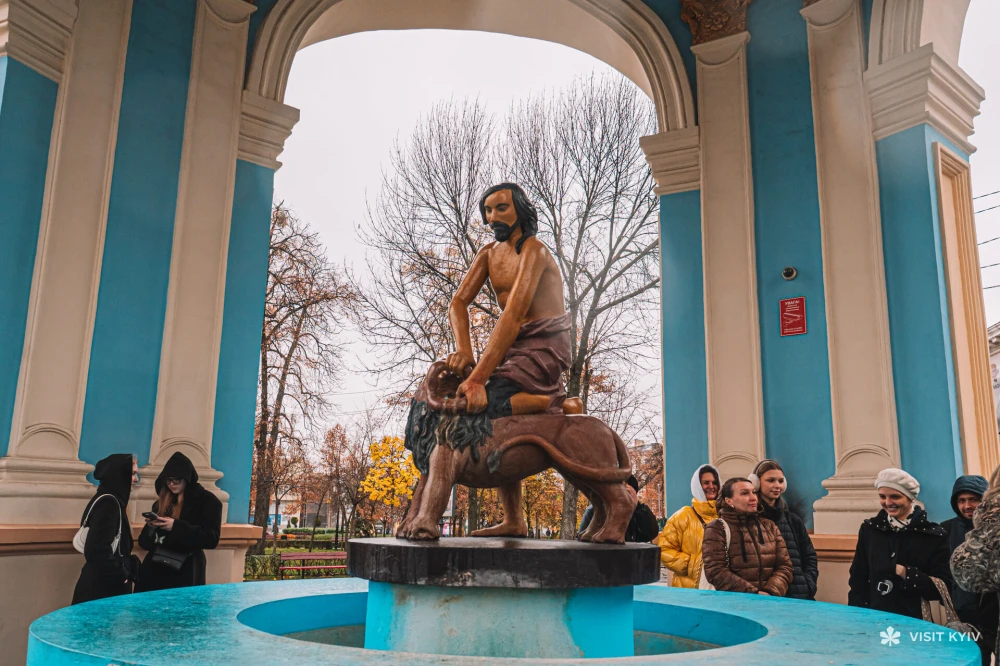
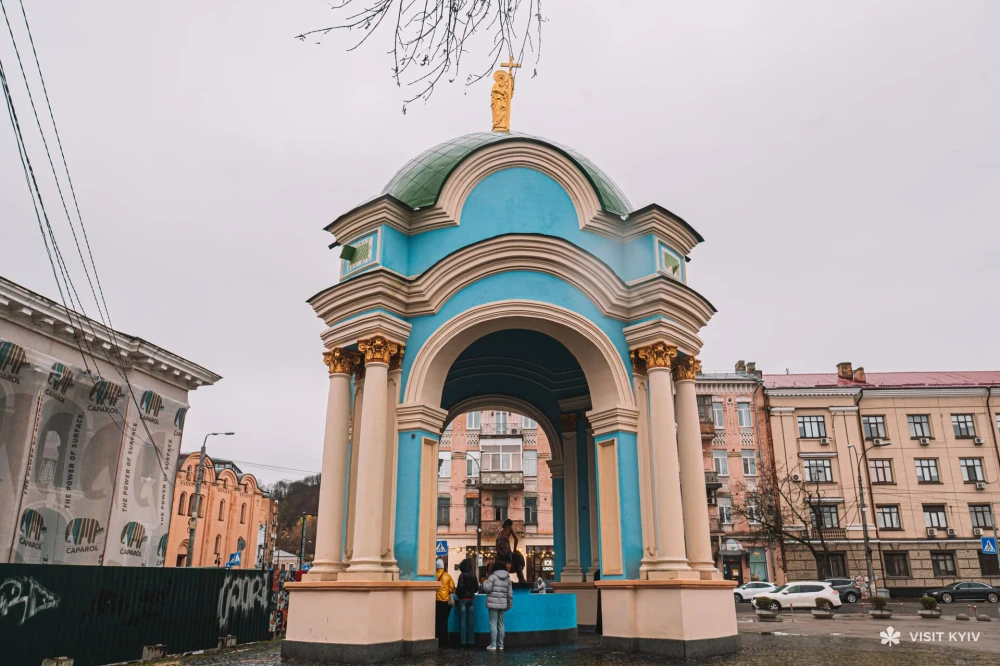
Samson Fountain has been part of Kontraktova Square since the 18th century, when it formed part of Kyiv’s water supply system.
Like many old landmarks, it has collected a few stories over the years. One local legend says that anyone who drinks from the fountain will always find a place for themselves in Kyiv. Another claims its water has healing properties because of a supposed connection to the River Jordan.
Near Kontraktova Ploshcha metro station, you can find a good view of St. Andrew’s Church above the rooftops. If you fancy a coffee break, stop by Kaffa, one of Kyiv’s long-established cafés, and take a look around inside.
Next: Walk to the Church of the Dormition of the Virgin Pirohoshcha.
Church of the Dormition of the Virgin Pirohoshcha
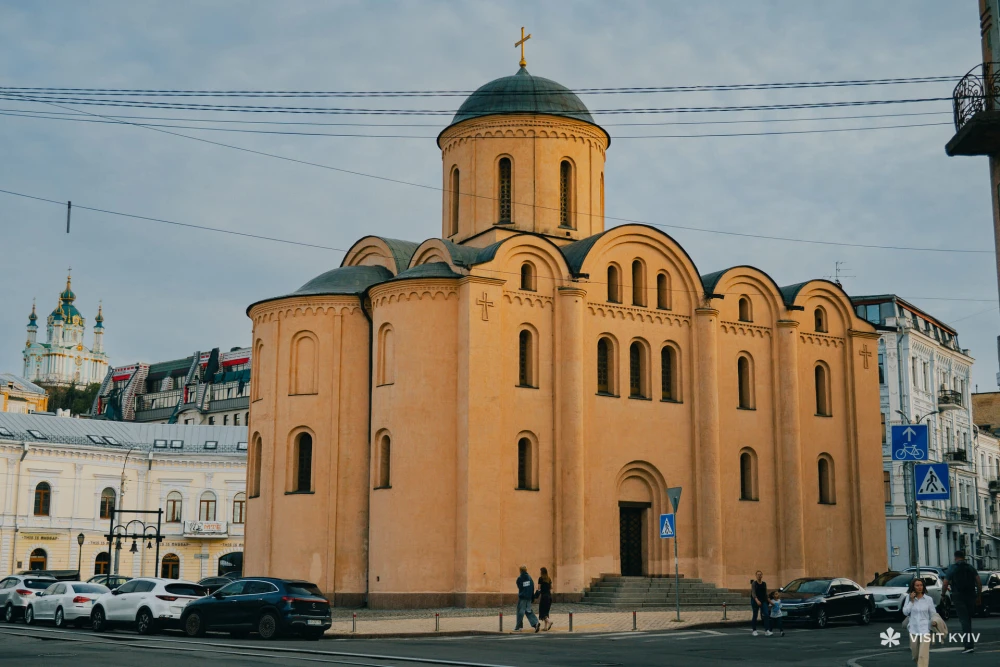
Just a few minutes from Kontraktova Square stands the Church of the Dormition of the Virgin Pirohoshcha.
The church has medieval origins, although the building you see today is a reconstruction completed in the late 20th century. It’s a reminder of the churches that once stood throughout historic Podil.


If you’re hungry, Musafir at 2 Prytysko-Mykilska Street is a good place to try Crimean Tatar food, particularly chebureks — crisp, fried pastries with savory fillings. For something different, Hinaus at 9A Spaska Street combines a bar with a cultural space and hosts events, including activities connected with Podil Art Week.
Next: Continue towards Zhytnii Market.
Zhytnii Market
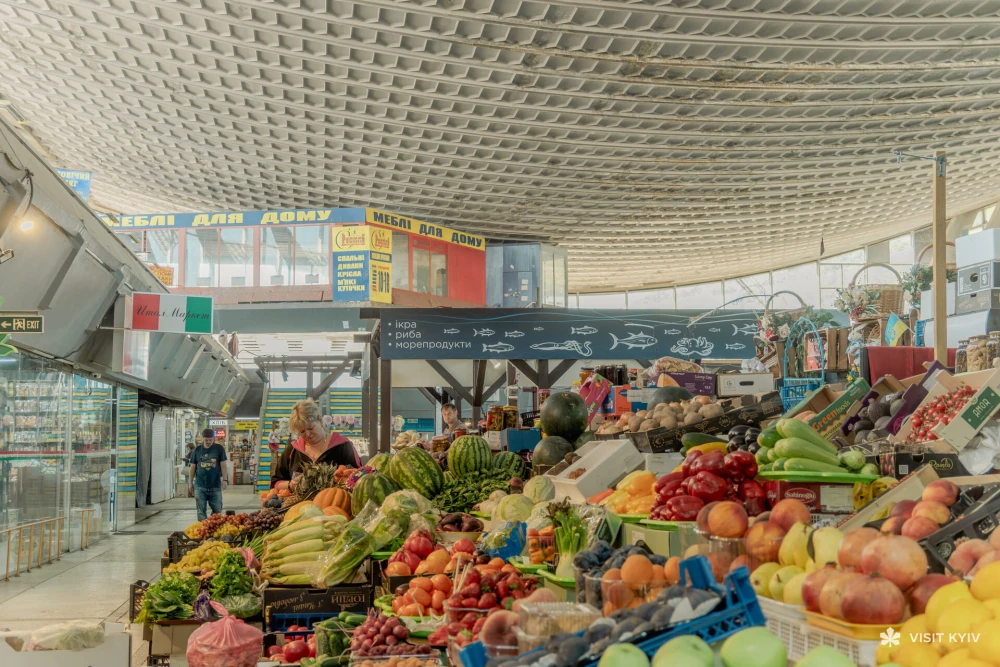
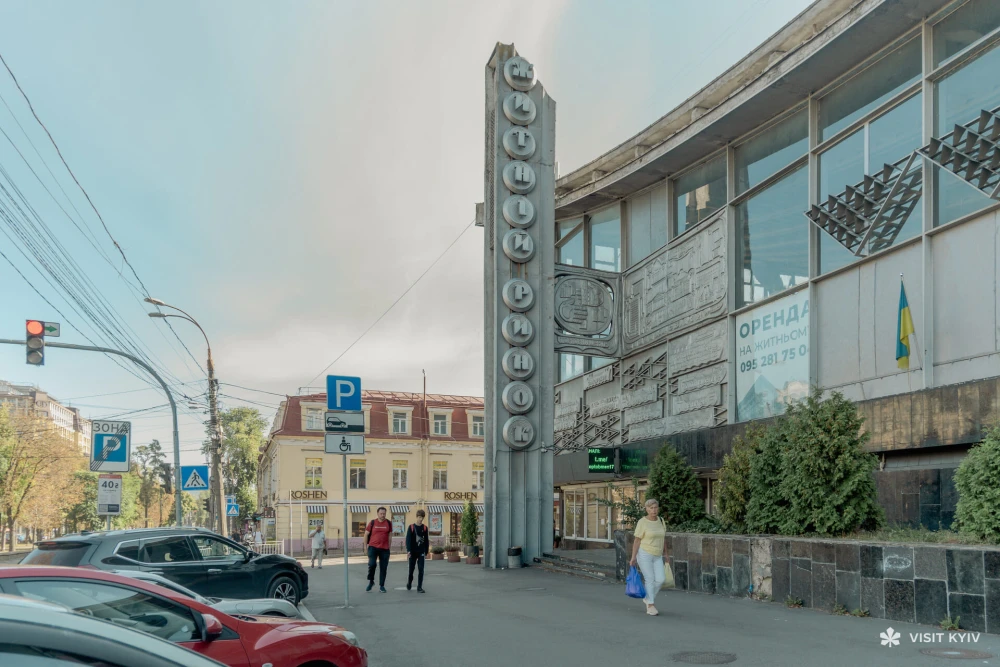
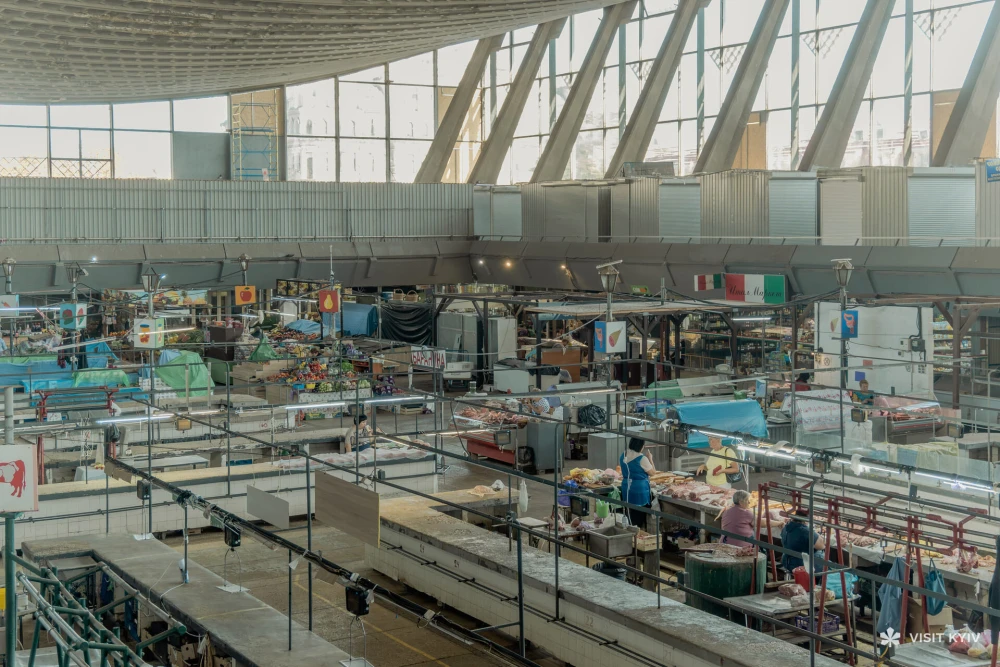
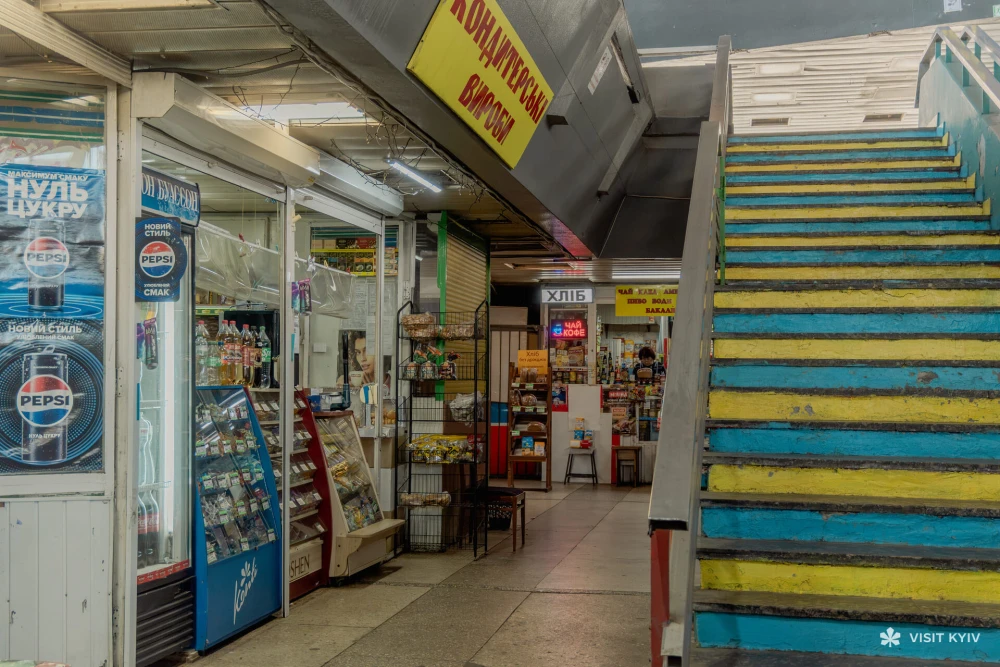
Zhytnii Market has been a trading spot for centuries. The area was already known for its markets during the time of Kyivan Rus, and its name comes from zhyto, the Ukrainian word for rye.
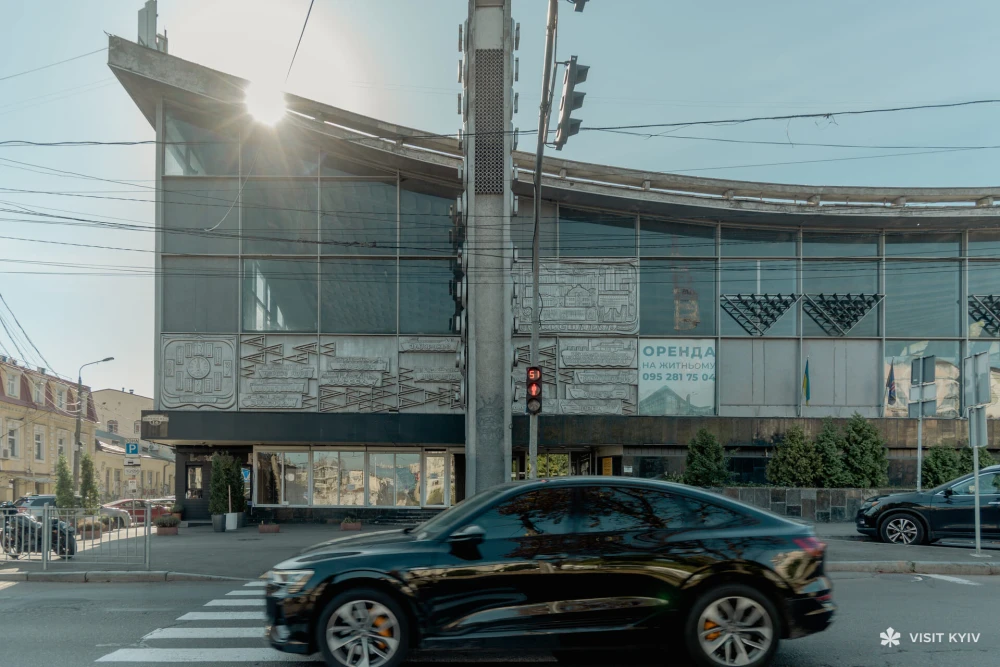
By the 15th century, it had become one of Kyiv’s main marketplaces. The building standing here today is much newer, dating from 1980, but it’s worth seeing in its own right.
With its enormous trading hall and distinctive geometric facade, the market is a striking example of Soviet modernist architecture. Look closely at the triangular metal details on the outside. They’re designed to resemble chestnut blossoms, a familiar symbol of Kyiv, while also helping shade the building from the sun.
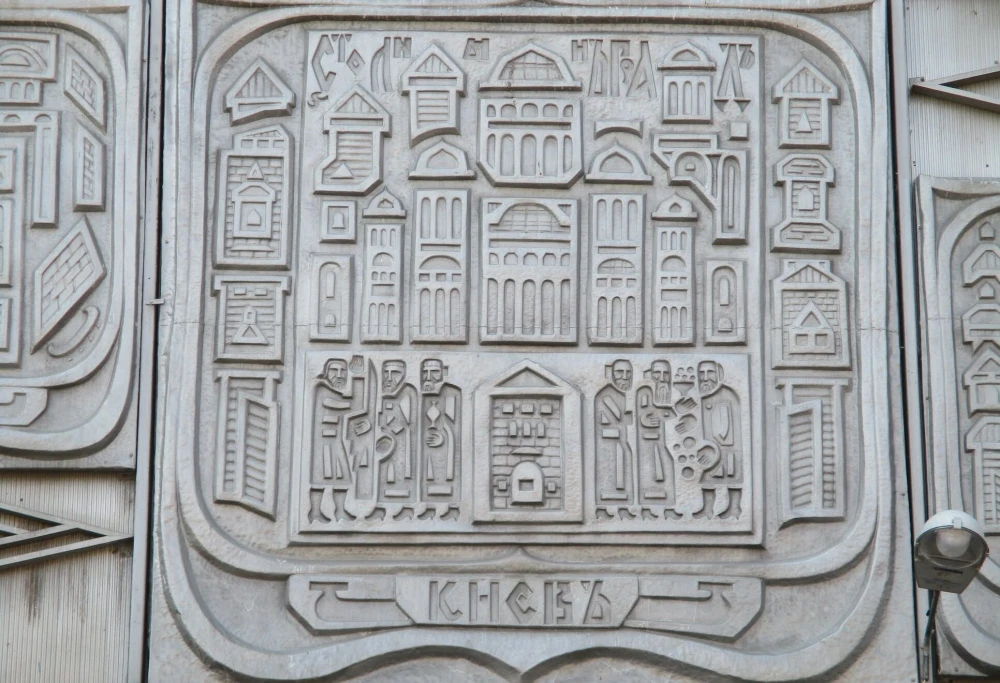
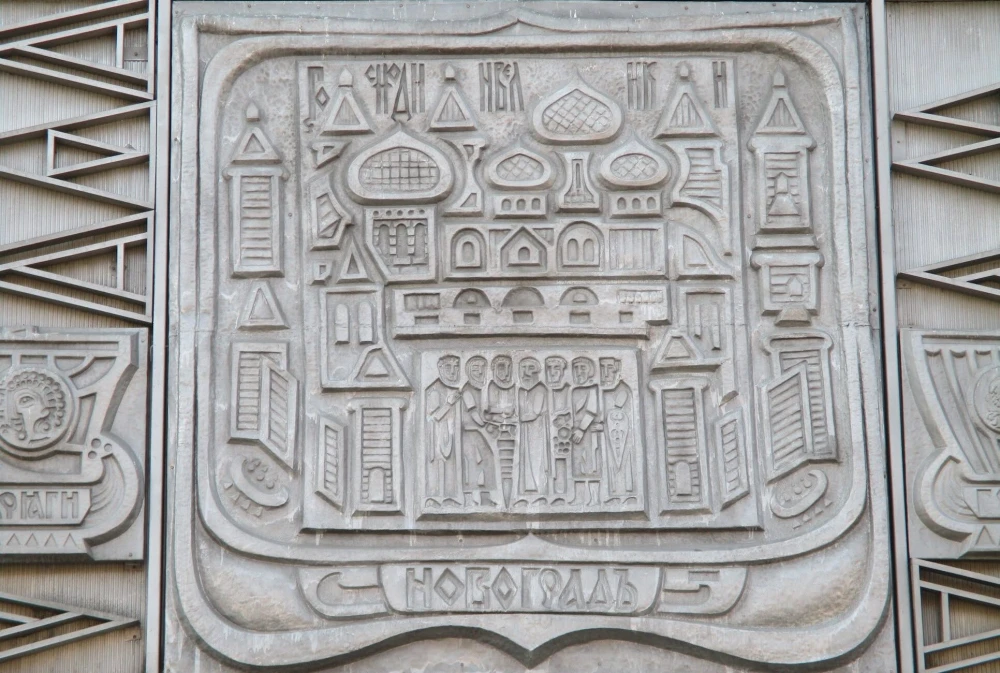
The ‘From the Varangians to the Greeks’ artwork
On the market’s facade, you’ll find a large metal artwork covering around 315 square meters. It tells the story of the ancient trade route known as ‘From the Varangians to the Greeks’, which connected Scandinavia and the Byzantine Empire through waterways including the Dnipro.
More than a thousand years ago, traders carried furs, honey, wax and weapons along this route, while goods such as silk, wine and jewelry arrived from Byzantium.
Take a closer look at the artwork before moving on. There are plenty of historical details to spot.
Castle Hill and its witch legends
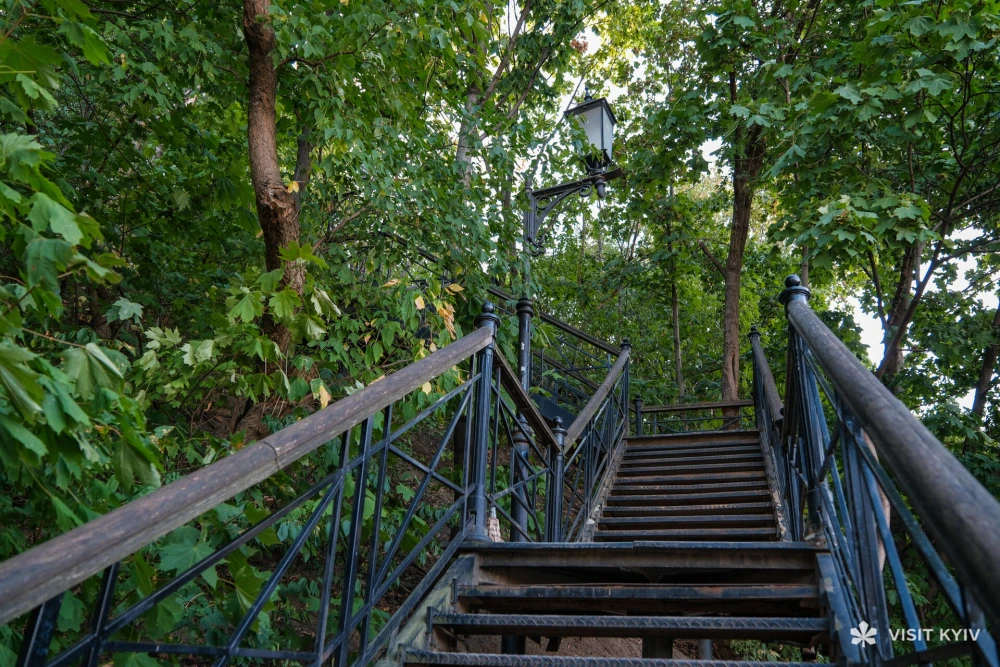
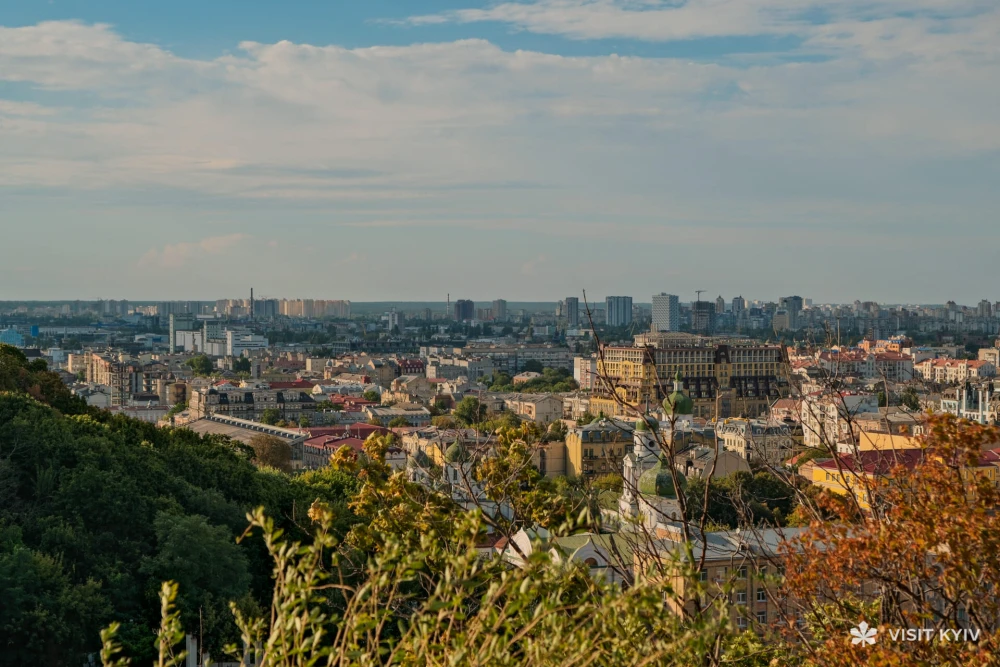
Above the market rises Castle Hill, a place with a long history of local folklore.
According to one legend, witches once gathered here for their sabbaths. Another story describes the hill as a witches’ burial ground.
There’s also a tale about an elderly nun from the Florivsky Convent who climbed the hill to tend some graves. When she returned, the other nuns barely recognized her: she had become a young woman. She never explained what had happened, and by the next morning, she was gone.

Markets and fairs in Podil today
Podil hasn’t lost its trading traditions. Markets and community events still take place around the neighborhood, although they’re generally smaller than they were before the full-scale invasion.
One to look out for is Podilskyi Shuk, a local market that also raises funds through its events. Locations change, so check its Instagram page for upcoming dates and venues.
Переглянути цей допис в Instagram
Zhytnii Market looks particularly good in the late afternoon, when the sunlight brings out the details of its facade. If you’d like to go inside, check the current opening hours before your visit.
Next: Head towards Mezhyhirska Street.
Adam and Eve Courtyard
At 24 Mezhyhirska Street, look for an archway decorated with sculptures of Adam and Eve. It marks the entrance to one of Podil’s tucked-away courtyards.
Inside, you’ll find old buildings, decorative plasterwork and architectural details that are easy to miss from the street. It’s a small stop, but one that shows a quieter, more residential side of the neighborhood.
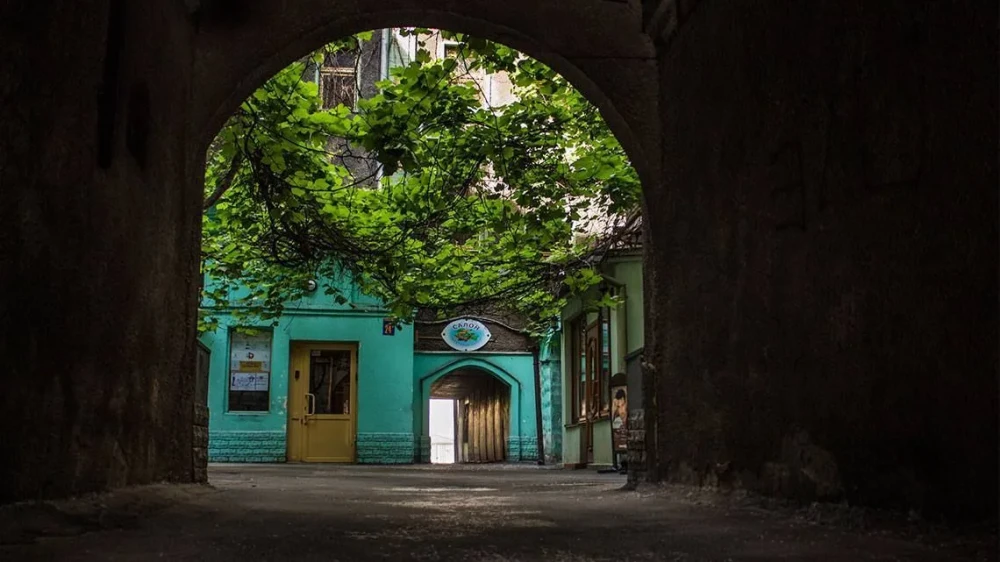
Don’t spend the whole walk looking only at the street-facing buildings. Some of Podil’s most interesting details are hidden in its courtyards.
Next: Continue towards Verkhnii Val and Nyzhnii Val.
Verkhnii Val and Nyzhnii Val
The names of these two streets tell you something about what Podil used to look like. Val means rampart, and until the 19th century, the Hlybochytsia River flowed between them.
Earthen embankments once helped protect the area from flooding. The river was later diverted underground, where it still runs today.
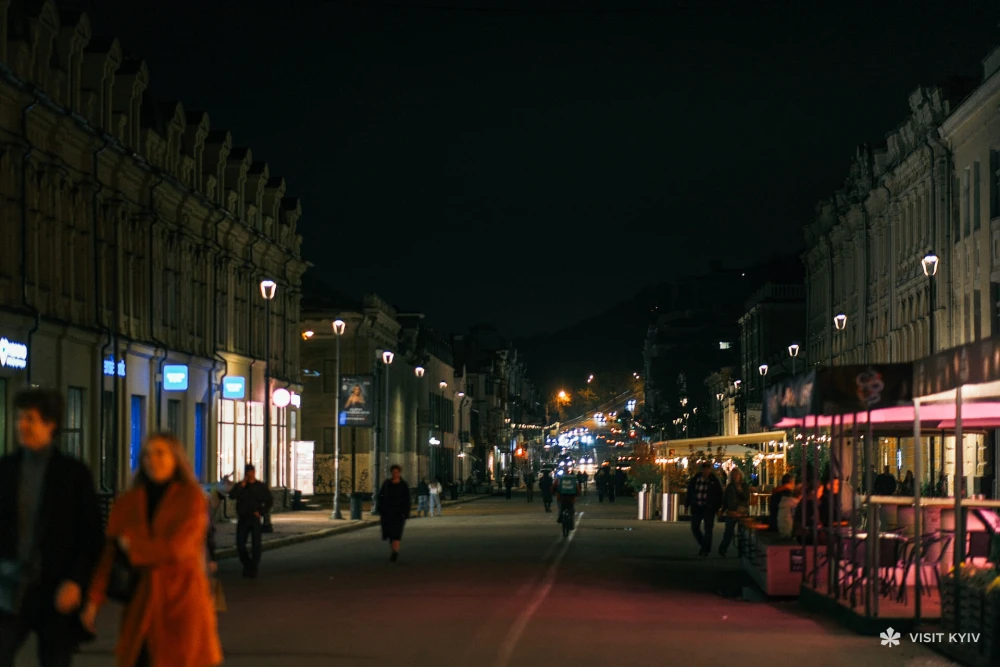
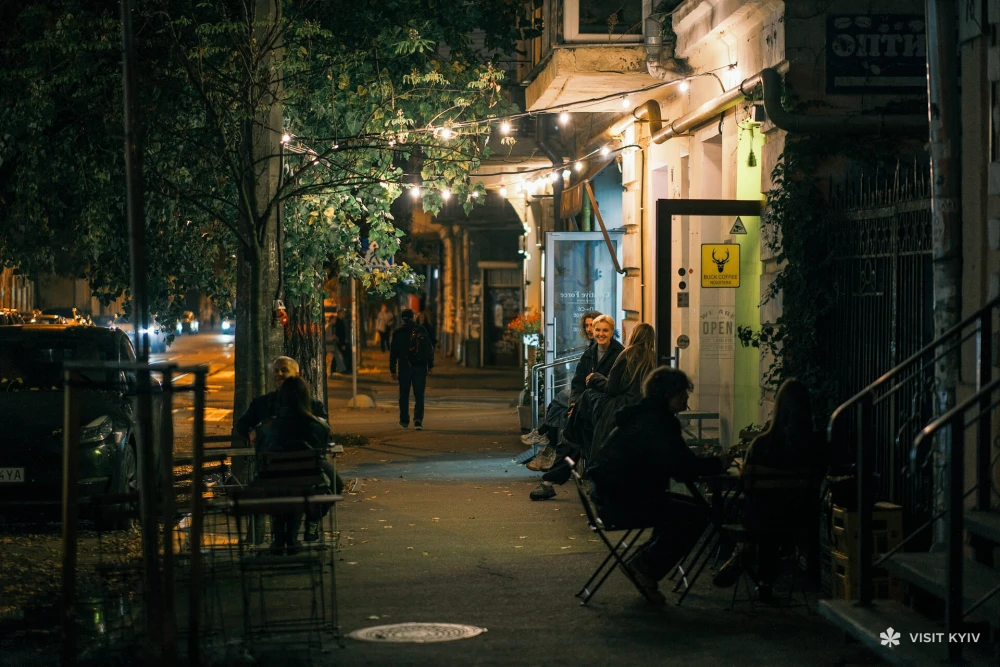
Now, the streets are better known for their cafés, bars, restaurants and cultural venues. It’s a good place to end the walk, especially if you’re ready for a drink or something to eat.
Where to go after your walk
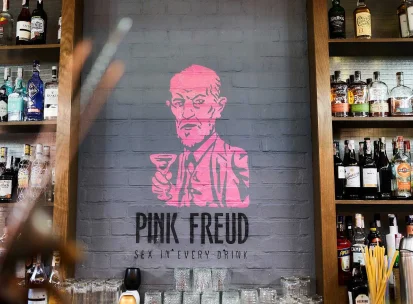
- Pink Freud — cocktails on Nyzhnii Val.
- Zakapelok — a bookstore that also hosts weekend markets and other events.
- Dymchuk Gallery — contemporary art.
- Zhovten Cinema — film festivals, Ukrainian cinema and screenings with subtitles. Check the schedule for English-friendly showings.
- Namelaka — desserts, if you don’t mind extending your walk.


Want to see more? Explore industrial Podil
If you’re not ready to finish, continue along Kyrylivska Street to see another side of the neighborhood.
Former industrial buildings here have become part of Kyiv’s music and nightlife scene, with spaces that host club nights, exhibitions and other cultural events.
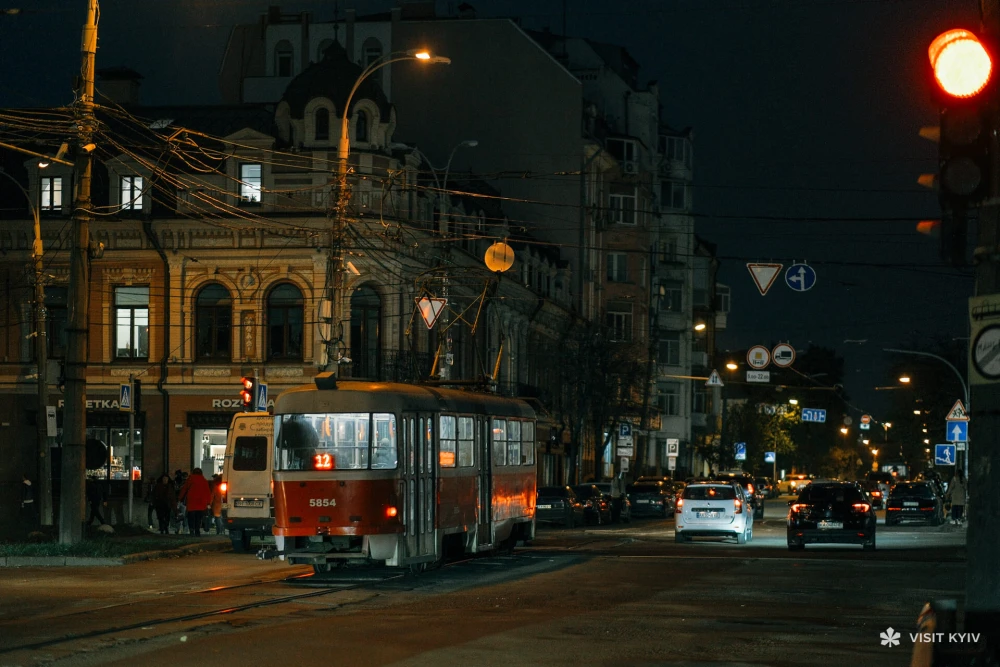
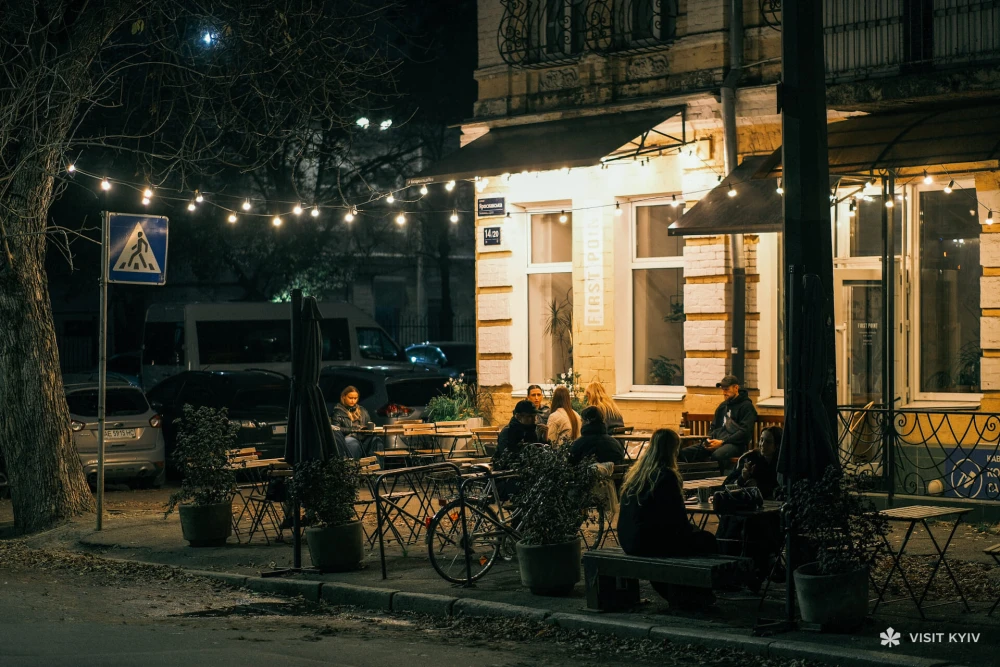
Two of the best-known venues are Closer and ∄ (K41), both associated with Kyiv’s electronic music scene.
It’s better to treat Kyrylivska Street as a separate extension rather than try to fit it into the main 90-minute walk. Check what’s on and whether you need tickets before heading to any of the venues.
About the author