The Flying Saucer building
About The Flying Saucer building
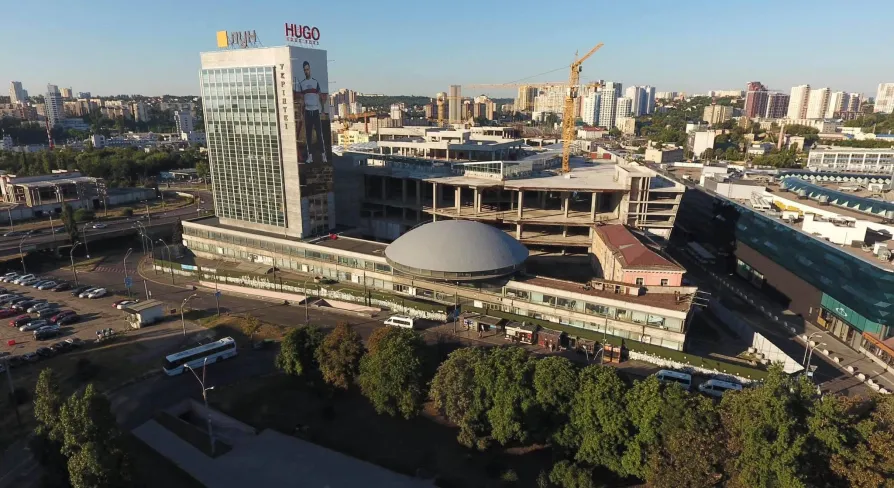
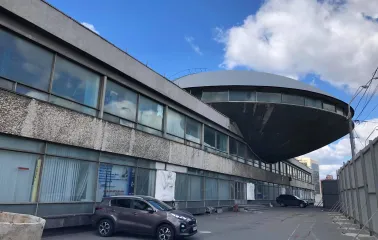
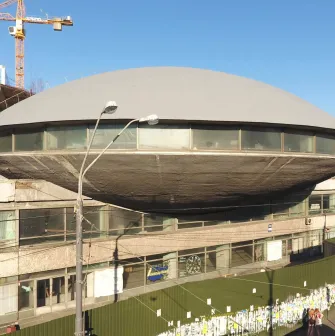
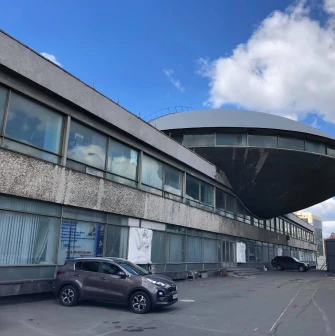
The Flying Saucer building stands near Lybidska metro station and is one of Kyiv’s most recognizable examples of 20th-century Ukrainian modernist architecture.
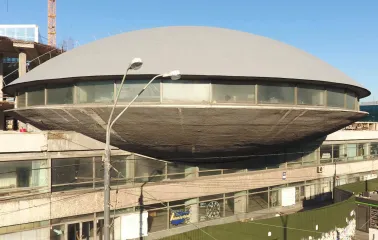
Completed in 1971, the building was designed by Ukrainian architects Florian Yuriev and Lev Novikov. Its distinctive circular structure appears to hover above the ground, earning it the nickname “Flying Saucer.”
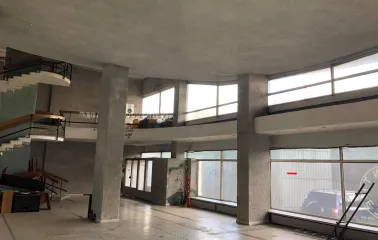
Yuriev originally envisioned the building as a theatre combining light, colour and music into a single artistic experience. He paid particular attention to the acoustics of its spherical hall, designing the space to reproduce voices and musical instruments with exceptional clarity.
His original vision was never fully realized. Instead, the building became part of the Ukrainian Institute of Scientific, Technical and Economic Information. Its distinctive hall was used for lectures and scientific conferences.
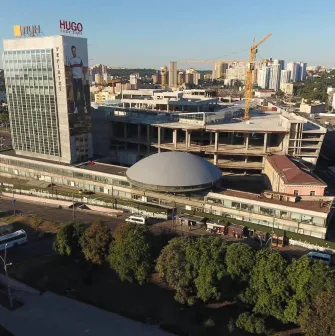
The building began to deteriorate in the 1990s and later faced the threat of redevelopment. Plans for the neighbouring Ocean Mall shopping centre sparked concerns among heritage advocates about preserving the structure and its surroundings.
In 2020, the Flying Saucer was officially added to Ukraine’s register of locally protected architectural landmarks. Despite this status, construction around the building continued, raising further concerns about its architectural integrity.
Restoration work was still underway in late 2025, including changes to the windows and interior. The building remains a distinctive example of Kyiv’s modernist architecture, although its surroundings have changed significantly.
Photo: The Flying Saucer building Facebook page
FAQ

The building is located at 180 Antonovycha Street, near Lybidska metro station and next to the Ocean Plaza shopping mall.
The building was completed in 1971 and designed by Ukrainian architects Florian Yuriev and Lev Novikov. Yuriev was also an artist and art theorist.
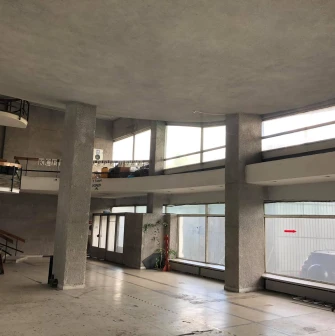
Inside is a spherical hall with a domed ceiling, originally designed as part of Florian Yuriev’s light-and-music theatre concept. Its unusual shape gives the space distinctive acoustic properties.
The hall was later used for lectures and scientific conferences. Restoration work on the building was underway in late 2025.
The nickname comes from its unusual circular shape, which resembles a flying saucer hovering above the ground.
The building has been undergoing restoration, and public access to the interior has not been confirmed. You can view its exterior from the surrounding public areas, although construction work may affect access and photo opportunities.