

“For me, folklore is a way to feel a country”: American folk musician Benya Stewart on Kyiv, Ukrainian traditions, and life during the war
An American folk musician on moving to Kyiv, volunteering, and discovering Ukrainian folklore.
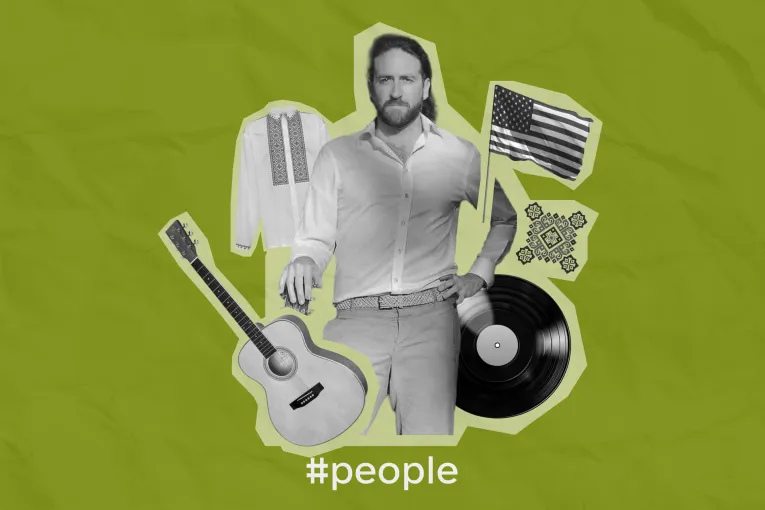
Benya Stewart is an American folk musician from Ohio who has called Kyiv home for the past three years. Here, he has immersed himself in Ukrainian folk music, learned the language, and explored the roots of the country’s cultural traditions.
After Russia’s full-scale invasion began, Benya and a fellow American launched the volunteer initiative From Ohio with Love, raising more than UAH 100,000 in support of the Armed Forces of Ukraine.
In an interview with Visit Kyiv, Benya talks about life in Kyiv, Ukraine’s folk music scene, and why he fell in love with the city.
How music brought me to Kyiv
I first came to Kyiv in autumn 2022, although by then I had already visited Ukraine several times, mostly travelling to Lviv. In one way or another, all of those trips were connected to music.
During one of them in 2020, I met Ukrainian musicians, including Marian Pyroh from the band Pyrih i Batih, as well as other Lviv-based artists. That was when I fell in love with Ukraine’s folk music scene.
When Russia’s full-scale invasion began, I stayed in touch with my friends in Ukraine and dedicated myself to volunteering by organising charity concerts, doing advocacy work, and travelling to Washington, D.C., for meetings in support of Ukraine. Around that time, my American colleague Brett and I launched the volunteer initiative From Ohio with Love and, together with UA First Aid, raised funds in support of the Armed Forces of Ukraine.
The defining moment of 2022 was my first trip to Kyiv. We delivered a vehicle and medical supplies for the Armed Forces of Ukraine and also performed for Ukrainian defenders near the front line in the Donetsk region, not far from Bakhmut. It was an incredibly powerful yet emotionally exhausting experience. After that, I realised I needed to take a step back from active volunteering.
Why I decided to stay in Kyiv
After that trip, I started coming to Kyiv regularly – no longer so much as a volunteer, but because of the people, the music, and the sense of connection I felt with the city. For me, folklore is a way to feel a country and its people – through stories, voices, and the way people pass memory down through songs. In Kyiv, I met many folk musicians and discovered the local music community, which became my main connection to the city.
After several visits, I decided to move to Kyiv because it was here that I felt truly alive. Later, I began working as an English teacher at a lyceum and giving private lessons at IT companies, while continuing my musical journey and research into Ukrainian folklore.
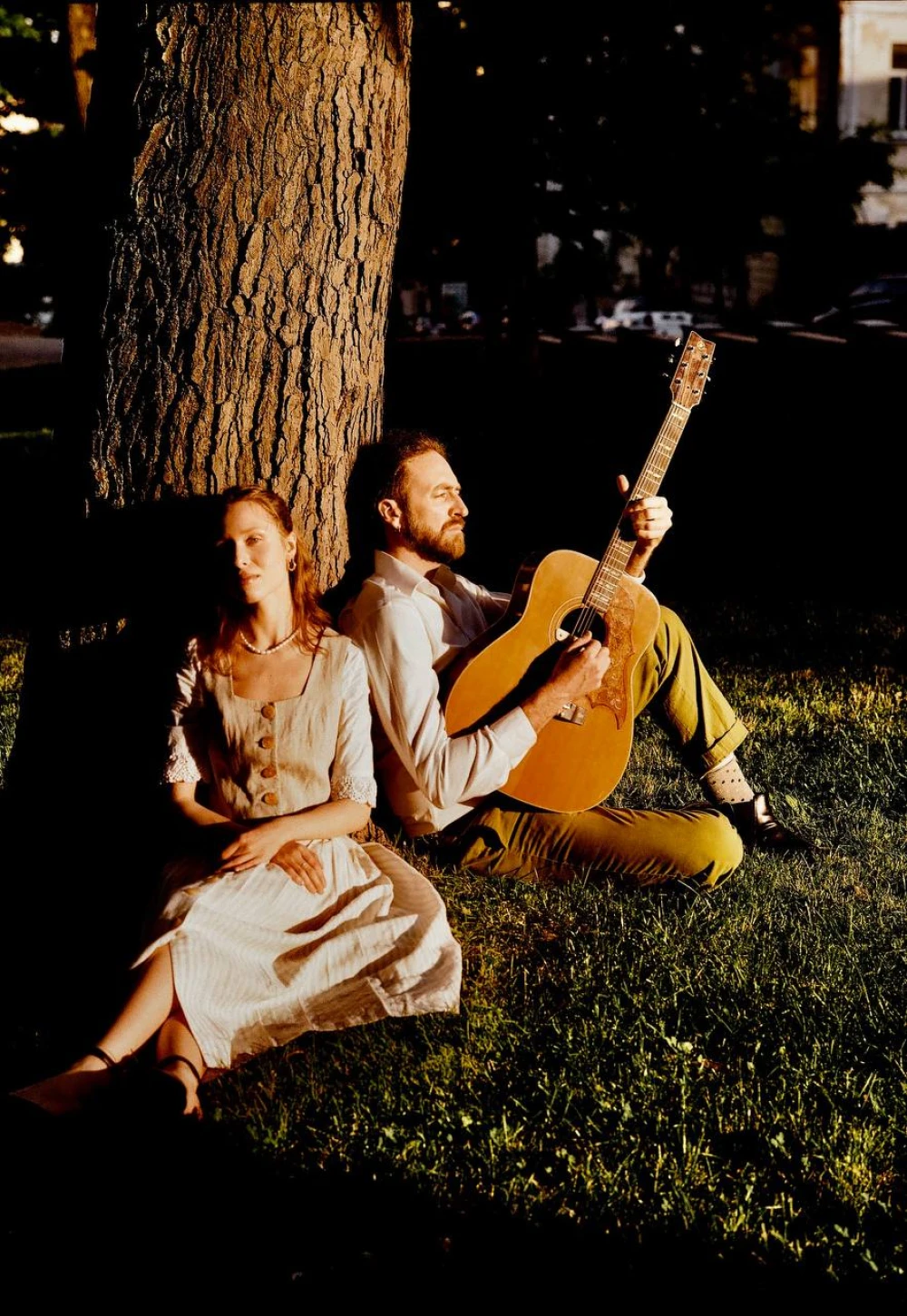
In the capital, I also met my girlfriend, Olia, who grew up in Naddniprianshchyna and had sung folk songs with her grandmother since childhood. For more than two and a half years, we have been developing a joint music project where we share Ukrainian and American folk traditions.
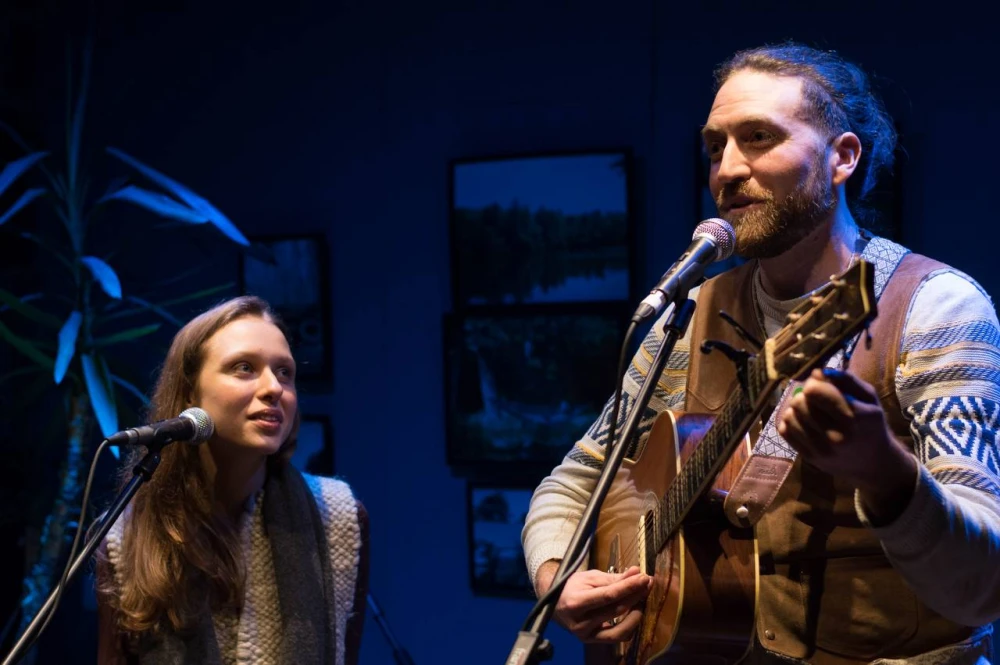
Today, I see myself less as a volunteer and more as an observer and participant in Ukrainian folk culture. I write a lot, study Ukrainian, observe changes in society, and try to live in this new reality, just like everyone around me.
When folklore meets war
There is one moment where mobilisation and folklore intersect in a particularly visible way: farewell gatherings before people leave for the front.
I first witnessed one of these gatherings in Lviv in June 2022, without fully understanding what was happening at the time. It was a farewell for a friend of mine who now serves in Cultural Forces. Back then, he was one of Lviv’s finest folk musicians. It was Music Day, and after his performance, several hundred people gathered in the street and sang folk songs for him. Eventually, it turned into a larger farewell, with hugs, singing, and goodbyes.
Later, I saw similar farewells several times in Kyiv as well, including for women who had volunteered to join the military. There is always singing, ribbons, embroidered cloth, and words of support. It feels like a living tradition, one that has somehow returned to Ukrainian life.
These farewells carry a strange combination of two realities. On the one hand, they feel almost like a festive cultural ritual, full of music, symbols, and togetherness. On the other hand, they are a real goodbye to someone leaving for war.
Honestly, it is an experience I still find difficult to process. I think and write about it a lot, but I feel it will take more time to fully understand it.
First impressions of Kyiv
I come from a small town and had never lived in a big city before moving here. So sometimes it is hard for me to say what exactly I love about Kyiv and what is simply part of living in any large city.
When it comes to my first impressions, what surprised me most was the public transport: the metro, trams, and marshrutkas, which run surprisingly efficiently. Many American cities would benefit from this kind of affordable and convenient transport, and I still do not understand why it is so rare there.
I was also impressed by the number of good cafés and restaurants, with great coffee, delicious food, and friendly service. It feels like Ukrainians do not always try to reinvent everything. Instead, they simply make classic dishes very well. In the United States, it is often the opposite: if you have not come up with something completely new, it can already seem uninteresting.
I think this also has to do with the quality of the ingredients. When I first moved to Ukraine, I was struck by how fresh the food was. In the United States, we are used to mass-produced food, while in Kyiv, you can buy fresh homemade products from local grandmothers selling at Lukianivskyi Market.
A year of disillusionment: when war became everyday life
My first two years in Kyiv were full of fascination. I loved discovering a new city – everything felt extraordinary. But the third year became a year of disillusionment for me.
In September, my close friend Vova was killed in the war after serving for less than six months. I also seriously injured my knee, had surgery, and went through a long recovery.
All of that seemed to paint the entire year in very dark colours. For me, it was a period when I saw another side of life in Ukraine and Kyiv.
At the same time, some moments lifted morale and gave a sense that Ukraine was still fighting and taking the initiative. I was grateful for that, because this year, and especially the winter, had been extremely difficult.
I also noticed that during recent large-scale attacks, including the one when the Lavra was damaged, Olia and I did not even get out of bed. We simply had no strength or desire left to react.
And then I caught myself thinking: “Wow… I think I’ve really become a local.”
Do People in the US understand what is happening in Ukraine?
In general, many Americans lack the context needed to truly understand what Russia’s invasion of Ukraine means. Many know about the Cold War between the United States and the Soviet Union, and that Ukraine was once part of the USSR, but this knowledge is often very broad.
Because of that, some people are vulnerable to Russian propaganda. Many Americans form their understanding of the war through television and social media, so they often do not fully grasp the Ukrainian context or the wider role of Russian society in the war.
What Makes Ukraine Special
I have never met anyone who did not like Ukraine. But the hardest thing is explaining what makes it so special to someone who has never been here. It is not something you can fully understand through stories – you have to feel it.
In Ukraine, you can walk through almost any village in summer and eat a cherry straight from a tree by the road. Maybe it is this connection to the land that creates the feeling of Ukraine, the one that is so hard to explain in words. I wish people in the United States could feel it too.
If Kyiv Were a Person
Kyiv is a city of inner contrasts and contradictions. Here, a thousand years of history exist alongside luxury cars and neglected neighbourhoods; old buildings slowly fall into decay, while new modern developments appear nearby, often standing half-empty.I think Kyiv remains strong and alive not only because of its history, but above all because of its people. It is their spirit that makes this place what it is.
If Kyiv were a person, it would be someone internally conflicted, a little torn apart, but at the same time very warm and dependable for those close to them. The kind of friend who does not always take good care of themselves, but is always there for the people they love: always in touch, always ready to support you.
I am incredibly grateful to Kyivans for welcoming me so warmly. I feel a very deep connection with the people of the capital – their friendship, support, and love.
I also want to thank the Armed Forces of Ukraine and every foreign volunteer who has stood up for Ukraine. It is thanks to them that I can live in this incredible country, travel through its cities, villages, and mountains, learn the Ukrainian language, discover folk songs, and do everything I can to tell the world about this priceless culture with such deep roots.


