


How to Survive Anything: A Ukrainian Guide
Every year, the number of wars and armed conflicts is rising across different parts of the world. Surveys show that in the United States, the United Kingdom, France, and Germany, around 40–46% of respondents consider a Third World War to be a real threat within the next five years.
Meanwhile, Ukraine has been living through a full-scale war for four years. During this time, Ukrainians have not only continued to fight relentlessly but have also learned how to live in new realities: working during air raid alerts and blackouts, insulating their apartments, cooking delicious meals from minimal ingredients, and still finding time for rest and small joys.
On the eve of February 24 — the fourth anniversary of the full-scale invasion — the VisitKyiv.com team has prepared a guide based on the real-life experience of Ukrainians living through blackouts, freezing temperatures, and other crises.
First and foremost, it will be useful for foreigners in their own countries, as emergencies (natural disasters, accidents, or infrastructure disruptions) can happen anywhere. At the same time, the guide serves as a practical reference for those planning a trip to Ukraine or already staying here, helping them better prepare for potential challenges.
This material is practical yet infused with humor, because humor itself helps us endure difficult times. As Ukrainian writer Lesya Ukrainka once wrote: “I would laugh to keep from crying”.
Contents
Rule #1: Stay Charged
Due to ongoing attacks on Ukraine’s energy infrastructure, blackouts and power outages have become an inseparable part of daily life. Depending on the region, electricity may be unavailable for 4 to 16 (or more) hours a day.
So when the power returns, a true “energy marathon” begins: within a few hours, you need to clean, cook, and charge all your devices.
Useful blackout life hacks:
- Always keep a charged power bank on hand.
When electricity disappears for almost a full day, this small device becomes a lifeline, helping you stay connected to the world.
- Find a cozy café or space with a generator.
Ukrainian businesses have long adapted to scheduled outages. A lack of power at home can be an opportunity to combine pleasure with practicality: warm up with a cup of hot coffee while charging your devices.
- Recharge your sense of humor.
Humor and satire have become real fuel for Ukrainians, replenishing our internal batteries. We draw strength from witty creators on social media — and we recommend following accounts that can support you in darker times.
Rule #2: Layer Up
In winter, during severe frosts and heating outages, indoor temperatures can drop sharply to +10…+15°C (50–59°F) or even lower. This can become a serious challenge, so it’s important to approach your winter wardrobe thoughtfully.
Here are additional tips to stay warm:
- Dress in layers: several light items retain heat better and prevent sweating. You can always remove an extra layer.
- Avoid tight clothing and shoes, as they reduce heat retention.
- Choose wool or thick terry socks for maximum insulation and moisture control.
- Eat nutritious, calorie-dense food: soups, grains, nuts, chocolate, and protein- and fat-rich dishes help your body generate heat from within.
- Keep moving: light exercise or dancing to your favorite tracks will warm you up quickly and boost your mood.
- Drink enough fluids, especially hot beverages.
- For outdoor walks, wear thermal underwear, a hat, a scarf, gloves, and shoes with thick soles.
Rule #3: Stay Grounded (Literally)
When circumstances can change in seconds, staying grounded — physically and emotionally — is essential. In emergencies, quick orientation and calmness help ensure safety and confident action.
Practical advice to avoid chaos and stay grounded:
- Identify your nearest shelter, resilience center (“Point of Invincibility”), or public assembly area in advance.
In a shelter, you can safely wait out aerial threats such as air raid alerts. At a resilience center, you can warm up, charge your phone, and access basic amenities. In other emergencies, such as earthquakes, it is important to know the designated community meeting point for evacuation or assistance — often the nearest large square.
- Create your own calming ritual.
When stress surges, take control: practice simple breathing exercises, meditate, call a friend, or create a playlist that helps you shift away from anxious thoughts.
Rule #4: Build a Go-Bag Life
The phrase “pack your life into one suitcase” has long ceased to be just a movie quote. It reflects real Ukrainian experience — being ready to quickly gather essentials and prepare for any scenario.
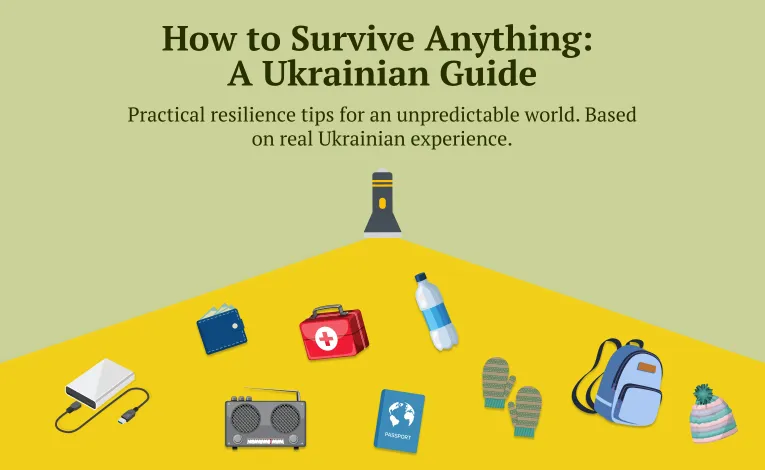
What to include in your emergency bag:
- Documents (passport, insurance, certificates, copies of important papers)
- A flash drive with scanned copies of all documents
- Cash and bank cards
- First aid kit (essential medications, bandages, antiseptics)
- Chargers and a power bank (and possibly a backup phone)
- Warm clothing and spare underwear
- 1–2 liters of water per person and long-shelf-life food requiring minimal preparation (freeze-dried meals, energy bars, nuts, canned goods)
- Portable gas stove, fuel canisters, matches, liquid fuel
- Basic utensils
- Flashlight and spare batteries
- Notebook and pen
- Radio receiver (in emergencies, the radio may become the primary information source)
- Hygiene products
Yes, it may sound less like a small bag and more like a hiking backpack.
Rule #5: Stock Up and Team Up
Due to ongoing attacks in Ukraine, infrastructure disruptions — including interruptions to electricity, water, and heating — can complicate access to stores and basic resources.
At the same time, similar challenges may arise in other countries during natural disasters, technological accidents, extreme weather, or other crises. That is why it is important to prepare in advance, regardless of where you are.
Helpful tips:
- Choose long-shelf-life food and drinks: canned meat, fish, vegetables, snacks, instant soups and grains, freeze-dried meals, biscuits, chocolate, nuts, dried fruits, pasta, powdered milk, tea, coffee.
- Store both drinking and technical water. Experts recommend 3 liters of drinking water per person per day and 10–12 liters for hygiene and cooking needs. Plan for at least 72 hours.
- Fill a thermos with hot water to prepare tea or instant meals during outages.
- Use natural cold: in winter, store food on a balcony; in summer, keep it in the coolest place away from sunlight.
- Build community: coordinate supplies with neighbors or friends, support each other, and share advice. It’s always easier together.
Rule #6: Stay Updated
In Ukraine, digital services are an integral part of daily life. Online banking, government services, and medical records are accessible within a few clicks.
In a world of constant information flow, staying informed through reliable sources is essential.
Useful resources when traveling to Kyiv:
- The official website of the President of Ukraine
- Official channels of the Ministry of Internal Affairs, regional military administrations, and other state services
- The “Air Alert” app for tracking threats in your area
- The “Kyiv Digital” app for air raid notifications, finding resilience centers, and accessing city services, such as purchasing public transport tickets
On the website mediacenter.org.ua, you can find additional trusted resources for accessing high-quality and reliable news.
Rule #7: Stay Flexible
Ukrainians have learned that flexibility is a superpower. When plans change abruptly, adaptability and creativity help you move forward.
How to stay flexible:
- Prepare in advance: cook meals, fill a thermos, clean your space, stock water and snacks, charge devices.
- Plan alternatives and improvise: if a movie screening is canceled due to an air raid alert, organize a movie night at home instead.
- Try something new: pick up a new book, dance to your favorite song, or take a short walk along a new route.
- Find joy in small things: hot coffee after a blackout, a peaceful night’s sleep, a theater visit uninterrupted by sirens.
Rule #8: Celebrate Life and Donate
Despite air raid alerts and shelling, life in Ukraine continues. Theaters, concerts, festivals, exhibitions, and new venues keep cities vibrant.
At the same time, volunteering and supporting the armed forces have become part of everyday culture.
Many charitable initiatives and cultural events direct their proceeds toward defense and national development. You can contribute by buying a ticket or making a donation at an event.
You can also donate online through trusted foundations, including:
- United24 — the official fundraising platform supporting defense, medicine, reconstruction, and education
- Come Back Alive Foundation — supporting Ukrainian soldiers
- Olena Zelenska Foundation — supporting children, education, and cultural projects
Supporting Ukraine is not only about donating. It is about presence, interest, and solidarity. By attending cultural events or contributing financially, you become part of a community that helps the country live and create even in difficult times.
For more about life in Kyiv, inspiring locations, events, and travel tips, visit VisitKyiv.com.
VisitKyiv.com is a website for travelers heading to Kyiv, with practical guides on what to see, where to eat, and how to explore the city safely.

